



Trump accuses Supreme Court after legal setback targets U.S. companies and attorneys with India ties
- In Reports
- 06:15 PM, Feb 21, 2026
- Myind Staff
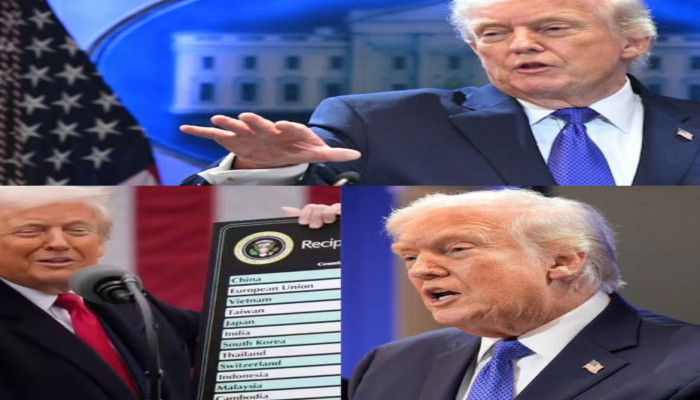
Trump Accuses U.S. Supreme Court of Being Influenced by Foreign Interests After Legal Setback, Attacks U.S. Companies and Attorneys With India Ties
In an extraordinary and highly critical response to a major legal defeat, U.S. President Donald Trump sharply attacked the Supreme Court of the United States (SCOTUS), alleging that the justices were influenced by foreign interests. His comments came after the Court, in a 6–3 majority decision, struck down his broad global tariffs as exceeding presidential authority under U.S. law.
Trump held a news conference at the White House and also posted on social media to express his frustration. He called the Court’s decision a political and judicial betrayal, saying that the majority of the justices were “lapdogs for the radical left” and “fools” who acted in ways he described as “unpatriotic and disloyal to our Constitution.””
He claimed that outside forces especially those tied to foreign interests influenced the judges. Trump did not provide solid evidence for this, but he repeated the idea forcefully, saying the Court had been swayed and that its ruling favoured global actors over American interests.
A key focus of his criticism was not just the decision itself, but also the U.S. companies and attorneys involved in the case who he says had connections to India. Trump singled out the Chicago-based toy seller Learning Resources, which brought the lawsuit that led to the Supreme Court ruling. He accused the business and its lawyers of being disloyal to the United States. “I know the people that brought the lawsuit… they’re major sleazebags… they’re un-American slime balls who want to see our country fail,” Trump said.
The president also appeared to refer indirectly to Indian-American attorneys who argued the case before the Supreme Court including Neal Katyal and Pratik Shah. Trump’s comments suggested that he believed their identities and ties gave them undue influence.
Learning Resources and the attorneys argued that their legal fight was about the separation of powers and whether the president had the constitutional authority to impose sweeping tariffs. They said their win at the Supreme Court protected long-standing legal principles and was not about attacking any individual political figure. According to them, the case concerned basic constitutional limits on presidential power.
Katyal, who had initially represented other groups before winning the right to argue for Learning Resources, praised the Supreme Court for upholding a key constitutional safeguard. “I’m gratified to see our Supreme Court, which has been the bedrock of our government for 250 years, protect our most fundamental values,” he said after the ruling.
Trump didn’t stop there. In his remarks, he also criticised three conservative justices Neil Gorsuch, Amy Coney Barrett, and John Roberts for joining with the liberal justices to strike down his tariff authority. He went so far as to call it “an embarrassment to their families,” showing how personally frustrated he was with the outcome.
When asked whether the six justices who voted against his tariffs would be welcomed at the upcoming State of the Union address, Trump said they were “barely invited” and added, “Honestly, I couldn’t care less if they come.”
The Supreme Court’s decision was rooted in its interpretation of the International Emergency Economic Powers Act (IEEPA) and the U.S. Constitution. Essentially, the majority concluded that the president cannot unilaterally impose nationwide and open-ended tariffs under that law without specific authority from Congress. Legal experts say the ruling reaffirmed the constitutional separation of powers and limited the president’s unilateral use of trade policy as an economic tool.
The court’s alignment combining three liberal and three conservative justices underscored that the ruling was based on legal reasoning rather than a simple partisan divide. Many constitutional scholars view the case as an important defenceof the judiciary’s role and congressional authority in setting trade and tariff policy.
Trump’s aggressive reaction highlighted the growing tension between the executive branch and the judiciary. It also illustrated how deeply divided U.S. politics have become, even on questions of constitutional interpretation. His statements have unsurprisingly drawn strong reactions from various sides, with some calling them inflammatory and unfounded, while supporters have echoed his concerns about foreign influence and economic policy.
Overall, the episode marks a significant moment in U.S. political and legal history, illustrating the friction between presidential power, judicial review, and international economic policy.



 Loading...please wait
Comments