




Trump 2.0 - Truth of Trade Weaponising: “Trump Always Chickens Out” - Does he?
- In Current Affairs
- 08:08 PM, Sep 21, 2026
- Viren S Doshi
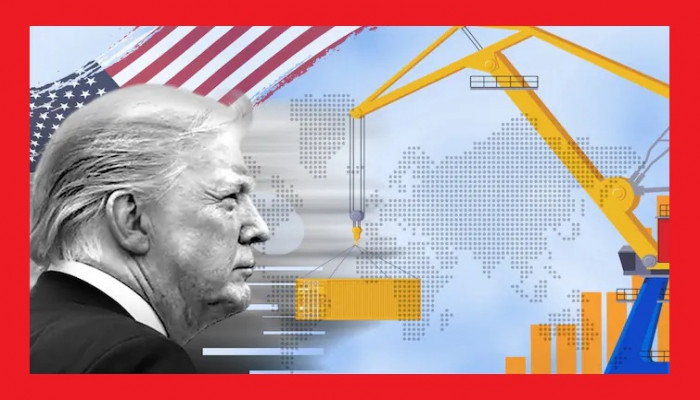
As of mid-to-late September 2026, the second Trump administration has pursued an aggressive, protectionist trade agenda centred on tariffs and related economic tools. Early broad tariffs imposed under the International Emergency Economic Powers Act (IEEPA) were invalidated by the United States Supreme Court. The administration responded by shifting to other statutory authorities, including Section 232 of the Trade Expansion Act of 1962 (national security), Section 301 of the Trade Act of 1974 (unfair trade practices), Section 122 of the Trade Act of 1974 (temporary balance-of-payments measures), and Section 338 of the Tariff Act of 1930. The overall effective tariff rate on United States imports rose significantly from pre-2025 levels (around 2 per cent) but moderated after legal setbacks, settling in the mid-to-high single digits to low double digits depending on the metric and period.
This article details the status of tariffs, the precise update on court-ordered refunds of collected IEEPA duties, country-specific impacts on United States imports and exports and other economic measures adopted by Trumpian Politics.
Status of Major Tariffs
IEEPA-based tariffs—including “fentanyl”-related duties on Canada, Mexico, and Communist Regime-occupied China, plus broad “reciprocal” or Liberation Day tariffs on most trading partners—were struck down by the Supreme Court on February 20, 2026, in Learning Resources, Inc. v. Trump. The Court held that IEEPA does not authorise tariffs, which constitute a form of taxation reserved for Congress.
Soon a temporary 10 per cent across-the-board tariff under Section 122 replaced much of the invalidated structure and ran for 150 days until July 24, 2026.
It was then succeeded by new Section 301 tariffs (effective the same day) targeting approximately 60 economies for alleged inadequate bans or enforcement against goods produced with forced labour. These generally impose additional duties of 10 per cent or 12.5 per cent (or structured rates reaching those levels when combined with existing most-favored-nation rates). Exemptions apply to many United States-Mexico-Canada Agreement (USMCA)-qualifying goods, certain energy and food products, and items already covered by Section 232 duties.
Active or expanding Section 232 national-security tariffs cover steel and aluminium (often 25–50 per cent), automobiles and parts (25 per cent), heavy trucks and buses, lumber/furniture/cabinets, pharmaceuticals (up to 100 per cent on certain patented drugs, with possible lower rates for onshoring or partner deals), unmanned aircraft systems/drones (up to 100 per cent), polysilicon, copper, and other categories.
Lower rates or exemptions frequently apply to partners with framework deals.
Additional targeted actions include a 25 per cent Section 301 tariff on Brazil (around July 2026) and 50 per cent Section 338 tariffs on a range of Canadian goods (effective around August 22, 2026, later modified), justified by alleged discrimination against United States automobiles, dairy, and alcohol. Canada responded with retaliatory tariffs; the United States further adjusted product lists and announced import bans on certain Canadian goods (effective around September 29, 2026).
Framework agreements reached with various partners in 2025 moderated some rates in exchange for commitments.
Average effective United States tariff rates peaked near 11 per cent in late 2025 before declining after the Supreme Court ruling and subsequent adjustments.
Approximately $166 billion to $175 billion in IEEPA tariffs was collected from US importers. The Supreme Court ruling triggered refund obligations. United States Customs and Border Protection (CBP) developed the Consolidated Administration and Processing of Entries (CAPE) system within the Automated Commercial Environment (ACE) portal to process claims in phases, consolidating refunds (including interest) rather than handling them entry-by-entry. Refunds are issued electronically via Automated Clearing House (ACH). As of early-to-mid September 2026, reports CAPE had accepted roughly $132.5 billion to $134.7 billion in potential and certified refunds for processing. Approximately $106.6 billion to $122 billion had been certified and sent to the United States Department of the Treasury for disbursement. Phases I and II cover unliquidated entries, entries within roughly 80 days of liquidation, and certain reconciliation-flagged entries. These account for the bulk of the value processed so far. Phase III (for finally liquidated entries—those past the ordinary protest/reliquidation window) faced delays but was scheduled to launch on October 6, 2026, primarily for importers who filed suit at the Court of International Trade (CIT) and provided a valid importer-of-record number by late July 2026. It addresses a smaller remaining share of the total. The government has appealed aspects of CIT orders directing broader (including “universal”) refunds for non-plaintiffs and finally liquidated entries, citing jurisdictional limits. The appeal remains pending at the United States Court of Appeals for the Federal Circuit.
Importers with finally liquidated entries who have not sued may need to file individual actions at the CIT (with a general two-year window from relevant dates, potentially into early 2027) to preserve claims. CBP has indicated it will process accepted claims relatively promptly (often targeting 45–90 days absent compliance issues), but full resolution of all claims continues amid litigation.
Whether Importers Passed Tariff Costs (or Refund Benefits) to End Users and Customers: Who suffered
Economic research on the 2025–2026 tariffs consistently shows high pass-through of costs from the border to United States buyers.
Foreign exporters absorbed only a small share of the burden (typically 4–14 percent in various studies, often by not lowering pre-tariff prices). The large majority—often 86–96 percent or more—fell on United States importers, firms, and ultimately consumers.
Border-level pass-through into import prices was near-complete in many analyses (90 percent or higher). Importers initially absorbed some costs through compressed margins to maintain market share or volumes, but over time a substantial portion was passed forward. Retail and consumer-price pass-through estimates varied by study, product, and time horizon: one Federal Reserve Bank of New York analysis found about 26 percent of the tariff increase reaching consumer prices (with direct effects dominant and indirect effects via input costs and reduced competition adding more over 9–12 months); other work reported retail pass-through around 15–24 percent in early periods, rising toward higher shares later, or overall consumer price increases of 0.5–1.0 percent or more depending on the tariff regime assumed permanent. Contributions to core inflation measures were estimated in the range of 0.2–0.8 percentage points in different windows.
Households responded by reducing quantities purchased (especially non-essentials), trading down to cheaper varieties, and shifting spending.
For refunds of the invalidated IEEPA duties, importers who receive the money may retain it as a windfall, use it to restore margins, or pass some benefit through lower prices—though evidence on refund pass-through specifically remains limited as of September 2026, and competitive pressures or inventory lags influence outcomes.
Net effect of the tariff weapon has been higher costs primarily borne domestically impacting import volumes and values thereby affecting foreign exporters.
Trade Impacts Country by Country
Tariffs raised costs for United States importers, prompted front-loading of goods in early 2025 (especially chemicals, pharmaceuticals, and gold), and led to subsequent adjustments and trade diversion.
The goods trade deficit narrowed in parts of 2025, with diversification away from China.
Behavioural responses (sourcing shifts) reduced the effective base for some duties. Overall import volumes showed mixed effects, with maritime imports declining in some periods; exports faced partner retaliation in select cases.
Data through mid-2026 indicate slower growth in two-way trade with many partners relative to global trade, though absolute volumes sometimes rose.
China: Sharpest impact. Its share of United States imports fell substantially (reports of declines of roughly 2.7 percentage points or more in certain periods, with year-over-year drops exceeding 40 percent in some comparisons).
Effective tariff rates remained elevated (mid-20s to higher in various snapshots).
Trade diversion benefited Association of Southeast Asian Nations (ASEAN) countries like Vietnam, Taiwan, and others.
The bilateral goods trade deficit with China declined notably (around 32 per cent year-over-year in 2025 in one official summary), and it ceased to be the largest bilateral deficit partner for the first time in decades.
United States exports faced Chinese countermeasures during escalations.
Canada: Significant disruption. Imports declined (reports of roughly 10–15 percent drops in periods), with elevated average tariff rates due to layered measures. Retaliatory Canadian tariffs on United States goods (steel, aluminum, seafood, appliances, etc., covering tens of billions of Canadian dollars) took effect in September 2026. Two-way trade shares fell. USMCA exemptions provided partial relief for qualifying goods, but Section 338 actions tested this. Escalation included United States import bans on certain Canadian products.
Mexico: Relatively resilient due to USMCA exemptions. It strengthened its position as a top United States import source, with positive growth in some periods while Canada and Communist Regime occupied China declined. Average effective rates remained among the lower ones for major partners.
European Union: Moderate impacts. Effective rates around 7–9 percent in various windows after deals. Imports saw front-loading then reversal; Europe’s share of United States imports declined in early 2026 partly due to unwinding stockpiles. Framework deals limited escalation. Autos, metals, and other sectors faced Section 232 duties.
Japan, South Korea, United Kingdom, Taiwan, and other framework partners: Lower effective rates than peak threats due to deals (often capped near 10–12.5 per cent or better). Trade volumes generally held or grew modestly; some partners gained share via diversion from China.
Brazil and India: Higher effective burdens (Brazil via the additional 25 per cent Section 301 tariff; India via layered rates including earlier Russian oil-related actions and forced-labour measures). Despite this, trade shares showed only limited change or modest shifts.
Vietnam, Taiwan, ASEAN economies, and others: Often gained United States import share through trade diversion as companies shifted sourcing away from higher-tariff origins, particularly China.
Broader patterns: Primary metal and manufacturing imports spiked ahead of certain Section 232 implementations, then adjusted. Pharmaceuticals, autos, and metals faced targeted pressure. United States exports of capital goods rose in aggregate in some reports, but specific categories (e.g., certain chemicals or drugs) declined amid partner responses.
Overall, the policies accelerated diversification of supply chains while raising input costs for United States manufacturers and consumers in affected sectors while keeping China on tenterhooks.
Precise quantitative impacts vary by data source, time window, and whether behavioural changes are fully accounted for. Official Census Bureau and CBP data, along with analyses from institutions tracking trade, provide useful data.
Other Measures Against Foreign Countries
Beyond tariffs, the administration employed sanctions, export controls, import restrictions, investigations, secondary measures, and pressure for reciprocal trade deals.
Stated rationales typically include national security, countering unfair practices or excess capacity, disrupting fentanyl and trafficking flows, eliminating forced labor, reducing trade deficits, and onshoring production.
Key categories and examples include:
Sanctions and designations: Expanded or maintained pressure on Russia (including energy companies such as Rosneft and Lukoil in 2025; recent September 2026 Graham signed by the President authorised secondary sanctions, tariffs up to 100 per cent on major importers of Russian energy, and related prohibitions, with presidential waiver authority).
Maximum-pressure campaigns targeted Iran (sanctions on oil sales, nuclear/missile networks, and related entities; secondary measures). The recently passed and signed Graham Act further authorised the President for the next five years.
Actions against Cuba intensified (restoration of certain restrictions, secondary tariffs on oil shipments to Cuba, expanded designations).
Venezuela faced heightened measures linked to the Maduro regime (designations related to narcoterrorism, sanctions on energy, tanker seizures). Designations also targeted cartels and trafficking networks more broadly.
Import bans and restrictions: Beyond Canada-specific bans, heightened enforcement of forced-labour import prohibitions affecting goods linked to dozens of countries. Tightened rules on low-value (de minimis) shipments and postal entries. Mainly affected China.
Section 301 and related investigations: Probes into forced-labour enforcement (leading to the July 2026 tariffs), structural excess capacity in manufacturing (covering the European Union and about 15 other economies), and other practices such as digital services taxes or pharmaceutical pricing in select cases. These can result in tariffs, quotas, or other remedies.
Export controls and entity listings: Continued use against entities linked to Russia, Ayatollah Regime ruled Iran, Communist Regime occupied China, and others for dual-use or sanctions-evasion concerns.
Reciprocal trade frameworks and pressure: Numerous Agreements on Reciprocal Trade or similar frameworks with countries including Argentina, Bangladesh, Cambodia, Indonesia, Malaysia, Taiwan, and others, often involving market-access commitments, labor/environmental standards, and moderated United States tariffs. Pressure on partners regarding Russian oil purchases, digital taxes, and alignment away from Communist Regime occupied China supply chains.
Panama-specific measures (Canal security, influence concerns, and cooperation): A major focus of the administration’s Western Hemisphere strategy, aptly named as Donroe Doctrine centred on the Panama Canal. President Trump publicly raised concerns about alleged influence by China over the waterway and indicated an intent to ensure United States access and preeminence, referencing the 1977 neutrality treaties. High-level engagement included visits by Secretary of State Marco Rubio (February 2025) and Secretary of Defence Pete Hegseth (April 2025). A memorandum of understanding enhancing defence and security cooperation, providing for rotational and joint United States-Panamanian presence at sites near the Canal that had previously hosted United States military installations was signed. Efforts sought to optimise transit priority and develop a framework addressing fees for United States warships and auxiliary vessels. The administration publicly supported a January 2026 Panamanian Supreme Court ruling that annulled long-standing concessions held by a Hong Kong-based firm (Panama Ports Company, linked to CK Hutchison Holdings) to operate the Balboa and Cristóbal container terminals; Panama subsequently assumed control of the ports in February 2026 and arranged temporary operations by other international firms pending rebidding. Panama withdrew from the Belt and Road Initiative.
In September 2026, the State Department notified Congress of the reprogramming of $52 million in foreign military financing (redirected from certain European and Middle Eastern recipients) toward Panama, Peru, Ecuador, and Colombia, citing the need to combat narcoterrorism and help secure the Panama Canal.
Additional cooperation covered migration management (including vehicle donations and funding extensions under prior memoranda) and a February 2026 bilateral health memorandum of understanding under the America First Global Health Strategy (focused on HIV/AIDS and infectious disease capabilities, with planned United States support up to $22.5 million through 2028 alongside increased Panamanian domestic funding).
These steps aimed to limit non-hemispheric strategic footholds while strengthening bilateral security and commercial ties, impacting the influence of China badly.
Other economic tools: Secondary tariffs or threats tied to third-country dealings with sanctioned regimes (e.g., oil to Cuba or Iran-related). Congress and the executive advanced Russia and Iran-related legislation expanding tools at its disposal.
Weaponising Trade and Economy - The Trump Way
So Trump Doesn't Chicken Out, though he appears to have done so. This is uniquely clever about him and his brand - Trumpian Politics takes a Trump Toll, anyhow. American people have, by and large, shown resilience and empowered the Trump Administration to arm-twist the monopolistic behemoth - China.
Who bears the brunt overseas? Of course, the Communist Regime occupied China in most cases despite the propaganda that it has strong leverage in the form of supply chain or resources or product process monopolies.
The days are gone when the monopolistic Communist regime used to escape the clutches of even a mighty nation like the US.
Disclaimer: The opinions expressed within this article are the personal opinions of the author. MyIndMakers is not responsible for the accuracy, completeness, suitability, or validity of any information on this article. All information is provided on an as-is basis. The information, facts or opinions appearing in the article do not reflect the views of MyindMakers and it does not assume any responsibility or liability for the same.



 Loading...please wait
Comments