




Trade deal sets stage for critical minerals push as Jaishankar meets top Trump aides in Washington
- In Reports
- 05:44 PM, Feb 04, 2026
- Myind Staff
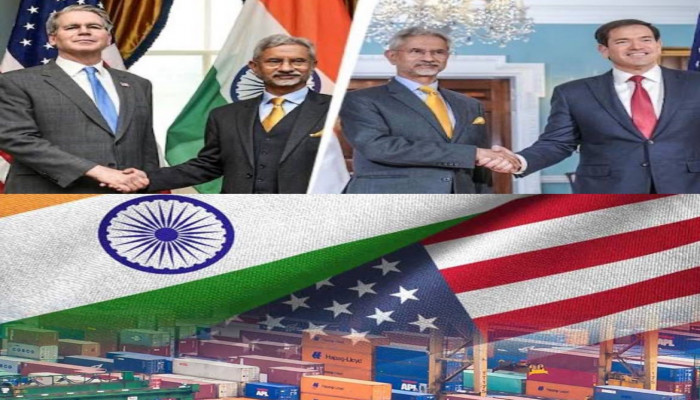
External Affairs Minister S. Jaishankar’s visit to the United States has signalled a new phase in India-US economic and strategic relations, coming just days after President Donald Trump and Prime Minister Narendra Modi finalised a major trade agreement. With the trade breakthrough now announced, both countries are shifting focus toward deeper cooperation, especially in critical minerals, supply chain security, and long-term strategic sectors.
Jaishankar, who is in the US from February 2 to 4, held back-to-back meetings on February 3 with US Treasury Secretary Scott Bessent and Secretary of State Marco Rubio. The meetings were aimed at advancing cooperation across trade, energy, nuclear power, defence, technology, and supply chain security.
His Washington visit comes immediately after Trump announced a major trade deal with India following talks with Modi. Under the agreement, reciprocal tariffs on Indian goods have been cut from 25 per cent to 18 per cent, with immediate effect. The reduction is being seen as a major boost for Indian exporters, particularly in manufacturing, pharmaceuticals, and renewable energy.
Officials in both Washington and New Delhi view the trade agreement as an important foundation for improving market access and lowering regulatory barriers. Jaishankar has also connected the trade deal with India’s domestic priorities, such as job creation and industrial development. He described the agreement as a key part of the government’s “Make in India” programme and argued that stronger trade ties would help strengthen India’s manufacturing base while supporting innovation-driven growth.
Jaishankar began his official engagements by meeting Treasury Secretary Scott Bessent. Officials described the discussion as important in translating the political trade agreement into workable policies. The talks were seen as a vital step in “papering” the details of the trade breakthrough announced on Sunday.
After the meeting, Jaishankar posted on X that he had a “useful discussion” on advancing economic partnership and strategic cooperation. Officials said the discussion focused on trade facilitation, market access, and regulatory coordination. There was also emphasis on ensuring smooth implementation of the newly announced agreement. The engagement with the Treasury Department is being viewed as critical for turning high-level commitments into real economic outcomes.
Later in the day, Jaishankar met Secretary of State Marco Rubio. Both sides placed strong emphasis on formalising cooperation on critical minerals and expanding a long-term strategic partnership.
In a formal readout issued on February 3, the US State Department said, “Secretary Marco Rubio met today with Indian External Affairs Minister Subrahmanyam Jaishankar. The Secretary and External Affairs Minister discussed formalising bilateral cooperation on critical minerals exploration, mining, and processing.”
The State Department also noted, “Secretary Rubio and Minister Jaishankar welcomed the trade deal reached between President Trump and Prime Minister Modi. The two leaders emphasised the importance of our democracies working together to unlock new economic opportunities and advance our shared energy security goals.”
Both leaders also reaffirmed their commitment to cooperation through the Quad and agreed that “a prosperous Indo-Pacific region remains vital to advancing our shared interests.”
Jaishankar, in his own social media post, said the talks covered bilateral ties, as well as regional and global issues. He stated that the discussions focused on multiple pillars of the India-US partnership, including trade, energy, nuclear cooperation, defence, critical minerals, and technology. He added that both sides agreed on early meetings of institutional mechanisms to move forward on shared priorities.
Rubio also posted about the meeting, stating that the discussions focused on critical minerals cooperation and “unlocking new economic opportunities.” He also welcomed the trade agreement as an important step forward in strengthening the partnership.
The increasing attention on critical minerals reflects the strategic concerns in both capitals regarding reliance on limited suppliers, especially China. The State Department has said Rubio intends to mobilise international partners to strengthen supply chains for minerals that are essential for defence manufacturing, advanced technologies, and clean energy transitions.
As part of this push, the United States is hosting its first Critical Minerals Ministerial in Washington DC on Wednesday. The ministerial is expected to bring together officials from more than 50 countries to improve coordination and diversify global supply chains. Jaishankar is scheduled to participate in the ministerial during his visit.
US Interior Secretary Doug Burgum recently said that around 30 countries are keen to join a proposed coalition aimed at reducing dependence on China for mineral supplies, with at least 20 more expressing strong interest.
Officials in both countries see Jaishankar’s Washington visit as proof that the India-US partnership is expanding beyond traditional trade and defence ties. Discussions during the visit also covered energy cooperation, nuclear collaboration, technology development, and regional security, alongside economic integration.
By combining the trade deal with a push for critical minerals cooperation, both New Delhi and Washington appear focused on aligning commercial benefits with long-term strategic goals and shared energy security priorities.



 Loading...please wait
Comments