




Tibetans hold 90-hour hunger strike at UN, protest China’s oppression
- In Reports
- 06:57 PM, Apr 09, 2026
- Myind Staff
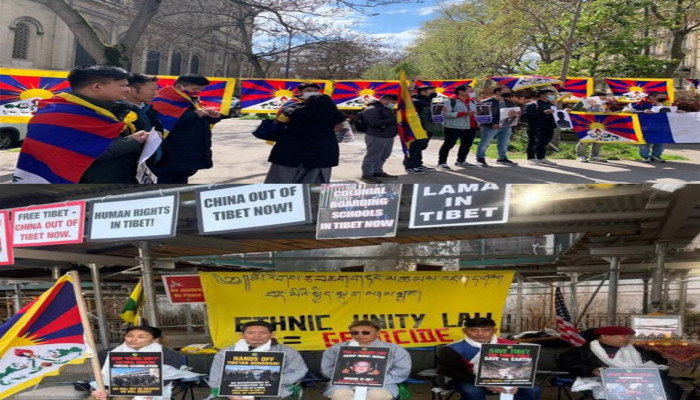
Tibetan activists have begun a 90-hour hunger strike outside the United Nations headquarters in New York to protest against what they describe as China’s continued oppression in Tibet. The demonstration has been organised by members of the Regional Tibetan Youth Congress from New York and New Jersey. It started on April 6 and is scheduled to continue until April 10, aiming to draw global attention to the situation inside Tibet and push for international intervention.
The protest is part of a broader effort to highlight human rights violations faced by Tibetans. Activists gathered outside the UN building to demand freedom and independence for Tibet. They also raised concerns over policies that they believe are harming Tibetan identity, culture, religion, and language. The hunger strike is being carried out by a group of Tibetan activists who are taking turns while maintaining the continuity of the protest.
The demonstrators are particularly protesting against a recently introduced Chinese law, referred to as the “Ethnic Unity Law.” According to the activists, this law is designed to enforce assimilation and weaken Tibetan identity. They argue that such measures threaten the preservation of Tibetan traditions and way of life. The protesters are urging the international community, especially the United Nations, to take notice and act on these concerns.
In addition to opposing the new law, the activists have also demanded the release of Tibetan political prisoners. Among those mentioned is the 11th Panchen Lama, who has been missing for decades. The protesters stressed that such cases reflect the broader pattern of repression faced by Tibetans under Chinese rule.
The hunger strike also aims to shed light on the conditions inside Tibet. Activists claim that Tibetans face arrests, imprisonment, and torture for expressing dissent. They say that even peaceful protests are met with strict action. The situation, according to them, continues to worsen over time, with increasing restrictions on basic freedoms.
Lobsang Tsering, President of the Regional Tibetan Youth Congress, highlighted the seriousness of the issue. He said, "It is a critical time for Tibet. The situation inside Tibet is worsening every year. The Chinese Communist government is forcibly placing over one million Tibetan children in state-run, colonial-style boarding schools, where they are only taught the Chinese language and culture and the ideologies of Chinese leaders. This aims to eliminate the Tibetan identity by separating children from their language, culture, and religion."
The activists also raised concerns about environmental damage in Tibet. They pointed out that activities like mining, deforestation, and large-scale development projects are harming the fragile ecosystem of the Tibetan Plateau. According to them, this not only affects Tibet but also has wider environmental consequences.
Throughout the protest, participants have been distributing pamphlets to inform people about the situation in Tibet and their demands. These include restoring freedom, protecting cultural identity, and ensuring basic human rights. They are also appealing to global organisations and governments to put pressure on China to address these issues.
The hunger strike is part of a larger movement among Tibetans worldwide. Similar protests and campaigns are being organised in different countries to raise awareness. Activists believe that international support is crucial in bringing attention to their cause and pushing for meaningful change.
By staging the protest outside the United Nations, the demonstrators hope to directly reach global leaders and policymakers. They want the UN to play a more active role in addressing the concerns of the Tibetan people. The protest reflects growing frustration among Tibetans in exile, who feel that their voices have not been heard despite years of peaceful activism.
As the hunger strike continues, the activists remain firm in their demands. They aim to keep the issue alive on the global stage and seek justice for Tibet through non-violent means.



 Loading...please wait
Comments