




Thousands take to streets across Romania protesting alleged judicial abuses
- In Reports
- 11:44 PM, Dec 15, 2025
- Myind Staff
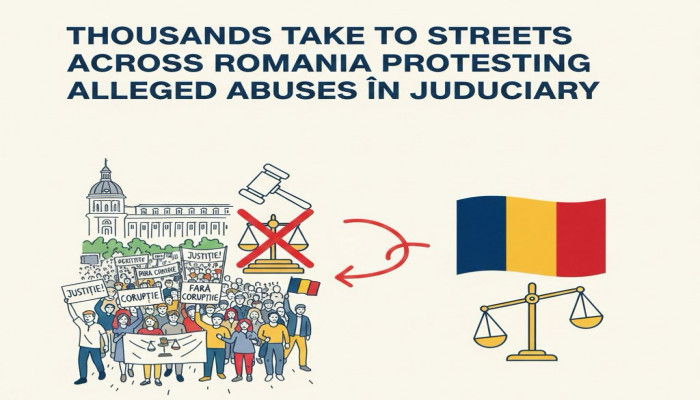
Thousands of people across Romania continued to protest against alleged abuses and dysfunction within the country’s judicial system, as demonstrations entered their sixth consecutive day on Monday. Protesters gathered in large numbers in the capital Bucharest and several other cities, calling for integrity, transparency, and reform in the justice system.
The protests were sparked after hundreds of judges and prosecutors publicly raised concerns about what they described as deep-rooted and systemic problems in Romania’s judiciary. Around 700 judges and prosecutors signed an open letter shared on social media, in which they complained of what they called “profound and systemic dysfunction” in the justice system.
On Sunday evening, an estimated 10,000 people marched in Bucharest, chanting slogans such as “Justice not corruption,” “We see you,” and “Independence not obedience.” Similar demonstrations were reported in other cities across the country, showing widespread public support for the concerns raised by magistrates.
The open letter from judges and prosecutors followed the release of a documentary by independent media outlet Recorder, aired last week. The documentary alleged that chief judges, who reportedly have political backing, have been using legal loopholes for unethical practices. These practices allegedly include questionable acquittals and the intimidation of magistrates who raise concerns.
According to the documentary, judges or prosecutors who speak out against these practices often face disciplinary actions, discouraging whistleblowing within the system. However, members of Romania’s judicial watchdog rejected the claims, saying the documentary was an attempt to destabilise the justice system.
Romanian President Nicusor Dan responded to the growing unrest by announcing that he would hold consultations with members of the judiciary on December 22. Acknowledging the seriousness of the situation, the president said that the concerns raised by magistrates could not be ignored. “When so many magistrates complain of ‘an integrity problem in the justice system,’ things are very serious,” President Dan said. His statement came amid rising pressure from both the judiciary and the public for concrete steps to restore confidence in the justice system.
Among the protesters was Liviu, a 28-year-old physicist, who expressed deep frustration with the current state of the judiciary. Speaking at the march, he said: “At the moment, the most visible impact in society is that trust in the Romanian justice system and that something can still be done (about it) is completely missing.” His comments reflected a broader public sentiment that confidence in Romania’s justice institutions has sharply declined.
Legal experts have pointed to a series of judicial changes introduced in 2022 as a key factor behind the current crisis. According to experts, these changes granted chief judges on the judicial watchdog unchecked powers over their subordinates. Critics argue that this concentration of power opened the door to the very abuses now being protested against.
The situation drew attention at the European level. After Romania joined the European Union in 2007, Brussels placed the country’s justice system under special monitoring to ensure progress in judicial reform and anti-corruption efforts. Although this monitoring mechanism was lifted in 2023, observers say the pace of anti-graft investigations slowed soon after. Since then, the judiciary has delivered several high-level acquittals, raising concerns that Romania’s fight against corruption may be losing momentum.
As protests continue into a sixth day, demonstrators have vowed to keep pressure on authorities until meaningful reforms are introduced. Organisers say the movement is not directed against judges as a whole, but rather aims to support honest magistrates and restore independence and accountability within the justice system. With thousands still mobilised and consultations scheduled with the president later this month, the coming weeks are expected to be critical for the future of Romania’s judiciary and public trust in its institutions.



 Loading...please wait
Comments