




The Unbeatable Pole: Why the 2026 Election is the DMK’s to Lose
- In Politics
- 09:37 PM, Feb 13, 2026
- Digital Nomad
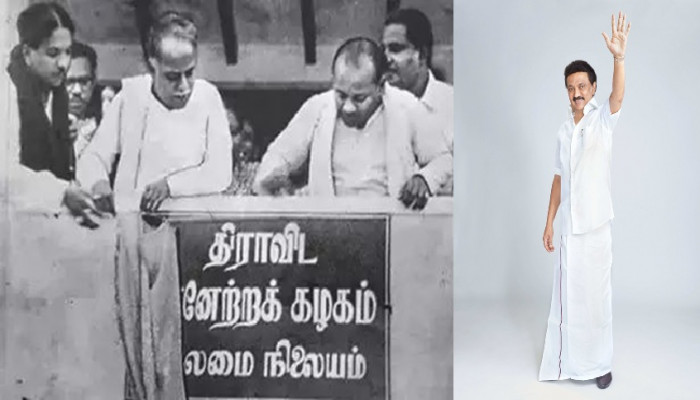
The Dravida Munnetra Kazhagam (DMK) occupies the central position in the current political landscape of Tamil Nadu, acting as the gravitational anchor of the Secular Progressive Alliance. This coalition remains a formidable apparatus for power preservation, having successfully integrated a diverse spectrum of ideological partners ranging from the Congress to the Left and Dalit parties. While the external observer might view this as a mere marriage of convenience, the ground reality reveals a meticulously engineered structure that benefits from both historical legacy and modern administrative reach. The party has transitioned from its role as an agitator to a quintessential establishment force, defining the contours of state discourse through its so-called Dravidian Model of governance. Understanding this pole is essential for any non-Tamil observer as it provides the baseline against which all other political movements and disruptions in the state are measured.
The secondary pillar of the Dravidian model rests on a triadic expansion of social security, industrial scale, and logistical infrastructure. The flagship Kalaignar Magalir Urimai Thogai represents the most significant shift in welfare philosophy by providing a monthly entitlement of one thousand rupees to over one crore women, effectively institutionalising a basic income for female heads of households. This is complemented by the Pudhumai Penn scheme, which incentivises higher education for girl students from government schools and the Vidiyal Payanam free bus travel initiative, which has radically altered female workforce participation. These interventions are designed to create a resilient social floor that sustains political loyalty through direct and tangible benefits. On the ground, these are not perceived as mere doles but as essential corrective measures for household economic stability.

Industrial momentum is anchored by high-technology manufacturing hubs that signal a departure from traditional low-value assembly. The recent inauguration of the nine thousand crore Tata Motors Jaguar Land Rover plant in Ranipet marks the first instance of premium luxury vehicles being fully manufactured in India rather than assembled from kits. This is bolstered by the Rs 16,000 crore commitment from Vietnamese electric vehicle giant VinFast in Thoothukudi and the massive solar cell manufacturing facility by TP Solar in Tirunelveli. These projects are strategically distributed across the state to prevent lopsided development in the Chennai belt and to leverage regional talent pools. Such a scale of industrialisation reflects a clinical intent to capture the global supply chain shifts in the automotive and green energy sectors.

The physical landscape of the state is being redrawn by three massive infrastructure projects that would resolve the bottlenecks of rapid urbanisation. The expansion of the Chennai Metro Phase-2, involving a revised investment of over Rs 61,000 crore, is the most ambitious rapid transit project in the country, intends to integrate the expanding city peripheries. Simultaneously, the development of the Parandur greenfield airport over 5000 acres is positioned as a critical hub for future cargo and passenger capacity exceeding 60 million people annually. The Kilambakkam bus terminus and its associated connectivity projects serve as the primary logistical conduit for the southern districts, relieving the saturated city core. These projects provide the skeletal strength required to support the state's aspirations of becoming a trillion-dollar economy by the end of the decade.

A striking paradox of the current administration is the calibrated balance between aggressive anti-BJP rhetoric and pragmatic administrative collaboration with the central government. While the political stage is frequently dominated by resolutions against linguistic imposition and the perceived misuse of central agencies, the functional machinery often works in lockstep with New Delhi to secure vital infrastructure.
The recent reclassification of Chennai Metro Phase-2 as a central sector project is a prime example, where the state secured 65% central funding despite ongoing public disputes over federal autonomy. This duality suggests a sophisticated strategy of preserving ideological purity for the electorate while maintaining the fiscal and developmental conduits necessary for state stability. On the ground, this is viewed as a necessary realism that prevents political friction from stalling the state's progress.
The proposed greenfield airport at Parandur, however, remains a contentious and unfulfilled ambition. While it is framed as a critical hub for future cargo and passenger capacity, the project has faced sustained resistance from local villagers, particularly in Ekanapuram, over the acquisition of agricultural land. The timeline for completion has already been deferred to 2030, and the government has recently pivoted towards a more cautious approach, avoiding coercive land acquisition ahead of the upcoming assembly elections. To manage the optics, the administration has introduced a relief package and built model houses to demonstrate resettlement benefits, yet the project remains in a state of delicate suspension. It serves as a reminder that even the most ambitious establishment projects can be slowed by the grit of local agrarian politics.

Alternative industrial initiatives are providing a more immediate sense of momentum, particularly through the establishment of specialised manufacturing clusters. The Pradhan Mantri Mega Integrated Textile Region and Apparel Park, known as PM MITRA, is being developed with an outlay of Rs 1683 crore to consolidate the state’s position in the global textile value chain. By diversifying away from singular mega projects into these distributed industrial parks, the administration maintains a steady narrative of progress that is less vulnerable to the localised resistance seen in Parandur.
The primary strength of the ruling party lies in its assured cadre base, and a consistently loyal minority vote bank that views the alliance as a bulwark against so-called fascist and communal forces. The party machinery is arguably the most disciplined in India, with a presence in every street and hamlet, ensuring that government schemes are translated into political capital at the booth level.
In the 2024 parliamentary elections, the alliance demonstrated its lethality by sweeping 39 seats, proving that its arithmetic remains largely invincible when the opposition is fragmented. This electoral dominance is underpinned by a narrative of protecting state autonomy, which secures a significant portion of the electorate that remains wary of national parties. Being in power provides the added advantage of institutional leverage, allowing the party to set the agenda and control the distribution of resources across the state.

Despite these structural advantages, a visible weakness has emerged in the form of perceptions of entrenched corruption and a deteriorating law and order situation. While official statistics suggest a marginal decline in certain crime categories, high-profile incidents and a surge in drug-related offences have created a palpable sense of unease among the middle class. The opposition has successfully capitalised on these narratives, framing the administration as soft on internal discipline and prone to local-level high-handedness by party functionaries. Corruption allegations in large-scale infrastructure projects and sand-mining remain a persistent thorn in the side of the government, providing ammunition for critics. For the common citizen, these issues often outweigh macroeconomic successes, as they directly impact the daily experience of safety and justice in the public sphere.
Opportunities for a second consecutive term are bolstered by the fact that anti-incumbency sentiment is currently being divided across multiple opposition fronts. The entry of new players like the Tamizhaga Vettri Kazhagam (TVK) and the persistent presence of the Naam Tamilar Katchi (NTK) ensure that the disgruntled vote is not consolidating behind a single challenger. Furthermore, the prevailing anti-BJP sentiment in the state continues to act as a glue for the Secular Progressive Alliance, keeping smaller partners from defecting to the rival camp. This fragmentation of the opposition essentially lowers the victory threshold for the ruling party, allowing it to win comfortably even with a slightly reduced vote share. As long as the opposition remains a multi-cornered contest, the establishment pole remains the primary beneficiary of the fractured electoral mathematics.
A significant threat looms in the unpredictable and largely untested voting patterns of the Gen Z demography, which may not share the same historical loyalty to the Dravidian movement. This younger cohort is increasingly influenced by digital narratives and individual charisma rather than traditional cadre discipline or legacy ideologies. Simultaneously, there is a growing sense of cadre disillusionment at the entrenched dynastic domination that spans the entire party hierarchy from the state cabinet down to district secretaries. When local leadership becomes a hereditary office, it stifles the aspirations of grassroots workers who have spent decades in the party service. If this disillusionment leads to apathy at the booth level, the formidable party machinery could see a sudden and unexpected decline in its operational efficiency during a close contest.
Udhayanidhi Stalin has been elevated to the position of Deputy Chief Minister, marking the formalisation of the third generation of the party leadership. His profile has evolved from that of a film personality to a serious political strategist who has been tasked with modernising the party's youth wing and overseeing special programme implementation. While his presence ensures a smooth succession and provides a youthful face to the party, it also serves as the primary lightning rod for accusations of dynastic politics. His role is critical in bridging the gap between the old guard and the younger voters, but his ideological assertions often trigger national controversies that the party must then navigate. For the DMK, he represents both the continuity of the family legacy and the potential risk of alienating those who seek a more meritocratic political structure.
The real X factor in this political equation remains the personal popularity of M.K. Stalin, whose image has been carefully cultivated as a steady and fatherly statesman. His appeal in Tamil Nadu mirrors the kind of singular leadership cult observed with Narendra Modi in Northern and Western India, where the leader is often perceived as being above the failures of his subordinates. Despite the controversies surrounding his ministers or the party cadre, Stalin himself maintains a high approval rating driven by his perceived sincerity and accessibility. He has successfully positioned himself as the ultimate protector of Tamil interests on the national stage, a persona that resonates even with those who might be critical of the DMK as a party. This personal capital is the insurance policy that the alliance relies upon to weather local-level anti-incumbency and administrative fatigue.

The strategic announcement of a one-time credit of Rs 5000 on 13th Feb to all women just prior to the notification of poll dates serves as a definitive masterstroke in electoral engineering. This move mirrors the high-impact direct benefit transfer models successfully employed in Northern and Western India, demonstrating a calculated adoption of populist mechanics to secure immediate voter sentiment. By bypassing traditional administrative delays and placing liquidity directly into the hands of the female electorate, the leadership has effectively neutralised building anti-incumbency in one swift stroke. Such tactical precision underscores the Chief Minister's command over the political narrative and his ability to leverage the state exchequer for strategic consolidation. This final intervention ensures that the establishment enters the campaign season with an overwhelming momentum that the fractured opposition will find increasingly difficult to disrupt.
To summarise, the 2026 election appears less an open contest and more a choreographed validation of the current power structure. The arithmetic of the Secular Progressive Alliance, bolstered by this last-minute chemistry of direct welfare, now presents a formidable barrier to any nascent political challenge. Consequently, the establishment pole remains firmly entrenched, and the prospect of a transition in Fort St George appears more distant than ever.
Disclaimer: The opinions expressed within this article are the personal opinions of the author. MyIndMakers is not responsible for the accuracy, completeness, suitability, or validity of any information on this article. All information is provided on an as-is basis. The information, facts or opinions appearing in the article do not reflect the views of MyindMakers and it does not assume any responsibility or liability for the same.



 Loading...please wait
Comments