



The Tectonic Shift in West Bengal: A Battle for the Soul of Democracy
- In Politics
- 01:31 PM, Apr 28, 2026
- Shwetank Bhushan
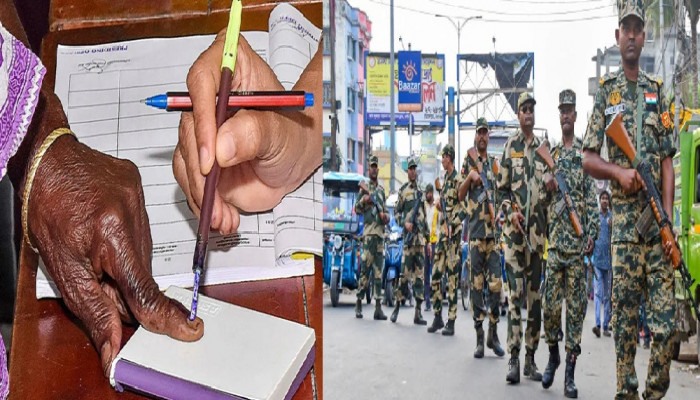
The West Bengal Assembly Election of 2026 has matured into a conflict that transcends simple partisan politics; it is a battle for the very soul of the state’s democratic machinery. For decades, West Bengal has been characterised as India’s most politically violent state, where the “scientific rigging” of electoral outcomes was a well-oiled tradition. However, as the 2026 cycle reaches its zenith, the narrative has shifted from the localised “Khela Hobe” theatre of 2021 to a central, symbolic, and institutional stage. This election is set to mark a tectonic shift in Indian politics, moving beyond rhetoric toward a fundamental restoration of the formal state.
The Legacy of Violence and Its Crumbling Pillars
Historically, Bengal’s elections have been a masterclass in atmospheric pressure through street violence. For over fifty years, starting under the Congress era of Siddhartha Shankar Ray and perfected during the Left Front’s 34-year reign, a cycle of institutionalised violence dictated the direction of the state. The ruling force traditionally used state machinery as a political tool to ensure that citizens preferred not to be seen voting for a losing opposition.
Since taking power in 2011, Mamata Banerjee has been accused of not only adopting but surpassing this model, weaponising fear to ensure opponents either remained home or faced severe consequences like arson and physical assault. The survival of the Trinamool Congress (TMC) regime has depended heavily on this perception of violence. In 2026, however, this pillar is finally crumbling. For the first time in five decades, violence may no longer be the primary factor determining the election’s outcome.
A Climate of Correction
The winds of change are blowing at a historical speed across the state. Acute anti-incumbency is being fuelled by a resonant misrule characterised by “political violence,” “tolabaji” (extortion), “syndicate” culture, and “excessive appeasement”. The TMC continues to carry the heavy baggage of the Sharada, Narada, and Rose-Valley scams. Furthermore, the Chief Minister’s unprecedented interference in central agency investigations, literally barging into probes to walk away with evidence, has signalled to the electorate that the law-and-order situation is in shambles.
The primary driver of this election, however, is the “politics of ridiculous appeasement”. Moves such as appointing a Muslim cleric to the Tarkeshwar Temple Board and curtailing Durga idol immersion for Moharram processions were already controversial; however, the response to sensitive issues like the RG Kar tragedy and Sandeshkhali has gone overboard. These incidents have hurt the honour of women and shifted the debate toward national security and social identity. Consequently, Mamata Banerjee is today a target of public ire as much as her party, like an English batter lost on a spinning Chennai turf.
The Silent Operator
While political rallies dominate the headlines, the true “Silent Operator” of 2026 is the Special Intensive Revision (SIR) of electoral rolls. This process represents a mechanical dismantling of the “Ghost Voter” infrastructure that has historically padded the gaps between victory and defeat.
The Purge of Millions: The SIR successfully removed approximately 91 lakh names from the voter lists across the state. This massive cleanup targeted “Logical Discrepancies,” deceased individuals, and double enrolments, effectively resetting the state’s political mathematics.
The Math of Collapse: With victory margins in Bengal often razor-thin, a clean electoral roll means that even a minor 3-4% swing in genuine voter sentiment can lead to a complete collapse of the ruling party’s majority.
The Institutional Shield: For the first time, a Supreme Court intervention led to the creation of 19 special tribunals and provided judicial oversight. This stripped the TMC of its ability to influence Booth Level Officers (BLOs), who now operate under a judicial rather than a political mandate.
Economic Stagnation and Youth Aspirations
Bengal was once a centre for industrial production, but under successive regimes, it has lagged significantly in providing employment. Local “strongmen” and “syndicates” frequently interfere with new industrial ventures, forcing investors to retreat.
This has created a profound generational shift. The new generation of voters is determining political loyalty based on opportunities rather than traditional slogans. Today’s youth desire a system that provides facilities and opportunities within West Bengal comparable to those in Bengaluru, Pune, or Delhi. When these ambitions are stifled, their anger becomes vocal, finding a voice in a new political alternative focused on nationalism, transparency, and development.
BJP’s Journey: From Margin to Mainstream
The BJP’s surge in Bengal is characterised as an “unreal” transformation. Before 2014, the party had virtually no presence in the state. This change was fuelled largely by Mamata Banerjee’s own “queen-size ego” and her incessant attacks on Prime Minister Modi, which paradoxically raised the BJP’s profile.
Between 2016 and 2019, the state’s politics were fundamentally altered as the BJP detected an undercurrent for change and worked to throw a surprise by securing a 41% vote share in the 2019 General Election. Since then, the party has mobilised every single booth. Today, PM Modi’s popularity as a tangible deliverer of change is at an all-time high. BJP Karyakartas have landed in Kolkata from all over India while the TMC’s previous “Khela Hobe” enthusiasm appears to have vanished.
Phased Election Impact and the 93% Turnout
The Election Commission’s decision to conduct a two-phase election with unprecedented presence of central forces with their armoured vehicles has allowed central forces to penetrate every corner of the state, instilling newfound confidence in the electorate.
Turnout: Phase 1 concluded with a record-breaking 92.9% turnout, the highest since independence. Historically, high turnouts in Bengal were synonymous with “chappa voting” (rigging), but in 2026, the absence of violence suggests a genuine surge of the “silent voter”.
Female Voter Pivot: Early data indicate that female participation has surpassed male turnout. This suggests that traditional “Lakshmir Bhandar” loyalty is being challenged by deeper concerns over safety and the desire for institutional change.
The Silent Voter: In this secure environment, a silent voter has emerged who records their independent choice without public declaration.
The Battle for Bhavanipore
A significant tactical shift in this cycle is the retreat from the rural gamble of Nandigram back to the urban heart of Bhavanipore. While the Chief Minister is attempting to leverage the constituency’s “mini-India” character to frame a message of pluralism, the BJP sees this as an opportunity to consolidate the urban vote. This is no longer a safe sanctuary; it is a prestige battle where the “Bhavanipore Model” is being tested against a polarised electoral reality.
The Final Phase
All eyes are now on the final phase involving 142 seats in Greater Kolkata, which will effectively write the script for the next government. In this direct fight between the TMC and BJP, there remains little room for the Congress or Left parties. While Congress shows some strength in Murshidabad and Malda, which is detrimental to the TMC, the broader battle remains bipolar.
The “Ghar Wapsi” of Democracy
The 2026 election is an election of correction. The SIR has ensured that only genuine citizens decide the future, and the record turnouts suggest they are doing so with unprecedented resolve. As the “Ghost Voters” vanish and the “Fear Factor” is deleted, the political landscape of Bengal is undergoing a shift so fundamental it will redefine the state for at least half a century.
On the 4th of May, the polls will do more than just count votes; they will witness the return of Bengal’s sovereign flavour and the restoration of the formal state. Just as the 2005 Bihar election ended the “Jungle Raj,” the 2026 Bengal election is poised to end the era of state-sponsored intimidation.
Disclaimer: The opinions expressed within this article are the personal opinions of the author. MyIndMakers is not responsible for the accuracy, completeness, suitability, or validity of any information on this article. All information is provided on an as-is basis. The information, facts or opinions appearing in the article do not reflect the views of MyindMakers and it does not assume any responsibility or liability for the same.



 Loading...please wait
Comments