




The Sabarimala Review Series: India’s Unfinished Decolonisation of Religion Part 1
- In Religion
- 11:57 AM, Apr 10, 2026
- His Holiness Jainacharya Yugbhushan Suriji
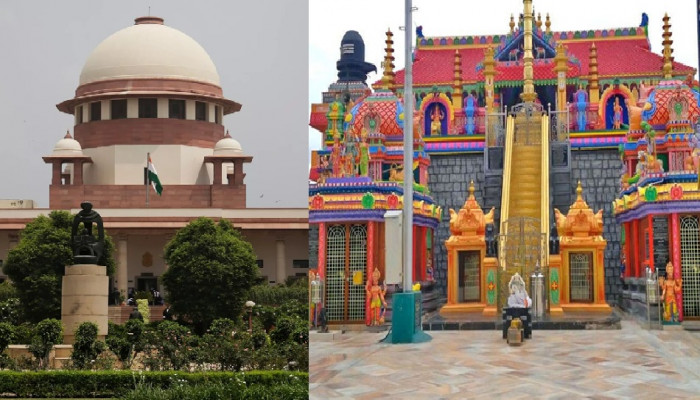
As a nine-judge bench reconvenes on Sabarimala, the foundational question remains: when did the State acquire jurisdiction over the spiritual?
On April 7, a nine-judge Constitutional Bench of the Supreme Court of India commenced hearing on what may be the most consequential reference on religious freedom since the Republic’s founding. The Sabarimala review, which encompasses questions about the entry of women into the Sabarimala Temple, is now nominally about whether women of certain ages may enter that particular shrine. But the seven questions framed by the Court go far deeper. They ask: What is the scope of religious freedom under Articles 25 and 26? What is an “essential religious practice”? Can courts determine the content of faith? And what is the relationship between individual rights and the autonomy of religious denominations?
These are vital questions. But they rest upon a prior question that has never been asked, let alone answered: when did the Indian State acquire the authority to govern the internal affairs of Indian religions in the first place?
This is not a rhetorical provocation. It is a constitutional one. Every power exercised by the State must be traceable to a legitimate source — consent, transfer, delegation, or constitutional grant. The State taxes because the Constitution authorises taxation. It legislates because legislative power is conferred. But when it comes to appointing committees over temples, administering religious endowments, determining what is “essential” to a faith from the judicial bench, and adjudicating spiritual practice — where is the source? There should be an answer to this. There is none.
When India became independent, the transfer of power was a documented legal event. The Indian Independence Act, 1947, specified what was being transferred. Section 6(1) declared that the Legislature of each new Dominion shall have full power to make laws for that Dominion. However, this can only mean temporal authority: territory, revenue, criminal law, and defence. As the constitutional scholar, H.M. Seervai made clear in his seminal work, the Constituent Assembly’s power was derivative — it came from the Independence Act. A derivative authority cannot exceed its source. It can only pass on what was handed to it.
Here is what was not handed to it: authority over the internal governance of Indian religions. The British Crown never claimed spiritual jurisdiction over Hinduism, Jainism, Sikhism, Buddhism, or Islam. It could not have — these traditions did not recognise the Crown as a spiritual authority, and the Crown never asserted itself as one. If the British never held this power, and the Constituent Assembly’s authority derived from the British transfer— where did the State’s jurisdiction over religion come from? It was not debated. It was not legislated. It was not consented to. It was assumed — silently, incrementally, and without any identifiable instrument of transfer.
To understand what was assumed, consider what existed before the assumption. Bharat is a nation whose political landscape was shaped by princely states, at times fragmented under the rule of many such states, at other times unified under a single powerful empire — from the Nanda Dynasty to the Maurya Empire under Chandragupta and Emperor Ashoka. Yet through all these shifts of temporal power, its religions endured as the true and unbroken succession in the civilisation. They were not informal. They were not ad hoc. They were structured, borderless, rule-bound, and self-perpetuating, based on independent philosophical foundations.
The Jagannath Temple of Puri was described by the Shri Jagannath Temple Administration Improvement Committee, chaired by the then Governor of Orissa, as “a small state within a big state.” The Shankaracharya Mathas, established in the eighth century, have maintained unbroken succession for twelve hundred years, each governing a cardinal direction of the subcontinent. The Ashta Mathas of Udupi have rotated the administration of Sri Krishna Math every two years for seven centuries, without a single IAS officer in sight. The Sikh Takhts remain self-governed by their Jathedars. The Jain sacred hills of Palitana and Parasnath have been governed under spiritual regimes with succession lineages tracing to the great Sudharma Swami. The Padmanabhaswamy Temple of Thiruvananthapuram was governed by the royal family as servants and custodians on behalf of the deity. The Buddhist Sangha operated under its Vinaya code. Each of these was — and is — a self-governing, self-perpetuating system, drawing authority not from any temporal source but from scriptural mandate, spiritual succession, and the voluntary allegiance of millions. The question is not whether they governed well. The question is whether any power was ever transferred from these institutions to the State.
No democratic nation claims the right to restructure Catholic governance, rewrite Catholic canon law, or appoint bureaucrats to manage Church properties. The Vatican’s institutional autonomy is globally recognised — not because Catholicism is more legitimate than other faiths, but because an obvious principle is being respected: the internal governance of a religion is not the State’s domain. Most Indian religions are older than the Vatican by centuries. Their scriptural codes predate European constitutional thought by nearly two millennia. Why is institutional religious autonomy obvious when applied to one religion and invisible when applied to others?
And closer to home: the first clause of the Magna Carta, in 1215, declared that the English Church shall be free and its rights undiminished. Even where the Crown is formally the Supreme Governor of the Church of England and twenty-six bishops sit in the House of Lords, the government does not regulate churches. India has zero spiritual representation in Parliament. Not one Acharya. Not one Jathedar. Yet the State owns and administers temples, manages and controls endowments, and adjudicates religious practice. What medieval England recognised for as a religion eight centuries ago, modern democratic India has not recognised for its own. This is the colonial residue.
We live in an age of sovereignty crises. Tax sovereignty erodes as corporations operate across borders. Data sovereignty is contested as governments scramble against tech giants. AI sovereignty is a race to ensure states are not governed by algorithms they did not build. Currency sovereignty is challenged by the rise of decentralised digital currencies. Trade sovereignty is constrained by GATT and WTO obligations. In each of these domains, the State once possessed the power and is now struggling to retain it against external actors. But spiritual sovereignty presents the exact reverse: here, the State never possessed the power in the first place — and yet it assumed it. Silently. Incrementally. Without any instrument of transfer.
In File No. 50/VII/33-Poll. of the National Archives of India lies a document that reads like a constitutional summons that was served but never answered. His Holiness Jagadguru Sree Sankaracharya Swami of Pushpagiri Pitham submitted an argument that no Indian jurist has ever refuted: that the Indian Legislature is incompetent to legislate on matters pertaining to ancient religions, since its members are elected on purely secular qualifications and no member has been nominated by any recognised religious body possessing authoritative knowledge on matters of religion. No religious head nominated these legislators. No denomination transferred its spiritual authority. Yet the Legislature and the courts presume ecclesiastical jurisdiction over scriptures they have never studied, whose parampara they have no part in.
As the nine-judge bench began hearings, the questions before it are of undeniable importance. But they all presuppose something that has never been established: that the State has jurisdiction over these matters at all. Show us the instrument of transfer. Until it is shown, every temple committee appointed by the State, every bureaucrat who administers a religious endowment, every court that determines what is “essential” to a faith it does not practice, exercises a jurisdiction it was never given.
Once India frees itself from this colonial entanglement and the State refrains from indulging in spiritual matters, its spiritual soft power will flourish. India’s religions predate its Republic by millennia. They shaped the civilisation’s foundations and outlived every dynasty that ever claimed dominion over this land. The spiritual sovereign is not asking the temporal sovereign for something that was taken. It is asking for recognition of something that was never given away.



 Loading...please wait
Comments