




The Indian Ocean: Major Power Projection arena for Global Actors
- In Military & Strategic Affairs
- 10:13 AM, Nov 24, 2020
- Soumik Pyne
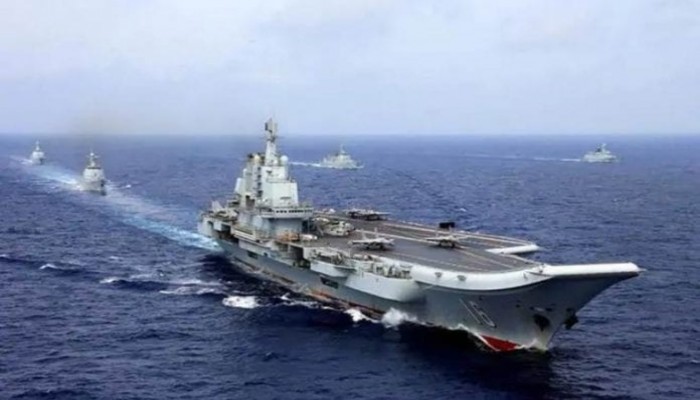
On the 17th of November 2020 the US Secretary of the Navy made plans public to deploy a dedicated U.S. Naval Fleet in the Indian Ocean. If this fleet is composed along the lines of the 5th and 7th fleets currently deployed in the Persian Gulf and Japan, it would likely mean that the USN would have an active presence of at least 20 deployed vessels with at least one carrier battle group with 75 combat aircraft permanently in the Indian Ocean. It would also indicate a US Naval deployment of up to five Carriers and associated vessels at any given time in Asian waters.
To be fair the USA has never shied away from its interest in the Indian Ocean, as long ago as in 1890, Rear Admiral Alfred Thayer Mahan of the USA affirmed, that “whoever controls the Indian Ocean will dominate Asia, the destiny of the world will be decided on its waters”. The USA began acting on those initial strategies as British power in Asia began to wane with alliances like SEATO (South East Asian Treaty Organisation), CENTO (Central Treaty Organisation) and ANZUS (Australia New Zealand United States) designed to ensure an American foothold in the region.
The 5th fleet at Bahrain was explicitly deployed to secure Oil supplies from the Middle East and ensure these supplies travel safely through the Bab al Mandab and the Suez Canal to help run factories and provide energy to Europe and America. It is to ensure continuous American military presence that the US currently operates two Military bases in the Indian Ocean namely the Island base of Diego Garcia and Camp Lemonier in Djibouti. This military presence served to ensure Energy supplies to the USA continued without interruption. In the Cold War era, they deterred any sort of a permanent Soviet Naval presence in the region.
It is interesting to note here that a permanent US presence in the Indian Ocean was precipitated by a request by India for assistance against the Chinese during the 1962 conflict. When then Prime Minister Jawaharlal Nehru requested Washington for support President John F. Kennedy dispatched the US aircraft carrier USS Kitty Hawk to provide air support to India if the invading Chinese military overran Assam and drove south to Calcutta. But a ceasefire was reached before the carrier arrived.
This in turn catalysed Washington to look for a more forward presence in the Indian Ocean as a bulwark against Chinese and Soviet military adventurism. By 1964 US planners had decided to build a base on Diego Garcia in the Chagos Archipelago. The then British Rulers of the Island chain were all too happy to lease Diego Garcia to the USA for 50 yrs and the island passed hands in 1966.
Diego Garcia lies nearly at the centre of the Indian Ocean and is approximately equidistant from all chokepoints. This base already has prepositioned infrastructure capable of hosting an Aircraft carrier. Since 1980 an Airfield capable of being used by the largest and heaviest combat aircraft in the US arsenal was in place. It is because of these advantages that the base has played an important role in all US air campaigns in the Middle East since 1991.
The 21st century brought with it a new challenge though. China is fast building itself the world’s largest Navy and has begun a program of building its own bases in the Indian Ocean as well. Chinese have already operationalized a Naval port and base at Djibouti that overlooks the Bab Al Mandab and are building an enclave at Gwadar in Pakistan where up to 500,000 Chinese citizens could live and work.
Gwadar is expected to become home to a sizable Chinese military presence including a Marine detachment and by some accounts the PLAN wants to base an aircraft carrier there as well. Apart from these the Chinese are involved in infrastructure and military upgradation projects in nearly all nations of the Northern Indian Ocean with the exception of India. This includes a 99-year lease of Hambantota port in Sri Lanka. While the Chinese Navy began its first deployments into the Indian Ocean in 2008 under the aegis of the multinational anti-Piracy patrols, they have now expanded their presence. Currently 7 to8 Chinese war ships have a permanent presence in the Indian Ocean at any given time. It is to address these challenges that the USA has proposed the deployment of the aforementioned 1st fleet.
Apart from China and the USA the Indian Ocean is also home to another major military power in the shape of France. It is worth noting that more than a million French citizens live and work in the French territories of Reunion & Mayotte. France has been a member state of the Indian Ocean commission for over thirty years now. France maintains a permanent military presence on both island territories under the aegis of the FASZOI or Forces armées de la zone sud de l'océan Indien, this includes two regiments of Marine commandos and at least two light frigates permanently based to the islands.
France also maintains a permanent detachment of 1500 Special forces troops in Djibouti. Along with the USA, China is the third major power with a security presence in the nation. France wary of increasing Chinese activity in the Indian Ocean, is looking to upgrade its military presence in the region. Russia is planning to entering the Indian Ocean arena and President Putin approved a plan to build a new Russian Navy Logistics base in Sudan.
This facility once complete will host four vessels including nuclear powered ships and have a permanent complement of 300 personnel. Some reports also indicate Russia may base an ELINT station and Long-Range Air defence system in Sudan as well. Russian plan to acquire Pipavav Shipyards in Gujarat India could give Moscow two footholds into the Indian Ocean Region.
Whereas India has allied relationships with the like-minded French, Russian and American Navies at the moment and there is no real immediate threat we face from these forces the case of the Chinese forces is rather different. China is a long-standing ally of Pakistan which has fought numerous skirmishes with India over the Himalayas with most recent skirmish earlier this year.
Multiple researchers have projected an increase in the PLAN fleet to over 550 warships by 2030. These numbers along with the China-Pakistan alliance could mean a sizable Chinese fleet based at Gwadar as well. China may additionally pass on older warships to the beleaguered Pakistani Navy. China has also become a major naval supplier to Bangladesh and this foothold in the Bay of Bengal points to increasing security risks for India unless concrete steps are taken to stymie such moves.
India could also face challenges in operating between navies like the USN and Russian Navy given that it is allied to both. But the aforesaid navies are not allied themselves. Such challenges could rise in the face of an event outside the IOR like a hypothetical American intervention in the Donbass or a Chinese invasion of Taiwan supported by Russia. Diplomatic and military guidelines for such situations become all the more necessary now that repercussions could spill over into the IOR.
It is safe to state that the Indian Navy now finds itself as the steward of an Ocean that is fast becoming a hotbed of Great Power competition. Indian Government needs to look south towards the vast maritime territories of India and work to strengthen its presence with renewed vigour lest India be relegated to an ancillary position. Indian Government has moved rapidly to build up alliances with all like-minded powers in the Indian Ocean region including access to Naval Bases in Indonesia, Oman, Reunion & Mauritius amongst others.
The Indian Navy has engaged in a variety of multinational exercises like “SIMBEX”, “MILAN” and “MALABAR” designed to help improve interoperability and increase coordination between allied forces in the Indian Ocean.
The Navy is working out possibilities for joint patrolling with France and Bangladesh as well. That said, the key to any maritime focus and countering Chinese influence lies in the number of hulls the Navy can deploy and as such it all boils down to funds.
India spends only 15% of its total military expenditure on its Navy compared to as much as 30% by the USA and nearly 25% by Australia and Japan.
During FY2017-2018, India’s navy requested $5.2 billion but was only allocated $2.9 billion, such reduction in spending only serves to stymie the Indian Navy's plan for a 200-ship fleet by 2027 to maintain its primacy. Recent reports indicate that the funds crunch has led to the number of planned vessels getting reduced by 12.5% to 175 ships. An additional requirement of $2.82 billion to help pay for new shipbuilding projects was projected in 2019 but denied clearance by the Finance ministry.
The Indian Navy already has a very critical task of protecting the nearly 7500 sqkm coastline and vast EEZ of India alongside protecting the SLOC’s that carry up to 90% of Indian trade by volume. The aforesaid notwithstanding challenges for the Indian Navy and Indian national Maritime power in the Indian Ocean as the region becomes a centre for geopolitical contest between superpowers.
While the Indian government has taken the diplomatic initiative and engaged countries in the region to a degree of success, this will be a short-lived reprieve without necessary investments in Hard-power capabilities projection. India’s vision of remaining the unchallenged primary naval power and steward of the Ocean that bears its name will face serious challenges unless the government sanctions necessary investment today to preserve the same.
Image Credit: The Federal News
Disclaimer: The opinions expressed within this article are the personal opinions of the author. MyIndMakers is not responsible for the accuracy, completeness, suitability, or validity of any information on this article. All information is provided on an as-is basis. The information, facts or opinions appearing in the article do not reflect the views of MyindMakers and it does not assume any responsibility or liability for the same.


 Loading...please wait
Comments