




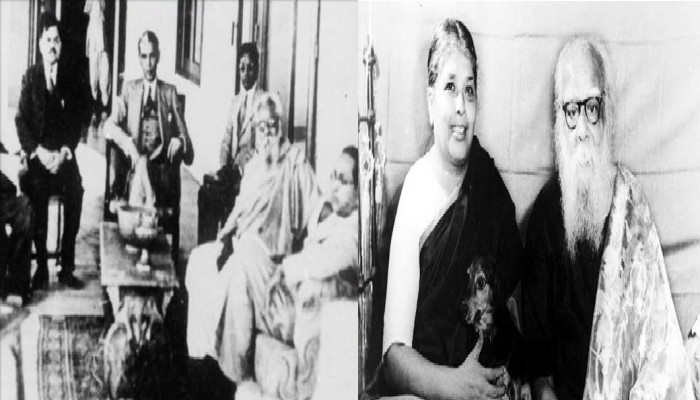
How E.V. Ramasamy built a movement on hatred of Hindu civilisation, contempt for Tamil tradition, and alignment with India's colonial oppressors
The Making of a Demagogue
Erode Venkatappa Ramasamy — who styled himself Periyar, meaning 'the great one' — is today celebrated by Dravidian parties as a social reformer, a rationalist, and the father of Tamil self-respect. Statues of him dot Tamil Nadu's public squares. His image adorns government buildings. His birth anniversary is a state holiday. Yet an honest examination of his ideas, his politics, his personal conduct, and his ideological alliances reveals a figure far more complex and troubling: a man whose legacy is inseparable from racial hatred, anti-national politics, contempt for his own Tamil civilisation, alignment with colonial and separatist forces, and a brand of 'rationalism' that was selective, opportunistic, and ultimately in the service of power rather than truth.
Born in 1879 to a prosperous Naicker trading family in Erode, Ramasamy did not emerge from the dispossessed communities whose cause he claimed to champion. He was a wealthy man of the dominant non-Brahmin landed class who found in the Justice Party's anti-Brahmin politics a vehicle for his personal ambitions. His early involvement with the Indian National Congress ended in acrimony — he resigned in 1925, claiming that the Congress was dominated by Brahmins — and he thereafter became one of the Congress's most venomous critics, aligning consistently with colonial authority and separatist forces.
The Self-Respect Movement: Whose Respect?
Periyar's Self-Respect Movement, launched in 1925, presented itself as a campaign for social dignity and against Brahmin priestly monopoly over Hindu religious life. Some of its goals — encouraging inter-caste marriages, challenging untouchability, promoting widow remarriage — aligned with genuine reform impulses that were also present within the Hindu reform movements of the period, including the Arya Samaj and various Vaishnava and Shaiva reform groups.
But Periyar's programme went far beyond social reform. It was a frontal assault on the entirety of Hindu civilisation. He directed his followers to burn images of Rama. He declared the Ramayana — one of the most beloved texts of Tamil spiritual life — to be a North Indian Aryan propaganda document designed to justify the subjugation of Dravidians. He smashed Hindu idols in public. He presided over ceremonies mocking Hindu marriage rites. He made statements about the Hindu gods that were designed not to reform but to destroy faith.
Periyar's 'rationalism' was not applied universally. He never subjected Islam or Christianity to the same corrosive ridicule he reserved for Hinduism. His rationalism was not a philosophical method — it was a weapon, and it had a single target: the Hindu faith of the Tamil people.
This selective scepticism reveals the true character of Periyar's project. A genuine rationalist would subject all truth claims — including those of the Abrahamic faiths — to critical scrutiny. Periyar praised Islam for its egalitarianism and was sympathetic to Christian missionary activity, while directing his most virulent attacks at Hinduism. His so-called rationalism was, in reality, a sophisticated form of iconoclasm directed exclusively at the religious tradition of his own people — precisely the tradition that the colonial-missionary complex had identified as the primary obstacle to their social and spiritual control.
Anti-Tamil: The Man Who Insulted the Tamil Language
One of the most bitterly ironic aspects of Periyar's legacy is that this supposed champion of Tamil identity expressed open contempt for the Tamil language and its classical heritage. Periyar repeatedly stated that Tamil was an inferior language and that Tamils should adopt a simpler, reformed script. He opposed the celebration of classical Tamil literature and dismissed the Sangam corpus as Brahmin-influenced.
His movement promoted a simplification of Tamil script — not out of pedagogical concern but out of ideological hostility to the Brahmin scholars who had historically been custodians of classical Tamil learning. In doing so, he alienated himself from the authentic Tamil literary tradition and demonstrated that his project was anti-Hindu before it was pro-Tamil. The Tamil language, with its deep Shaivite devotional literature — the Thevaram, the Tiruvachakam, the Divya Prabandham — was inseparable from Hindu civilisation. To attack one was necessarily to diminish the other.
The Nayanmars and the Alwars — Tamil poet-saints who produced some of humanity's most exquisite devotional literature — were products of the very Hindu tradition Periyar spent his life attacking. Periyar could not celebrate Tamil without confronting this devotional heritage, so he chose to caricature it and marginalise it. His intellectual heirs in the DMK have continued this tradition, using Tamil pride rhetorically while systematically undermining the Hindu civilisational foundation on which Tamil culture rests.
Anti-Dalit in Practice
Periyar's movement claimed to champion Dalit liberation, but the historical record reveals a more complex and troubling picture. The Self-Respect Movement was predominantly led by and served the interests of dominant non-Brahmin castes — Vellalars, Mudaliars, Naidus — who used anti-Brahminism to displace Brahmin communities from positions of influence and occupy those positions themselves. The material condition of Dalit communities in Tamil Nadu through the decades of Dravidian political dominance tells its own story.
Tamil Nadu, under continuous DMK and AIADMK rule — both ideologically rooted in Periyarism — has some of the worst records on manual scavenging, Dalit land rights, and caste atrocities in South India. The state has seen repeated incidents of violence against Dalits in villages dominated by intermediate castes — the very communities whose political interests Periyarism served. Dalit leaders who have risen independently of Dravidian political structures have consistently complained of co-optation, marginalisation, and instrumentalisation by the DMK.
Periyarism did not liberate Dalits — it replaced Brahmin privilege with dominant non-Brahmin privilege, while keeping Dalit communities in structural subordination. The beneficiaries of Dravidian politics have been the Vellalars and Mudaliars, not the communities at the bottom of Tamil Nadu's social hierarchy.
Anti-National: Periyar, Jinnah, and the Case for Tamil Separatism
Periyar's political trajectory during the crucial years of the independence struggle was not that of a neutral social reformer standing apart from electoral politics — it was that of an active opponent of Indian independence and an ally of the forces of partition. In 1940, Periyar publicly supported Muhammad Ali Jinnah's two-nation theory, arguing that just as Muslims were a separate nation, so too were Dravidians. He called for a separate Dravida Nadu — an independent state carved out of South India.
At the Dravidar Kazhagam conference in Madurai in 1947, just days before India's independence, Periyar declared that August 15 — Independence Day — should be observed as a day of mourning by Dravidians, as it represented the transfer of power from British colonisers to Aryan-Brahmin colonisers. This was not the language of a reformer — it was the language of a separatist and a collaborator with colonial rule.
Periyar's alignment with Jinnah's separatism was not incidental. Both men shared a fundamental premise: that India was not one nation but a collection of communities that could not coexist under a shared constitutional framework. Both men's politics ultimately served the British interest in preventing a united, independent India from emerging. While Gandhi, Nehru, Patel, Rajaji, and Ambedkar worked within — however contentiously — the framework of Indian unity, Periyar and Jinnah worked outside it.
The Dravidar Kazhagam under Periyar was not proscribed or significantly constrained by the colonial government — unlike the Congress, whose leaders were imprisoned repeatedly. This differential treatment speaks volumes about whose interests the respective movements served.
Pro-Colonial, Anti-Freedom
Periyar's hostility to the freedom struggle was not merely a matter of competing with Congress for political space — it was ideological. He consistently argued that British rule was preferable to 'Brahmin' rule, that independence would mean Aryan domination of Dravidians, and that the masses should be wary of the Indian nationalist project. During the Quit India Movement of 1942 — the most decisive mass uprising against British colonialism — Periyar actively discouraged participation, warning that an independent India would be a Brahmin India.
This position put Periyar squarely on the side of the colonial administration at the most crucial moment of India's national struggle. While young men and women across Tamil Nadu were risking their lives and freedom in response to Gandhi's call, Periyar was counselling collaboration with the oppressor. His followers disrupted Congress meetings, and his publications criticised the freedom movement.
The contrast with Subramania Bharati — Periyar's contemporary and fellow Tamil — could not be starker. Bharati wrote revolutionary poetry against British rule, lived in exile to avoid arrest, and died impoverished but lionised. Periyar collaborated with British power and died immensely wealthy. History's verdict on whose side each man was should be unambiguous.
The Fall of Periyar: Contradictions and Controversies
Periyar's later years were marked by mounting contradictions that exposed the gap between his proclaimed principles and his personal conduct. He advocated atheism and social equality throughout his public career; yet he married his ward Maniammai in 1949 when he was 70 years old, and she was 32. The marriage — performed with traditional rites he had spent decades condemning — was widely mocked as a betrayal of his principles and generated significant internal conflict within the Dravidar Kazhagam.
This marriage was also a political trigger. It contributed to the split between Periyar and his most able lieutenant, C.N. Annadurai, who left the DK to form the Dravida Munnetra Kazhagam (DMK) in 1949. The split was ostensibly over the succession to Periyar's movement and the question of whether to seek accommodation within the Indian political system, but personal animosity and the Maniammai marriage were significant catalysts.
Periyar continued to hold court in his later years, issuing statements, attending conferences, and maintaining his aura as the grand old man of Dravidian politics. But his movement was divided, his personal authority diminished, and his ideological legacy increasingly appropriated by the very dynastic politics he had nominally opposed. He died in 1973 at the age of 94, having lived long enough to see the movement he created become the vehicle for precisely the kind of corrupt, hierarchical power structure he had claimed to fight against.
Periyar's Real Legacy: Division, Hostility, and Political Exploitation
The honest assessment of Periyar's legacy must grapple with what his ideas actually produced in Tamil Nadu over the century since he launched his movement. The social reforms he advocated — inter-caste marriage, rejection of untouchability, women's education — were achieved not because of Periyarite politics but because of constitutional provisions, judicial interventions, and the broader reformist impulses of Indian democracy. These reforms occurred across India, including in states with no Dravidian political tradition.
What Periyar's specific ideological contribution produced was: a political culture saturated with anti-Hindu rhetoric that has normalised the desecration of Hindu symbols and the mockery of Hindu worship; a Tamil public sphere where hostility to Sanskrit, to North India, and to the national mainstream has become a badge of identity; a tradition of dynastic politics, institutional corruption, and electoral populism that has severely degraded Tamil Nadu's governance; and a generation of political leaders who use the vocabulary of social justice while enriching themselves and their families at public expense.
Tamil Nadu's great intellectual, spiritual, and literary tradition — the Shaiva Siddhanta philosophy, the Bhakti poetry of the Nayanmars, the ethical wisdom of Tiruvalluvar, the maritime enterprise of the Cholas — was not created by Periyar's movement. It was created by a civilisation that Periyar's movement has spent a century trying to destroy. The reclamation of Tamil pride from Periyarite ideology is the central task of Tamil cultural renewal.
Conclusion
Periyar was not a rationalist — he was a selective iconoclast. He was not a social reformer — he was an anti-Hindu agitator. He was not a Tamil patriot — he was an opponent of Indian independence who aligned with colonial power against his own people's liberation. The cult of Periyar that continues to dominate Tamil Nadu's political culture is built on myths, suppressions, and deliberate historical distortions. Tamil people deserve better than a political heritage rooted in manufactured hatred. The path to genuine Tamil renaissance runs through, not away from, the Hindu civilisational tradition that produced the greatest flowers of Tamil culture.
Part 4: The Dravidian Deception: Birth of DMK, Dynastic Consolidation and Competitive Communalism Part 4 https://myind.net/Home/viewArticle/the-dravidian-deception-birth-of-dmk-dynastic-consolidation-and-competitive-communalism-part-4



 Loading...please wait
Comments