




The Downsides of Population Control Policy
- In Current Affairs
- 12:48 PM, Jul 15, 2021
- Ankita Dutta
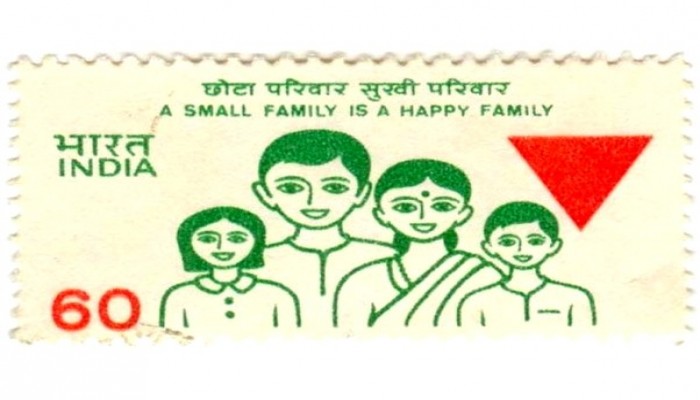
At the very outset, we need to understand that demographics is not a linear business. India is a signatory to the International Conference on Population and Development Declaration. Signed in 1994, the Declaration advocates free speech and honours the reproductive rights of couples to decide freely and responsibly both the number and spacing of children. Going by this logic, it means that Population Control Laws are undemocratic and decisions limiting procreation are not for the Government to make. It also implies that citizens should have the right to decide the number of children they want. So, what has now prompted our leaders to seriously think about bringing in a Population Control Legislation? Is it subtly informed by the concern of limiting the growth rate of the population of a specific religious community? In such a case, what are its consequences going to be for other communities? Let us analyse this issue further.
After long years of research, it has been proven by many famous demographers like Mari Bhat, Hill Kulu, etc. that the fertility rate across Muslim population groups remains high compared to other communities, and this cannot be attributed to their levels of education or economic status. Let us understand this phenomenon with the example of Kerala. The TFR of Kerala stands at 1.56 as per NFHS-4 data (2015-16), which is much lower than what the proponents of the Population Control Law want. If we look closely, Kerala’s Hindu TFR is 1.42 while the Muslim TFR is 1.86. Although both are below 2, but the TFR ratio is 1.86/1.42 = 1.31, which means that the Muslim TFR is 31% higher in Kerala, compared to only 24% higher for India. Thus, in no way have higher literacy rates resulted in bringing down the high TFR among the Muslims of Kerala. So, isn’t it too simplistic to think that by spreading more education and awareness, the problem is going to be solved?
In such a scenario, the most pertinent question that arises here is – Will a legal mechanism, i.e. the Population Control Legislation in this regard, be able to solve a problem that is undeniably religious in nature? Hadith No. 3371, Book No. 8 of the Sahih-Muslim titled Kitab Al-Nikah (The Book of Marriage) mentions the concept of Al-Azl in Chapter No. 22. In Islamic theology, Al-Azl (Coitus interruptus or the withdrawal method of sexual intercourse) is considered to be useless if the objective is to prevent conception, for Muslims believe that it is something which rests only in the hands of Allah.
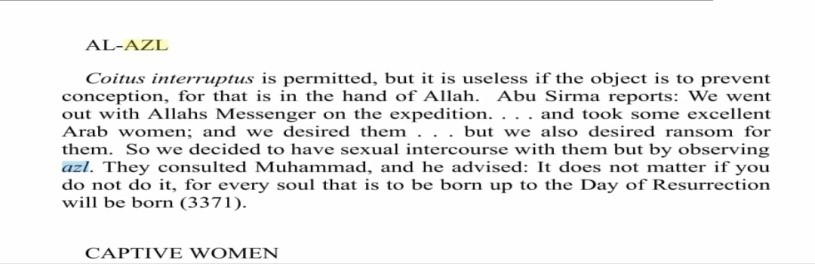
The Indian Express had published an article titled ‘The Polygamy Myth’ in July, 2017 by former Chief Election Commissioner S.Y. Quraishi where he referred to the concepts of Tawakkul (Reliance on Allah), Qadr (Pre-destination), and Rizq (Provision) in the context of family planning in Islam. As mentioned by Quraishi in his article, Sura 6:152 and 17:31 of the Al-Quran reads – “Do not kill your children (for fear of poverty); We make provisions for you, and for them too.” Sura 16:72 further mentions – “And Allah has made for you, your mates from yourselves and made for you, out of them, children and grandchildren.”
It was just two years back that AIUDF chief and perfume-baron Maulana Badruddin Ajmal had slammed the RSS and the Government of Assam over the introduction of the two-child policy in the state, while asking the Muslims to give birth to as many children as they wanted. Most importantly, he had clearly mentioned that Muslims are not bound by any such laws and hence they will continue to produce children. Islam as a political ideology survives on the sheer strength of numbers and consequent demographic change. Deliberate population explosion by the Muslims is motivated by a marauding zeal to outnumber the kafirs (non-believers).
This mindset is partially influenced by the Wahhabi culture of terrorising non-Muslim communities and ensuring their complete extinction from this planet. Understood from this perspective, hasn’t it been a religious motivation among all Muslims across the world to give more births, such that the tables of demography and political power too, are turned in their favour eventually? In this sense, making them ineligible from accessing the benefits of Government schemes can only be a short-term solution for population control.
Let us now discuss the case of Assam. Assam has been able to maintain its annual population growth rate at 1.6%, but it was found during the 2001 and 2011 Censuses that the Muslim population is growing at a rate of 29%. In contrast, the Hindu population in the state has come down from 22% to 16% and further reduced to 10% during the latest Censuses. From 1981-2011, the overall average growth rate of the population of Assam was 20.07%. This was much below the national average of 21.03% during the same period.
As per the Census data of 2011, Muslims comprise 34.22% of the 3.12 crore population of Assam. Dhubri, the constituency of Maulana Badruddin Ajmal, had the largest Muslim population of 80%. Barpeta, another border district in Lower Assam, showed the highest growth rate of Muslim population between the two Census years, i.e. around 12%. Muslim votes are a determining factor in at least 30 to 35 seats out of the total 126 seats in the Assam Legislative Assembly. Out of Assam’s 34 districts, 12% and more Muslim population resides in 19 districts. In 7 districts (out of these 19 districts), the Muslim population constitutes 50% or more.
Till almost the turn of the last century, the overwhelmingly Muslim-dominated Dhubri district of Lower Assam bordering Bangladesh was a Hindu-majority area. 80% of the population in Dhubri town was that of Hindus till the early 1920s. It was once a part of the Koch-Rajbongshi kingdom of present-day Cooch-Behar in West Bengal. Dhubri also boasted of prosperous Rajbongshi zamindaris such as Golakganj and Gauripur. But, at present, the Rajbongshis account for a mere 11% of the electorate of Dhubri district.
In Assam, there has been a continuous disappearance of non-Muslim communities from places such as Dhubri over the years. Innumerable villages in districts like Barpeta, Dhubri, Goalpara, and Nagaon that were once Hindu-majority have now become Muslim-majority. A Report on ‘Illegal Migration into Assam’ submitted to the President of India by the then Governor of Assam Lt. Gen (Retd.) S.K. Sinha in 1998 clearly showed that the Muslim population of Assam rose by 77.42% in 1991 from what it was in 1971. Comparatively, in the same period, the Hindu population had risen by a mere 41.89%.
The ramifications of this population explosion of the Muslims have now come to adversely impact the vital statistics of the state in terms of basic self-sufficient sustenance. Hindus in Assam who think that the two-child policy will come as a panacea for all the socio-economic ills plaguing their state must re-consider this over-simplistic understanding of this piece of legislation.
E.g. in certain areas of Dhubri, Barpeta, and Nagaon districts of Assam such as Jania, Senga, Baghbar, Dhing, etc. where there has been a complete transfer of political power into the hands of the Muslims, any possibility of the transfer of power back to the Hindu population is rather bleak. Unless an error-free delimitation exercise takes place in these areas, it is too naïve to expect that the Population Control Law will miraculously save Hindu demography by checking the ever-increasing growth of the Muslim population. If even in the remotest of possibilities power comes to rest in the hands of any non-Muslim in such areas, wouldn’t the Muslims of that particular area become the vote-banks of that leader? After all, the end objective of all political parties and their leaders is to win elections by whatever means possible.
This also means that any non-Muslim leader who perceives the Muslims as his/her vote-bank will turn a blind eye when they break the Two Child Policy. What is then the guarantee that he/she will not make use of the legal loopholes in this same Policy to selectively enforce it against the Hindus of that particular area/constituency, primarily with the purpose of enlarging their own vote-bank? Moreover, it is not difficult for anyone familiar with the politics and demography of Assam to understand which political parties will be the real benefactors in such a situation. As a result, leaders of these parties will be able to legally construct a specific group of population that is socially and politically suited to their own brand of appeasement politics. This would be further assisted by a corrupt bureaucracy, both in the higher and the lower ranks, where the infiltration of Islamists has now become an open secret.
Also, while coming up with a Population Control Policy, it is very important that we learn from the Chinese example of the failure of coercive population policies. It shows that any coercion by the state to have a certain number of children is counter-productive that can lead to serious demographic distortions. In the words of Sudha Deshpande, a former Professor of Demography at the University of Mumbai – “Our country is not like China where some kind of stern action could be taken against couples who broke the rules limiting the number of children.” She says that Population Control Laws are the vestiges of ‘hum do, hamare do’ Family Planning Programmes that were introduced in the early decades after Independence, e.g. Government-sponsored ads on Doordarshan about contraceptives. The One-Child Policy has today led to a serious population crisis in China, along with an abnormally skewed male-female sex ratio.
Given the strong cultural preference for a son that still exists in our society, stringent population control measures can result in an increasing number of sex-selective, unsafe abortions, female infanticide, etc. This means that if families are disincentivised from having more than two children, they are more likely to abort or abandon a daughter in the hope of having a son, which could worsen the sex ratio of the country. China is a classic example of this phenomenon. The dramatic excess of men in the Chinese population and the subsequent shortage of women has given rise to a lucrative bride market in China, besides forced prostitution. Many bachelors from the rural areas of China resort to mail-order-brides from the neighbouring countries of Southeast Asia such as Vietnam, Cambodia, the Philippines, etc. which has fuelled a sinister business of bride trafficking in China. Although the one-child policy of China recently ended in the year 2015, but its consequences still continue to be felt in the Chinese society.
After the Census of 1991, several Indian states prohibited those who had more than two children from holding any panchayat post. But, instead of better family planning or population control, this had several unintended consequences. According to the results of a study that spanned Andhra Pradesh, Madhya Pradesh, Haryana, Odisha, and Rajasthan, it was found that men were deserting or divorcing their wives if they became pregnant for the third time, besides an increase in the cases of sex determination and abortions. Also, given the persisting preference for sons, many families were found to be going in for repeated pregnancies. These are some of the issues that can negatively impact families, creating unnecessary marital discord.
If a family wants the abortion to be remained hidden, especially if the foetus is a female, and if there is lack of access to registered medical practitioners, it is very much possible that quacks would perform unlawful abortions that could be dangerous for the woman’s health. Moreover, if doctors or other service providers are incentivised for sterilization operations (considering that one of the most popular contraceptive methods even today is female sterilization), it could result in a dangerous situation where doctors do many such operations in a day without quality care. E.g. in the year 2014, in Bilaspur district of Chhattisgarh, 13 women died after sterilisation of 83 women who were operated on a single day. Can women’s interests and their health needs be compromised for the attainment of a pre-determined set of demographic targets?
Moreover, it must be remembered that religion-based uptake of sterilization is vastly different for both Hindus and Muslims. The data in NFHS-3 reveals that sterilization is twice as common among Hindus compared to Muslims. While 32.78% of Hindu respondents were sterilized, the number for Muslims sterilized was only 16.60%. As written by S.R. Swaroop, author of the book Truth About Muslim Population Explosion in India, there may be two possible reasons behind it. One may be that the Governments actively target Hindu women to increase the number of sterilizations, or Hindus are themselves more inclined to use this contraceptive method, leading to a permanent loss of fertility. It is difficult to pick one reason out of the two, but the outcome is the same in both the cases.
So, if sterilization data is used as the benchmark, then Hindus should be hit more by the Population Control Policy as well. Either the Government will target them more or as ever-obedient and law-abiding citizens, they will themselves be more than happy to obey the law themselves. In both these scenarios, this is only going to exacerbate the demographic problem for Hindus rather than improve it. The root of the problem, i.e. Islam, will be worsened further, besides creating extra problems for tax generation for the Hindus, etc. Hence, the proponents of Population Control Laws need to understand that in case the Government were to formulate any policy which excludes families with more than two children from the purview of Government schemes, jobs, etc. approximately more than 80% of the affected families in the long-term would largely be Hindus.
The Government also needs to look at the highly complicated and sensitive issue of Population Control with lessons from other ageing nations like Japan and devise policy outcomes appropriately. These countries are now looking at international migration of young working-age population because of a fast-declining workforce. Moreover, with no young people to look after, an increasingly ageing population becomes a financial burden on the state exchequer. A coercive population policy can also adversely impact the national security of a country in the long-term, while providing a few power-hungry politicians a fertile ground for political appeasement in the short-term.
Coming to the question of population increase and environmental degradation, a direct correlation between the two cannot be established. Let us understand this with an example. For years, the Chinese Communist Party (CCP) asserted that the One-Child Policy averted between 300-400 million births, about the size of the American population. However, such claims are now subject to suspicion, given the secretive track-record of the CCP. Some demographers estimate that the real number of births averted in China was probably between 100-200 million at most. In all probabilities, the figures have been inflated by China. Based on these inflated claims, The Economist magazine had ranked the One-Child policy of China as one of the most important stratagems to have slowed down global warming, more effective than even preserving the Brazilian rainforests or improved US emission standards.
No doubt, increasing numbers contribute to carbon emissions and environmental pollution, but this is only a part of the story. After all, the United States has less than 5% of the world’s population but contributes about 15% of the global carbon emissions. China, despite having drastically curbed its population, is still among one of the world’s top carbon polluter. Beijing had erected some of the flimsiest of environmental protection measures in its desperation to emerge as the economic superpower, resulting in a more detrimental effect on global carbon emissions than the number of children being born there. Besides Population Control, other measures such as cutting down on red meat consumption, over-consumption of luxurious goods, adopting a sattvik lifestyle, etc. are equally important for preventing environmental degradation.
This is, however, not to say that an indefinitely growing human population is absolutely fine and nothing to worry about. Thomas Malthus, who is credited with developing the first modern theory of population control, made predictions of a mass world starvation in the year 1798. Many echoed this prediction when world food prices peaked in the 1970s. However, these predictions have not materialized, partly because they failed to take into account the ingenuity of those engaged in agriculture, which has led to an increased food supplies across the globe. One of the foremost examples of this ingenuity is in the area of agricultural biotechnology. In addition to biotechnology, other new technologies in the areas of soil, fertilizers, and DNA are also helping to break the link between food production and increasing resource consumption. Famines have been completely eradicated.
There are more than 7 billion people living in different corners of the world today than what it was during the time of Malthus. We are also far richer and far more prosperous than any other human civilisation has ever been in history. Hilarious arguments like population explosion would cause humans to go extinct by 2020 have become just another joke of the day. Any measure/policy of Population Control cannot mask the real problem of overconsumption and the ecologically destructive practices of our society. In other words, environmental issues must not be used as another ploy in the political rhetoric of Population Control. Here, we must also remember that British colonial officers first used the argument of India being ‘overpopulated’, and famines being a result of that, in order to evade blame for their own administrative inefficiencies and negligence. No wonder, this colonial line of thinking has been oft-repeated and formalized in the years that followed after the Partition.
By writing this piece, I am neither doubting nor questioning the genuine intentions of those people who want the Population Control Legislation to be introduced in the Parliament and implemented soon. Their concerns are not misplaced. But, isn’t it more a question about the expansionist nature of Islam in general? Will this legislation be able to address this issue plaguing not just Assam or Kerala or Bengal but entire India for that matter? The problem of religious demographic imbalance that states like Assam and Bengal are going through at present is a civilisational and cultural one. The view that the cause of many problems that we face today can be attributed to overpopulation alone is short-sighted. The decision to push through the two-child policy must be solidly data-backed. A misguided policy has all the possibilities of proving itself to be just another lazy shortcut producing fatal consequences of a distorted demography in a few years’ time. No legislation must be enacted unless its future impacts and social effects are first completely understood.
As mentioned by S.R. Swaroop in an article titled ‘Population Control Law: How Wrong Premises Lead to Wrong Conclusions’, the Indian secular state has been pretty weak in implementing most policies in post-Independent India and hence, it will be foolhardy to expect that this particular policy will be any different. It has been proven time and again that the state itself is unwilling to implement laws equitably against the Hindus versus the Muslims. S.R. Swaroop also says that since the focus group is Muslims in this case (according to those bringing in the law), it will only make implementation even more difficult. In the case of Assam, it is very important that the Government recognises and makes an assessment of the factors that have impacted the population composition of districts like Barpeta, Goalpara, Nagaon, South Salmara-Mankachar, and Dhubri especially in the period post-1985, i.e. after the signing of the Assam Accord.
The 2019-20 data for the state of Assam shows that the Total Fertility Rate (TFR) has fallen far below the replacement rate, i.e. to 1.9 children per woman. Population growth is crashing all across the world and India is no different. As per the Census of 2011, the overall TFR among women in India is already close to the replacement level of 2.1 (the .1 is to account for mortality). Fertility rates lower than the replacement level means that the current population cannot be replaced at the prevailing population growth rate. This means that in the years ahead, India’s population is expected to remain more or less constant. As per World Bank estimates, India’s fertility rate fell from 5.9 children per woman (aged 15-49 years) in 1960 to 3.4 children in 1992-93 to 2.33 in 2016. Without any Two-Child Policy or Population Control Law in place, this is projected to drop down to 1.93 by 2025, and to 1.8 by 2030.
Data from the NFHS-4 survey conducted in 2015-16 reveals that many Indian states are already way below the replacement level. So, if more than half of the states are already below TFR level 2, then what is the point of bringing a Population Control Law? In fact, the TFR in many of these states is even below the advanced European countries, which now actually encourage having big families. If in the future, these states are going to have below replacement fertility rates, the negative consequences of such a declining demography can be easily imagined by anyone.
Also, India is not uniformly populated, and Indian states have widely varied fertility rates, e.g. in 2019-20, Bihar had a fertility rate of 3 children per woman in the age bracket of 15-49 years, and Sikkim had 1.1 children per woman in the same age group, as per NFHS-5 data. This means that in a state like Sikkim, women have fewer children than the required rate to replace the current generation. So, wouldn’t a policy that seeks to control population uniformly across all Indian states prove counter-productive?
The share of Hindus in the total population declined from 84.1% in 1951 to 79.8% in 2011, first time since the Partition of India when the Hindu population reached below 80%. Aren’t these the initial signs of a declining population of the Hindus? Clearly, it is this threat of a religious demographic imbalance and not exactly high population which is posing a serious danger to the unity and integrity of this country. On the other hand, the share of Muslims increased from 9.9% to 14.23% during the same period. This makes India home to the 3rd largest Muslim population in the world after Indonesia and Pakistan. We are home to 10% of the world’s Muslim community with 172 million Muslims (2011 Census). The TFR ratio for Muslims versus Hindus in India is 2.62/2.13=1.24 in NFHS-4, i.e. Muslims have a 24% higher TFR than Hindus.
While the absolute number of children per woman might have gone down for the Muslims, but the mainstream media never reports on the fact that Hindus have seen an even sharper drop. Not only the percentage of Muslims has grown exponentially over the decades, but it is also accompanied by a high fertility rate among the Muslim population in general. So, it is not merely population increase but a disproportionate growth of the Muslim population vis-à-vis other communities, especially the Hindus, that is leading to an unstable religious demography.
A few secularists have tried to downplay this huge demographic shift in India’s population by saying that it is not just the Muslim community that has witnessed an increase in their population growth rates during this period, because other religious groups like Sikhs, Jains, and Christians too, have also seen a considerable increase in their population in the same period. According to them, the increase in the population of all the minority religious communities is directly proportional to the decline in the Hindu population. Therefore, they argue that the reduction in the population of the Hindus cannot be solely attributed to a corresponding increase in the Muslim population.
However, it needs to be mentioned here that the Muslim population increase and implications of the same cannot be compared with that of any other religious communities. Wherever and whenever Muslims have become a majority, the rights and freedoms of the non-Muslim communities are severely curtailed. We all know what happened with the Hindus of the Kashmir Valley in the late 1980s and the early 1990s. The lives and livelihoods of the non-Muslim communities residing in the Muslim-majority areas of states like Assam and West Bengal are too pathetic and despicable to be even described. The reality is in front of us. Can we still afford to sugar-coat the concept of Population Control by talking about poverty, education, and development?
Recently, in an article published in the Guwahati/Northeast edition of The Times of India on July 07, 2021, a Professor in the Center for Population Studies at the Gauhati University had raised doubts on the findings of a National Family Health Survey (NFHS) which showed a fall in the total fertility rate of Muslim women in Assam. He said that while Census data is collected after a survey of each and every household, sample survey data is based on located or identified samples.
In order to substantiate his claims, the Professor said that if a Muslim man has four wives, each giving birth to 4-5 children, then these are not taken into consideration during the sample survey most of the times. Only one or the last woman is considered for the purpose of the sample. Prof. Kalita also said that teenage marriage amongst the Muslims of Assam is 14.9%, whereas amongst Hindus, it is only 4.5%. Moreover, female sterilisation among Muslim women is one of the lowest. No doubt, the narrative supporting a declining TFR among the Muslims is fabricated and highly motivated.
With increasing urbanisation and education, the overall TFR of India is expected to fall much below the replacement level in the Census of 2021. It is projected to fall further to 1.80 by 2026-30, as per statistics of the Health and Family Welfare Department. In 2018, the TFR stood at an all-time low of 2.222, which meant that on an average, 1,000 Indian women have 2,222 babies during their child-bearing years. Hence, considering the fact that India’s TFR is already falling over the years, the real danger is that of a declining TFR among the urban-rich, educated Hindu families vis-à-vis the Muslims. This can be addressed on the one hand by creating more awareness among them on the social and cultural importance of having a family and giving birth to at least two children, and on the other hand through Ghar-Wapsi programmes. It is a tough task undoubtedly, but can be undertaken by grassroot-level Hindu organisations and leaders with the right motivation.
Serious implementation of a Population Control Policy must be based on the reduction of births within a specific community/area, while simultaneously increasing births among the wealthy and the highly educated sections. At the same time, such a policy cannot disregard the practical needs of those involved in agriculture and farming, which involves a greater dependency on large families to work in the family farms. It is important because policies of Population Control that are designed with the chief objective of reducing birth rates focus almost completely on contraception and sterilization. This often fails to address the critical sociological and economic constructs which motivate some sections of our own people, especially the lower middle-class families and the rural poor, to have more children.
References:
- Mei Fong. (2016). One Child: The Story of China’s Most Radical Experiment. Oneworld Publications, London.
- S.R. Swaroop. (2018). Truth About Muslim Population Explosion in India: Evidence from Census 2011. Kindle Edition.
- Nirmala Buch. (June 11, 2005). Law of Two-Child Norm in Panchayats. Economic and Political Weekly. Vol. 40, Issue No. 24.
- Diane L. Slifer. (2000). Growing Environmental Concerns: Is Population Control the Answer. Environmental Law Commons. Vol. 11, Issue No. 1, Article 4, pp. 111-160.
- https://swarajyamag.com/politics/population-control-bill-is-a-daft-idea-hindus-need-to-shun-lazy-shortcuts-and-come-up-with-practical-solutions
- https://vivekkaul.com/2020/12/15/chinas-population-control-model-is-an-outdated-and-a-bad-idea-for-india/
- http://indiafacts.org/population-control-law-how-wrong-premises-lead-to-wrong-conclusions/
- https://www.hindustantimes.com/mumbai-news/the-arguments-against-population-control-laws/story-LxC0ycmNZ92rd9q6PlpqGM.html
- https://www.opindia.com/2018/11/the-population-control-law-being-advocated-by-people-is-harebrained-and-will-prove-to-be-catastrophic
- https://timesofindia.indiatimes.com/city/guwahati/assam-expert-calls-fall-in-fertility-rate-of-muslim-women-doubtful/articleshow_comments/84196431.cms?from=mdr
- https://indianexpress.com/article/opinion/columns/the-polygamy-myth-pakistan-muslims-family-planning-4737608/
Image Source: The Leaflet
Disclaimer: The opinions expressed within this article are the personal opinions of the author. MyIndMakers is not responsible for the accuracy, completeness, suitability, or validity of any information on this article. All information is provided on an as-is basis. The information, facts or opinions appearing in the article do not reflect the views of MyindMakers and it does not assume any responsibility or liability for the same.



 Loading...please wait
Comments