




Telangana: Demolition of 800-year-old Shiva Temple triggers massive outrage
- In Reports
- 06:04 PM, May 08, 2026
- Myind Staff
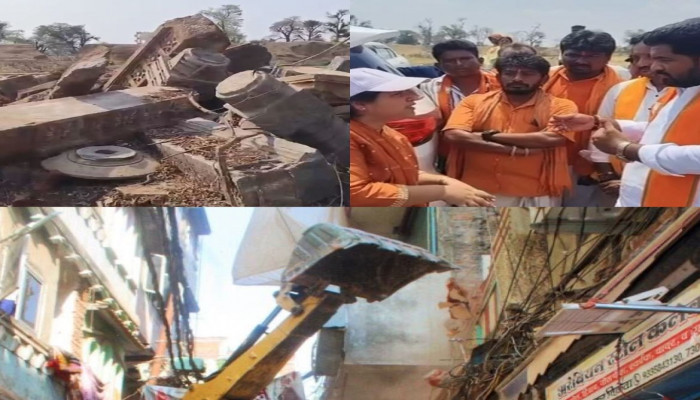
The demolition of an 800-year-old Shiva temple from the Kakatiya period in Telangana’s Warangal district has sparked widespread outrage among historians, heritage activists and government authorities. The temple, located in Ashok Nagar in Khanapur Mandal, was allegedly demolished during land-clearing work for a proposed government Integrated School project. The structure is believed to date back to the reign of Kakatiya ruler Ganapatideva in the 13th century.
The incident has drawn serious attention from the Union Ministry of Culture and the Archaeology Department, both of which have sought accountability over the destruction of the historic site. Historians and heritage experts have strongly criticised the demolition, calling it a major loss to Telangana’s cultural and historical heritage.
The temple was considered highly important because it contained a rare seven-line Telugu inscription dated February 1231 AD. The inscription referred to ruler Ganapatideva as “Maharaja” and “Rajadhirajulu.” Experts said such inscriptions are historically valuable as they help document the political and cultural history of the Kakatiya era.
According to heritage specialists, the temple had already been documented by the Heritage Department in 1965. The site was located within the historic “Kota Katta” mud fort zone, an area known for ancient defensive structures and historical remains. Historians argued that the structure could have either been preserved or shifted to another location instead of being brought down during the development work.
The controversy grew further after Telangana rights lawyer Rama Rao Immaneni filed a complaint before the National Monuments Authority. Following the complaint, the Union Ministry of Culture and the Archaeology Department registered a case related to the incident.
The complaint demanded action under Section 30 of the Telangana Heritage Act against officials who allegedly allowed the work to continue without securing mandatory permissions from the Archaeology and Endowments Departments. It also accused the state government of failing to constitute the mandatory Heritage Conservation Committee, which is required for the protection and monitoring of historical structures.
As criticism increased, the Warangal District Collector’s office issued a clarification after a joint inspection conducted on May 6. The administration denied claims of intentional demolition. Officials stated that only “remnants of an old dilapidated structure” were found during the clearing of dense vegetation spread across the 30-acre project site.
Authorities further claimed that the structure was not listed as a protected monument in official government records. However, the explanation failed to calm public anger, as historians and activists continued to question how a historically documented structure could be removed without proper examination.
Following mounting public backlash, Warangal Collector Dr Satya Sharada and Narsampet MLA Donthi Madhava Reddy visited the site and assured locals and heritage experts that the Shiva temple would be rebuilt at the same location. Their visit came amid growing demands for accountability and stronger protection of historical monuments in the state.
Officials stated that the reconstruction work would be carried out after consultations with historians, Stapathis and the Archaeology Department. Authorities also said steps would be taken to provide formal heritage protection to the site in the future to prevent similar incidents.
The demolition has once again raised concerns over the protection of historical monuments during infrastructure and development projects. Heritage activists believe the incident highlights gaps in conservation policies and coordination between government departments. Many have called for stricter enforcement of heritage laws and better identification of historically important structures before large-scale construction activities begin.
The issue has now become a major heritage controversy in Telangana, with growing demands for accountability from officials involved in the project and stronger safeguards for ancient monuments across the state.



 Loading...please wait
Comments