




Tehran says final decision not made on Trump’s Iran peace deal to be signed this weekend
- In Reports
- 12:50 PM, Jun 12, 2026
- Myind Staff
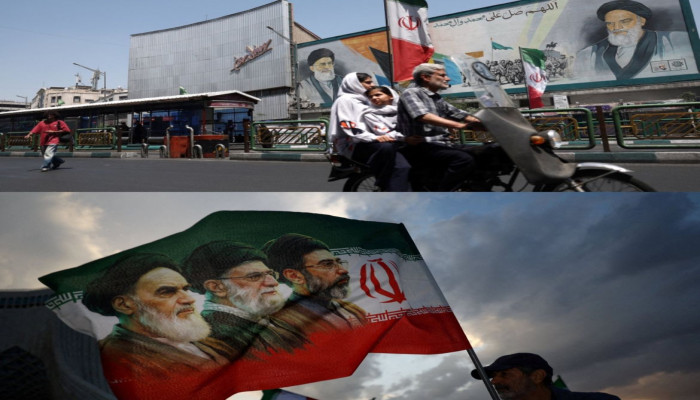
US President Donald Trump has said that the United States and Iran could sign a peace agreement as early as this weekend. The proposed deal would reopen the Strait of Hormuz, a key global shipping route that has remained largely closed during the ongoing conflict. However, Iran has stated that no final decision has been made yet and that the agreement is still under review.
If completed, the deal would mark the biggest diplomatic breakthrough since the war began three months ago. The conflict has claimed thousands of lives and caused major disruptions in global energy markets, leading to a sharp rise in oil prices.
Iranian media quoted Foreign Ministry spokesperson Esmaeil Baghaei as saying that much of the agreement's text has already been finalised. However, he stressed that Iran would not compromise on its core demands.
“We have not reached a final conclusion on this matter,” he said. “This is a very important issue that is currently being reviewed by the relevant decision-making bodies.”
Trump, meanwhile, expressed confidence that an agreement was close. Speaking to reporters at the White House, he said, “We just made a great settlement of the war with Iran.”
“The Strait will officially open as soon as we sign, which could be soon, very soon, maybe over the weekend in Europe,” he said, adding Vice-President J.D. Vance could sign for the United States.
When asked whether Iran’s Supreme Leader Ayatollah Mojtaba Khamenei had approved the deal, Trump replied, “I understand the answer is yes.”
Trump’s announcement came after he cancelled planned military strikes against Iran, citing progress in negotiations. Following his remarks, US stock markets rose while oil prices declined.
Since mid-March, Trump has repeatedly stated that an agreement with Iran was close. Despite those claims, fighting has continued throughout the week, putting pressure on the ceasefire announced in April.
“It’s a very strong memorandum of understanding that is a little conceptual,” Trump told reporters.
One of the main conditions repeatedly highlighted by Trump is that Iran must not be allowed to develop nuclear weapons. Iran has consistently denied that it is pursuing such weapons.
Iran’s demands include the removal of international sanctions, the release of billions of dollars in frozen assets, and recognition of its control over the Strait of Hormuz.
“The big thing is, there will be no nuclear weapons in Iran. That means not developed and not purchased,” Trump later said during a campaign event held by telephone.
The war has had severe consequences across the region. Since US and Israeli air strikes against Iran began on February 28, thousands of people have been killed, particularly in Iran and Lebanon. The conflict has also affected the global economy by driving up energy prices.
In recent days, violence has intensified despite the fragile ceasefire that came into effect earlier in April.
After a US Apache helicopter was shot down, Trump ordered fresh strikes near the Strait of Hormuz over two days. At the same time, Iran launched missile and drone attacks targeting US military bases in the region.
Bahrain’s Interior Ministry said on June 11 that an 11-year-old girl suffered minor injuries after debris from intercepted Iranian drones fell in residential areas. Several homes were also damaged.
Earlier, Trump had warned that the United States would hit Iran “very hard tonight.” He also said he eventually wanted control of Iran’s major oil export hub, Kharg Island.
Kharg Island handles around 90 per cent of Iran’s oil exports. Control over the island would allow the United States to significantly disrupt Iran’s energy trade and increase economic pressure on Tehran.
Iranian state media reported early on June 12 that Iranian forces had stopped a tanker from passing through the Strait of Hormuz without proper coordination. Normally, about one-fifth of the world’s energy shipments move through the strategic waterway. However, traffic has been heavily disrupted since the war began.
The conflict has also created political challenges for the White House. Recent opinion polls show Trump’s approval ratings have declined as voters express concern over rising fuel prices.
Several Republican leaders have privately and publicly voiced concerns that the unpopular war could hurt the party’s chances in November’s midterm elections.
At the same time, Trump faces pressure from Iran hawks within his own party. These groups want any agreement to permanently block Iran from developing nuclear weapons. Similar opposition had previously contributed to the failure of another effort aimed at reopening the Strait of Hormuz.
Regional support for the proposed agreement will also play an important role. Trump stated on social media that countries including Israel, Saudi Arabia, Qatar and the United Arab Emirates had approved the arrangement.
However, Israeli Prime Minister Benjamin Netanyahu’s office later clarified that Israel was not a party to the memorandum of understanding being negotiated between Washington and Tehran.
According to a statement released after Trump and Netanyahu spoke, the Israeli leader thanked Trump for pursuing an agreement that would involve removing enriched nuclear material, dismantling enrichment facilities, limiting missile production and ending support for regional proxy groups.
Iran has also demanded an end to Israeli military operations in Lebanon. Fighting there continues alongside the wider conflict involving Iran-backed Hezbollah militants.
While negotiations appear to be moving forward, Iran’s leadership has yet to provide final approval. As both sides continue discussions, the world is closely watching whether the proposed agreement can bring an end to the conflict and restore stability to one of the most important energy routes in the world.



 Loading...please wait
Comments