



‘Targeting of commercial shipping unacceptable’: India voices concern over Strait of Hormuz blockade
- In Reports
- 06:58 PM, Mar 20, 2026
- Myind Staff
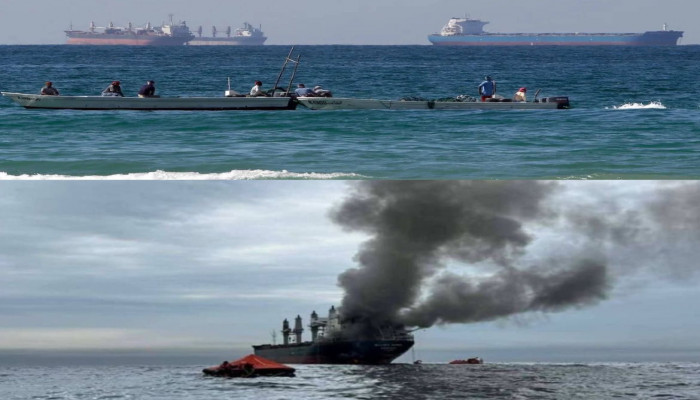
India has strongly voiced its concern over the rising threats to commercial shipping in international waters, especially in the wake of escalating tensions in the Middle East. The country has underlined the importance of maintaining freedom of navigation and ensuring the safety of seafarers as disruptions continue along the Strait of Hormuz, one of the world’s most critical oil transit routes. These concerns come at a time when the ongoing Iran-US conflict is intensifying, pushing global oil prices higher and raising fears of a prolonged energy crisis.
Speaking at the 36th extraordinary session of the Council of the International Maritime Organisation (IMO) in London, Indian High Commissioner to the United Kingdom, Vikram Doraiswamy, highlighted the seriousness of the situation. He stressed that any attacks on commercial vessels or civilian maritime infrastructure are unacceptable and have severe consequences. "Targeting of commercial shipping and attacks on civilian maritime infrastructure is unacceptable. Such attacks have resulted in the loss of innocent lives, injuries, and heightened risks, including to seafarers. India is among the top three seafarer-supplying nations, contributing approximately 13 per cent of the global seafaring workforce. We remain deeply concerned about the safety and welfare of all seafarers," Doraiswamy, the Indian High Commissioner to the UK, said, as quoted by news agency ANI.
Doraiswamy also emphasised that international maritime laws must be respected at all times. He stated, "The exercise of navigational rights and freedom by merchant and commercial vessels in accordance with international law must be respected." His remarks reflect India’s broader stance that open sea routes are vital for global trade and stability, and any disruption can have far-reaching consequences.
The Strait of Hormuz, located between the Persian Gulf and the Gulf of Oman, handles nearly one-fifth of the world’s oil shipments. Since the beginning of the Iran-US conflict, this key passage has been facing disruptions. These disruptions have not only slowed down the movement of ships but have also caused a sharp rise in global oil prices. Countries across the world, including India, are closely monitoring the situation as it directly impacts energy supply and economic stability.
Though some Indian-flagged vessels are allowed to pass through the region, several ships remain stranded in the Persian Gulf. According to reports, around 22 Indian-flagged vessels are currently stuck, including six LPG carriers, one ship carrying liquefied natural gas, and four crude oil tankers. The presence of these stranded vessels highlights the uncertainty and risk faced by maritime operations in the region.
To ensure the safety of its vessels and crew, India has increased its naval presence in nearby waters. Warships have been deployed to the Gulf of Oman to escort and monitor fuel carriers heading towards Indian ports. This move aims to provide security and reduce risks for ships navigating through the tense region. However, the situation remains unpredictable, and safe passage cannot be guaranteed for all vessels.
India is also engaging diplomatically and expects Iran to ensure the safe movement of ships during the conflict. External Affairs Minister S. Jaishankar has clarified that there is no “blanket arrangement” in place for the safe transit of vessels, and that Iran has not received any concessions in return. Iran, on its part, has maintained that the Strait of Hormuz remains open for most countries, but has indicated restrictions for American and Israeli carriers.
The ongoing conflict has also expanded beyond maritime disruptions, with both sides targeting key energy infrastructure. Israeli strikes have reportedly hit Iran’s South Pars Gas Field, which is part of the world’s largest natural gas reserve and a major energy source for the country. In retaliation, Iran launched missile attacks on a liquefied natural gas facility in Ras Laffan Industrial City in northern Qatar, further intensifying the crisis.
The ripple effects of the conflict are being felt across the Gulf region. Countries such as the United Arab Emirates, Kuwait, Bahrain, and Saudi Arabia have reported intercepting missiles as tensions continue to rise. These developments signal a widening conflict that could further destabilise the region and disrupt global energy supplies.
As the situation unfolds, India continues to call for de-escalation through dialogue and diplomacy. The country’s emphasis on peaceful resolution reflects its concern not only for its own economic interests but also for global stability. With the Strait of Hormuz playing a crucial role in energy transportation, any prolonged disruption could have serious consequences for economies worldwide.



 Loading...please wait
Comments