




Taiwan’s Lai Ching-te embarks on Eswatini visit, China calls him ‘rat’
- In Reports
- 07:11 PM, May 04, 2026
- Myind Staff
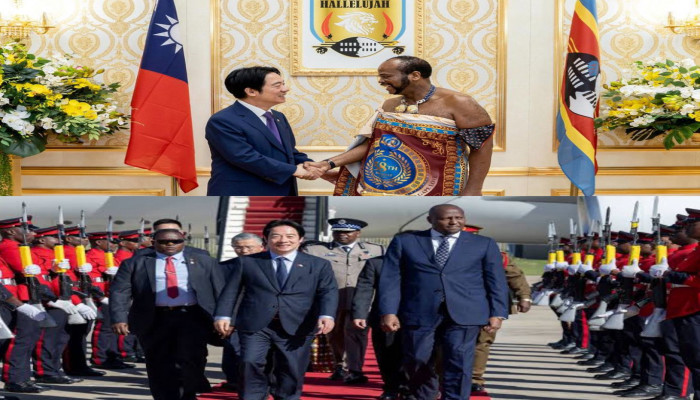
Taiwan’s President Lai Ching-te has strongly defended his country’s right to engage with the international community as he began an unannounced visit to Eswatini. His remarks came after China criticised his trip and used harsh language to describe him.
Speaking after arriving in Eswatini, Lai made it clear that Taiwan has the right to interact with other nations and contribute globally. Addressing King Mswati III, he said, "The Republic of China, Taiwan, is a sovereign nation and a Taiwan that belongs to the world." He continued, "The 23 million people of Taiwan have the right to engage with the world, and no country has the right — nor should any country attempt — to prevent Taiwan from contributing to the world." His statement reflects Taiwan’s long-standing position that it is an independent entity with the freedom to build international ties.
China, however, sees Taiwan very differently. Beijing considers the democratically governed island as part of its own territory and rejects any form of official engagement between Taiwan and other countries. This disagreement remains one of the most sensitive issues in international politics. China has repeatedly urged nations to cut any form of state-to-state contact with Taiwan, a demand that Taiwan’s government continues to reject.
The visit itself was carefully planned and kept secret until Lai had already arrived. Neither Taiwan nor Eswatini announced the trip in advance. Lai travelled using an aircraft provided by the Eswatini government. This approach, often described as “arrive then announce,” is used in high-level diplomacy to reduce risks of interference. A senior Taiwanese security official, who chose to remain anonymous due to the sensitivity of the matter, said this method helps minimise the "uncertain risks of potential interference from external forces."
The trip also comes after travel hurdles last month. Taiwan had earlier stated that China pressured three Indian Ocean countries to withdraw overflight permission for Lai’s aircraft. This made it difficult for him to travel to Eswatini, a small southern African nation with a population of around 1.3 million people. The country is one of only 12 nations in the world that maintain formal diplomatic relations with Taiwan.
China reacted strongly to Lai’s arrival in Eswatini. The Taiwan Affairs Office criticised the visit and used sharp language against the Taiwanese president. A spokesperson said that Lai had "skulked" his way to Eswatini and added, "Lai Ching-te's despicable conduct — like a rat scurrying across the street — will inevitably be met with ridicule by the international community." The comments highlight the ongoing tension between Beijing and Taipei over Taiwan’s international presence.
Taiwan’s Mainland Affairs Council responded firmly to China’s remarks. It stated that Lai does not need approval from Beijing to travel anywhere in the world. The council also dismissed China’s criticism in strong terms, saying, "The Taiwan Affairs Office's fishwife's gutter talk is boring in the extreme." This response underlines Taiwan’s refusal to accept China’s authority over its foreign relations.
The earlier cancellation of Lai’s travel plans due to overflight issues had already drawn global attention. The situation led to criticism of China from the United States and raised concerns among several major European countries. The European Union, along with Britain, France, and Germany, expressed unease over the developments, signalling broader international concern about China’s actions in restricting Taiwan’s movements.
Lai’s visit to Eswatini marks an important moment in Taiwan’s efforts to maintain and strengthen its diplomatic relationships. With only a small number of countries officially recognising it, each engagement carries significant political weight. The visit also highlights the ongoing struggle between Taiwan’s push for global participation and China’s efforts to isolate it diplomatically.
The situation continues to reflect deeper geopolitical tensions. While Taiwan insists on its sovereignty and right to global engagement, China remains firm in its claim over the island. Lai’s statements and China’s response show that this issue is far from resolved and will likely continue to shape international relations in the region.



 Loading...please wait
Comments