




Taiwan parliament unites against China's alleged move to block President Lai's Africa visit
- In Reports
- 08:25 PM, Jun 06, 2026
- Myind Staff
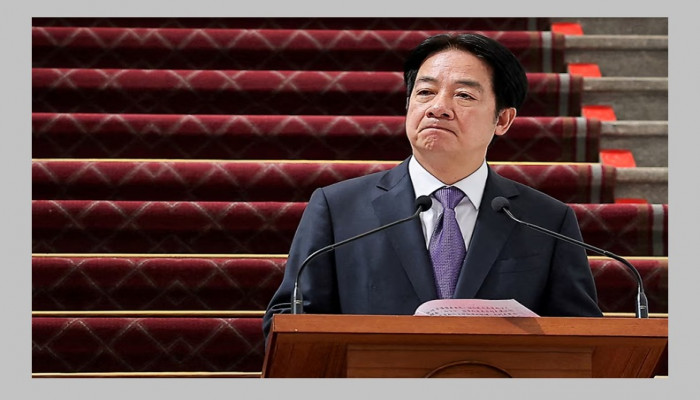
Taiwan's Legislative Yuan has unanimously approved a resolution condemning what it described as Beijing's efforts to obstruct President William Lai's planned visit to Eswatini. The resolution was passed following reports that China pressured several African countries to deny flight clearance for Lai's aircraft, according to The Taipei Times.
The resolution was introduced by Taiwan's ruling Democratic Progressive Party (DPP) after the Presidential Office cancelled Lai's scheduled trip to Eswatini on April 21. The visit was called off shortly before the president's departure after Seychelles, Mauritius and Madagascar reportedly withdrew flight permissions that had previously been granted to his chartered aircraft.
According to The Taipei Times, an unnamed national security official alleged that China influenced the decision of the three African nations. The official claimed that Beijing threatened to withdraw major debt relief measures, suspend financing arrangements and impose additional economic penalties if the countries allowed Lai's flight to pass through their airspace.
In the resolution, lawmakers strongly criticised what they described as China's use of diplomatic and economic pressure to force other countries into revoking flight clearances. They argued that such actions could put aviation safety at risk and were inconsistent with internationally accepted norms and principles. The resolution also stated that these actions violated the principles of sovereign equality and noninterference in the affairs of other nations.
Lawmakers further stated that Beijing's alleged actions represented a challenge to the existing international order. They said such measures were aimed at restricting the Republic of China's ability to engage with the international community and maintain relations with other countries.
The resolution highlighted rare bipartisan unity within Taiwan's legislature. Members from different political parties came together in support of the measure and reaffirmed their commitment to protecting Taiwan's sovereignty, democratic system, freedoms and international dignity. According to The Taipei Times, the resolution declared that lawmakers across party lines would stand united in defending these values against external pressure.
The issue has once again drawn attention to the ongoing tensions between Taiwan and China. Beijing considers Taiwan to be part of its territory and strongly opposes any action that could increase Taiwan's international visibility or strengthen its diplomatic standing. China has repeatedly objected to official visits, international engagements and participation by Taiwan in global organisations.
Taiwan, on the other hand, maintains that it is a self-governing democracy with the right to conduct its own foreign relations. The government in Taipei argues that it should be allowed to interact freely with other countries and participate in international affairs without external interference.
Over the years, Beijing has frequently been accused of using diplomatic and economic tools to limit Taiwan's international space. These efforts have included persuading countries to cut official ties with Taiwan and opposing its involvement in international bodies. The latest controversy surrounding President Lai's cancelled trip is being viewed as another example of the broader dispute between the two sides.
The disagreement over Lai's travel plans reflects the larger struggle between Taiwan and China over issues of sovereignty, international recognition and global participation. While Taiwan seeks to strengthen its presence on the world stage, China continues to oppose moves that could be seen as treating Taiwan as a separate political entity.
The unanimous resolution passed by Taiwan's parliament sends a strong political message. It reflects growing concern in Taipei over what lawmakers see as Beijing's attempts to isolate Taiwan internationally. At the same time, it demonstrates a united stance among Taiwan's political parties on issues related to the island's sovereignty, democracy and engagement with the global community.



 Loading...please wait
Comments