




Taiwan marshals chip diplomacy to strengthen ties with like-minded countries
- In Reports
- 02:58 PM, Sep 07, 2026
- Myind Staff
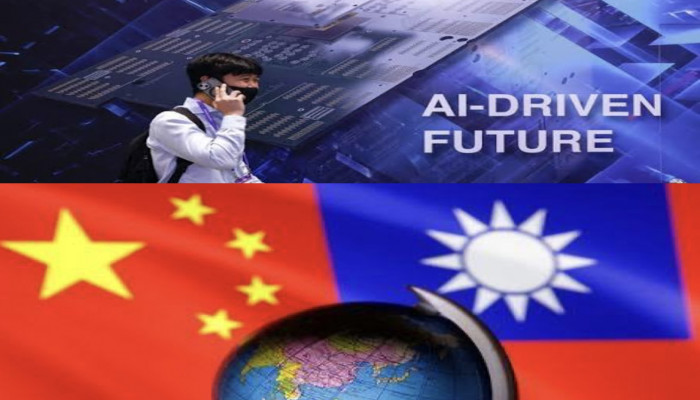
Taiwan is using its semiconductor strength to build stronger ties with key international partners as demand for artificial intelligence chips grows. At the SEMICON Taiwan trade show last week, the island presented itself as a reliable and democratic supplier for the global AI industry. It also signalled that it was ready to share the benefits of its chip industry with countries that share its values.
Taiwan is home to major semiconductor companies such as TSMC, whose chips support a wide range of AI applications. The island has long used its technology industry to gain international support despite its limited diplomatic recognition. China continues to claim Taiwan as part of its territory and regularly opposes efforts by other countries to strengthen ties with the island.
At the same time, Taiwan faces growing pressure from the United States, its most important international supporter and arms supplier. Washington wants Taiwanese companies to move more chip production to the US. TSMC is already investing $265 billion in factories in Arizona, showing the scale of Taiwan's growing manufacturing presence in the country.
Taiwanese President Lai Ching-te made an unusually strong appearance at SEMICON Taiwan. He spoke at two separate events on the same day. Lai said Taiwanese companies were expanding their operations around the world to "let resilience create shared prosperity". He also said Taiwan's strength in semiconductors was built on democracy and the rule of law.
Taiwan's government is also encouraging more investment in the US. Economy Minister Kung Ming-hsin, while opening the US pavilion at the trade show, said Taiwanese companies were planning another $20 billion in investment in the country. The move comes after Taiwan and Washington reached a deal earlier this year to increase Taiwanese investment in the US in return for lower export tariffs. However, uncertainty remains over the final trade arrangements.
US Commerce Secretary Howard Lutnick said last week that semiconductor tariffs would be imposed on companies that do not manufacture chips in the US. His comments have added pressure on Taiwanese firms to expand their production outside Taiwan. Still, Bill Frauenhofer, the Commerce Department official responsible for overseeing the tariff agreement with Taiwan, gave a positive assessment of the relationship during SEMICON.
"The phenomenal partnership" between Taiwan and the US was working, he said. "And we really, both of us, have vested interests in terms of making this successful."
Taiwanese technology companies have accepted that they need to expand their manufacturing networks beyond the island. Young Liu, chairman of Foxconn, which is Nvidia's largest AI server maker, said companies must now rethink how they operate globally. He said firms had to "think about how to make with Taiwan, not in Taiwan; make with Taiwan in the country where the market is".
Tien Wu, chief operating officer of ASE, the world's largest chip packaging and testing company, agreed with Liu during the panel discussion. He said expanding production overseas was also becoming a political necessity for Taiwanese businesses.
"Politically it is the right thing," Wu said. "And honestly, I don't think we have a choice not to do that."
Taiwan is also looking towards Europe as it seeks to expand its international partnerships. The European Union wants more investment from Taiwanese semiconductor companies and used SEMICON Taiwan to promote closer cooperation. The bloc sent European Commission official Kilian Gross to the trade show to present the EU's Chips Act 2.0 to Taiwanese officials and companies.
Taiwan sees stronger ties with the European Union as useful on both economic and strategic fronts. Taiwan and several European countries have strongly supported Ukraine during its war with Russia. They also face growing trade and diplomatic disputes with China. These shared concerns have created further space for cooperation between Taiwan and Europe.
Deputy Foreign Minister Francois Wu, one of Taiwan's most prominent diplomats, spoke at the opening of the French pavilion at SEMICON. He highlighted the shared political values between Taiwan and France. Wu said Taiwan and France both supported democracy, freedom and a rules-based international order.
Taiwan's semiconductor industry has therefore become an important part of its foreign policy. As the global race for AI technology intensifies, Taiwan is using its chip expertise to strengthen partnerships with the US and Europe. At the same time, pressure from Washington and the changing global supply chain are pushing Taiwanese companies to expand production abroad. Taiwan now faces the challenge of protecting its position as a major chip supplier while ensuring that its semiconductor success creates wider international partnerships.



 Loading...please wait
Comments