




Taiwan expresses strong concerns on China's Ethnic Unity Law
- In Reports
- 06:46 PM, Jul 04, 2026
- Myind Staff
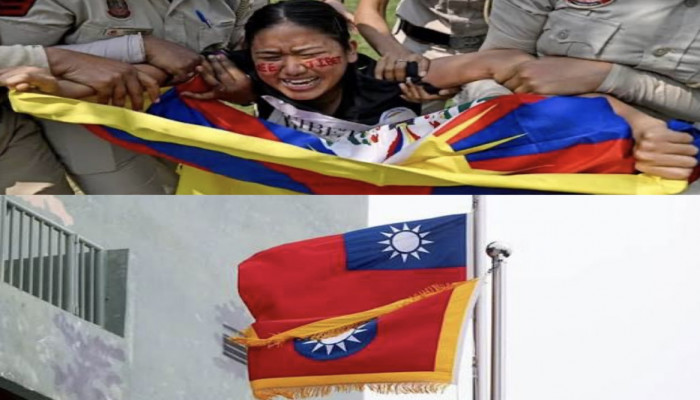
Taiwan has strongly criticised China's newly enforced "Ethnic Unity and Progress Promotion Law" and called it another example of Beijing's authoritarian governance. The Taiwanese government warned that the new legislation could allow China to increase political pressure beyond its borders. The law came into effect on July 3 after China's National People's Congress approved it in March.
After the law took effect, Taiwan Premier Cho Jung-tai announced that the government would create a Cabinet-level interagency platform to respond to cases of alleged transnational repression. The new mechanism will also strengthen efforts to protect Taiwan's national security and democratic system, according to The Taipei Times.
The new Chinese law stresses national unity. It also allows legal action against individuals or organisations, both inside and outside China, if authorities accuse them of undermining ethnic unity or encouraging ethnic division. However, the law does not clearly explain what actions fall under these offences. This has raised concerns over its broad scope and possible misuse.
Premier Cho said Taiwan's response would focus on three areas: prevention, protection and countermeasures. He assigned ministers without portfolio Ma Yung-cheng and Lin Min-hsin to establish a cross-government coordination mechanism. The platform will bring together several government agencies, including the Ministry of the Interior, the Ministry of Justice and the Mainland Affairs Council (MAC), to coordinate the government's response.
Taiwan also plans to strengthen international cooperation. The Ministry of Foreign Affairs will expand its work with like-minded countries to address what Taipei sees as Beijing's growing cross-border influence. The government believes closer coordination with international partners will help counter activities that it considers a threat to Taiwan's democratic system and security.
The Mainland Affairs Council criticised the new legislation and said it supports Beijing's broader political objectives. The council argued that the law promotes what it described as "unification by law," "forced unification" and "transnational repression." It said the legislation aims to advance China's political agenda through legal measures rather than open political dialogue.
The council also stated that the measure pressurises Taiwanese people to accept unification with China under the banner of ethnic solidarity. It described the legislation as a "unification law" disguised as legislation promoting unity. The council expressed concern that the law could become a legal tool to increase Beijing's influence over Taiwan and its people.
Reaffirming Taiwan's official position, the council stated that Taiwan is an independent sovereign state. It rejected what it described as Beijing's attempt to use legal instruments to erode Taiwan's autonomy. Taiwan maintains that its future should remain free from external legal or political pressure, according to The Taipei Times.



 Loading...please wait
Comments