




Switzerland set to host June 19 US-Iran peace deal signing as Strait of Hormuz reopens
- In Reports
- 02:05 PM, Jun 15, 2026
- Myind Staff
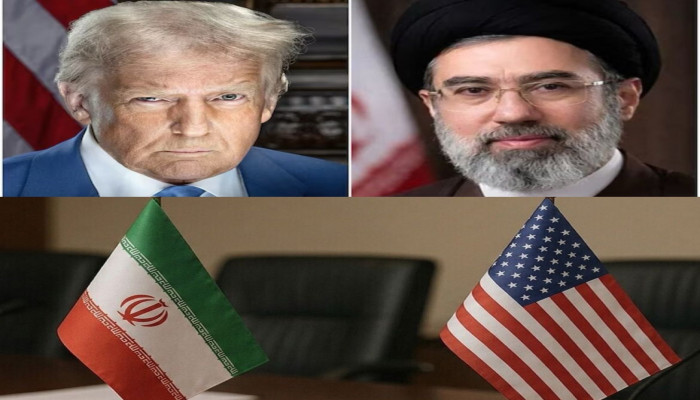
The United States and Iran are set to sign a peace agreement on June 19 in Switzerland after officials from both countries agreed on a framework aimed at ending the war, lifting the US blockade on Iran, and reopening the Strait of Hormuz. The announcement caused oil prices to fall sharply, while discussions on Iran’s nuclear programme have been left for a later stage of negotiations.
US President Donald Trump announced the agreement on Truth Social, stating, "The Deal with the Islamic Republic of Iran is now complete." Pakistani Prime Minister Shehbaz Sharif, whose country played a mediating role in the negotiations, confirmed the development early Monday local time. According to Sharif, the agreement includes "the immediate and permanent termination of military operations on all fronts, including in Lebanon." Iran’s Supreme National Security Council also announced that war and military operations on all fronts would end permanently from Monday night.
Lebanon remained one of the most challenging issues during the negotiations. Israel and Hezbollah have continued exchanging attacks despite repeated calls for a ceasefire. Israel has not responded to the peace deal announcement and has stated that it was not involved in the US-Iran negotiations.
Trump also announced that the Strait of Hormuz would reopen. The strategic waterway, which is crucial for global oil and gas shipments, had been effectively closed by Iran for several months. Trump said he had ordered an end to the US blockade on Iranian ports and urged, "Ships of the World, start your engines. Let the oil flow!"
Global markets reacted positively to the announcement. Brent crude futures dropped by around 4 per cent, while US West Texas Intermediate crude fell by more than 4.6 per cent. Asian stock markets recorded gains following the news.
Former Biden administration spokesperson Matthew Miller said the agreement appeared to restore conditions that existed before the conflict. He noted that Trump made significant concessions to bring back the pre-war status quo. However, he expressed concern that Iran’s nuclear programme may not have been fully addressed. Miller also argued that Iran demonstrated its ability to affect the global economy in order to gain concessions from Washington.
Iran’s deputy foreign minister,r Kazem Gharibabadi, said a broader agreement would be negotiated during a 60-day ceasefire period. These discussions are expected to include sanctions relief and other unresolved matters. Earlier reports had indicated that Iran’s nuclear programme would be one of the key issues addressed during these follow-up negotiations.
The peace framework was finalised despite an Israeli strike in Lebanon on Sunday. The attack drew criticism from both Iran and Trump. Israeli Prime Minister Benjamin Netanyahu has reportedly disagreed with Trump over calls to limit military operations in Lebanon. Israel maintains that it must retain freedom of military action in the region, while Iran continues to demand a complete ceasefire.
Trump said he updated Netanyahu on the progress of the peace negotiations during a phone call on Sunday. He described Netanyahu as "a very difficult guy" but added that the Israeli leader should thank him for preventing Iran from becoming a nuclear-armed state.
Before the announcement, a senior Iranian official said the draft agreement includes the release of $25 billion in frozen Iranian assets by the United States. A US official said the deal would require Iran’s nuclear programme to be dismantled, with its stockpile of highly enriched uranium either destroyed or removed. Iran has repeatedly denied seeking a nuclear weapon and would be permitted to dilute enriched uranium within the country.
Meanwhile, the E4 nations — the United Kingdom, France, Germany and Italy — welcomed the development and said they are prepared to lift sanctions if Iran takes meaningful steps regarding its nuclear programme. The four countries reiterated that Iran must never acquire a nuclear weapon and expressed their readiness to work with the United States, Iran and the International Atomic Energy Agency as negotiations continue after the signing of the peace agreement on June 19.



 Loading...please wait
Comments