




Supreme Court stays Madras High Court order to take Chidambaram Nataraja temple out of Dikshitars’ hands
- In Reports
- 07:24 PM, Nov 05, 2026
- Myind Staff
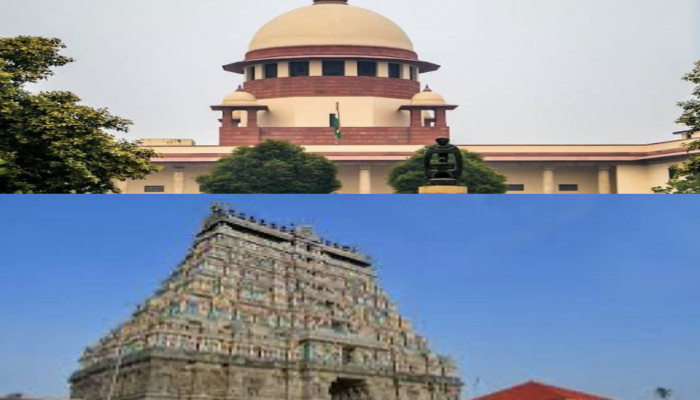
The Supreme Court has stayed a Madras High Court order directing the transfer of certain administrative responsibilities of the Bhagwan Nataraja temple in Tamil Nadu’s Chidambaram from its hereditary priests to a five-member board.
The dispute began in May 2022, when the Tamil Nadu government allowed devotees to offer prayers from the Kanakasabha, an elevated platform inside the temple where special prayers and rituals traditionally take place.
The Podhu Dikshitars, the hereditary priests managing the temple, challenged the government’s decision in the Madras High Court. They argued that the order violated their constitutional right to manage religious affairs under Article 26.
On October 30, the high court upheld the government’s decision. It observed that allowing devotees to have darshan (viewing of the deity) from the Kanakasabha would not interfere with religious rituals.
However, the court also raised concerns over damage to certain parts of the temple due to modern construction. It called for an examination of the temple’s accounts and property records.
The high court directed the formation of a five-member board comprising two retired high court judges, a retired IAS officer, the secretary of the Podhu Dikshitars and the secretary of the state’s Hindu Religious and Charitable Endowments Department. The board would oversee darshan arrangements, monitor financial matters and recover temple properties. The Dikshitars would continue to manage daily rituals and periodic religious festivals.
Appearing for the Dikshitars in the Supreme Court, Senior Advocate CS Vaidyanathan argued that the high court had expanded the scope of the original dispute. He said the order effectively stripped the community of its authority to administer the entire temple.
Vaidyanathan cited the Supreme Court’s 2014 Subramanian Swamy judgment, which overturned the state government’s appointment of an executive officer to manage the temple. He said the court had recognised the Dikshitars as a religious denomination and acknowledged their right to manage the temple.
He also denied that the Dikshitars were responsible for the structural changes and said they had already submitted the temple’s audited accounts.
Representing the state government, a senior advocate referred to a Heritage Commission report documenting structural alterations, including changes to the pathway leading to the sanctum sanctorum. The state also raised concerns over the temple’s accounts and asked the Supreme Court to defer interim relief until it could file a formal response.
The bench questioned whether the evidence linking the Dikshitars to the structural alterations.
"After hearing the counsel for both sides, it is our considered view that the impugned judgment should be stayed. Accordingly, the judgment is stayed," it said.



 Loading...please wait
Comments