



Supreme Court refuses interim relief to 34 lakh deleted voters in Bengal Polls
- In Reports
- 05:50 PM, Apr 13, 2026
- Myind Staff
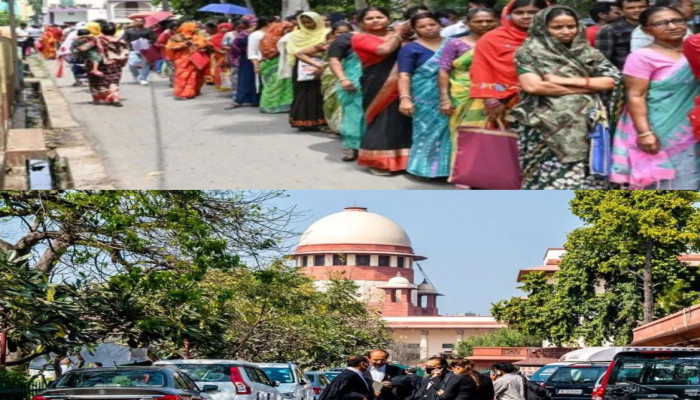
The Supreme Court of India has declined to grant interim voting rights to lakhs of people in West Bengal whose names were deleted from the electoral rolls. The decision comes at a critical time, with polling scheduled for April 23 and more than 34 lakh appeals still pending. The court is now faced with the challenge of protecting voter rights while ensuring the electoral process is not disrupted or overwhelmed.
The matter was heard by a bench led by the Chief Justice, which expressed concern about placing excessive pressure on appellate tribunals just days before polling. The court made it clear that allowing all affected voters to cast their ballots without proper verification could create administrative chaos. During the hearing, the Chief Justice said, “We cannot create a situation where we burden the appellate tribunal judges. There is another plea with us today that stops the appeals.”
According to submissions made in court, as of April 11, a total of 34,35,174 appeals had been filed in West Bengal. These appeals challenge the rejection or deletion of names from the voter list. Petitioners argued that such a large number of people should not be denied their right to vote, especially so close to the election date. They stressed that many of these individuals are genuine voters who have been wrongly excluded.
Senior advocate Kalyan Banerjee strongly urged the court to intervene. He said, “People of Bengal are only looking towards this court 34 lakh persons are genuine voters people want to exercise their right to vote.” He also suggested that the court ensure as many appeals as possible are resolved before polling day. As an additional measure, he proposed issuing a supplementary voter list so that those whose names are restored can still participate in the elections.
While the court refused to grant immediate relief, it did provide some reassurance. The bench clarified that voters whose names are restored after final adjudication will be allowed to vote. It stated, “Those names that were left out would be added to the list for the April 23 elections. Don’t worry — if their names are there, they will be voting.” This observation referred to decisions already made by judicial officers up to April 9.
The court also indicated that any remaining cases in a few constituencies could be managed by updating the electoral rolls once decisions are finalised. This suggests that the process of corrections will continue even as the election approaches, though within the limits of the law.
Throughout the hearing, the judges emphasised the need to strike a balance between ensuring voter rights and maintaining the integrity of the electoral process. The bench remarked, “We will try to create a via media between your right and the need for verification.” Justice Joymalya Bagchi pointed out that existing rules already allow for corrections once appeals are decided. He noted that electoral registration officers are required to update the rolls accordingly.
However, the court also raised practical concerns about the scale of the issue. Petitioners argued that even resolving 16 lakh appeals before polling would be extremely difficult. In response, the Chief Justice questioned the feasibility of such expectations. He asked, “If that’s the scenario then what should the court do?” He also made a pointed remark, “Those who have been allowed, should we even stay the names included,” highlighting the risk of continuous challenges disrupting the election process.
The Election Commission of India also presented its position during the hearing. It stated that the finalisation of electoral rolls for elections follows a separate legal framework from revision exercises. This limits the scope for last-minute changes. The Commission warned that altering rolls too close to polling day could create confusion and affect the smooth conduct of elections.
In addition to legal concerns, issues of law and order were also raised. Senior advocate V Giri urged the court to closely monitor vulnerable areas identified by the poll body. He stressed the importance of preventing any post-poll violence, especially in sensitive regions.
With polling just days away, the case highlights the complexity of managing a large electoral system. The court is attempting to ensure fairness without compromising procedural discipline. The outcome of the pending appeals will play a crucial role in determining how many affected voters can ultimately exercise their right.
As the situation unfolds, the Supreme Court continues to walk a fine line between urgency and caution. Its approach reflects the broader challenge of balancing individual rights with the practical demands of conducting free and fair elections on a massive scale.



 Loading...please wait
Comments