




Supreme Court refers Umar Khalid bail issue to larger bench
- In Reports
- 07:21 PM, May 22, 2026
- Myind Staff
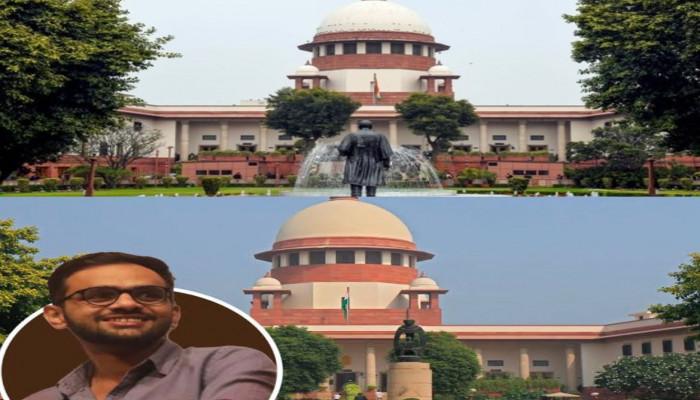
The Supreme Court on Friday referred to a larger bench an important legal question linked to bail under the Unlawful Activities (Prevention) Act (UAPA) while hearing matters related to the 2020 Delhi riots case. The court also granted six months of interim bail to two accused, Abdul Khalid Saifi and Tasleem Ahmad, in the same case.
A bench comprising Justices Aravind Kumar and PB Varale said a larger bench should decide whether an accused can remain in jail for a long period due to delays in trial despite the strict bail conditions laid down under anti-terror laws such as the UAPA. The issue has gained attention because several accused in the Delhi riots conspiracy case have spent years in custody while trials continue to move slowly.
During the hearing, the Delhi Police urged the court to refer the matter to a larger bench. The prosecution argued that the court should settle the legal position on whether long incarceration before trial and delays in proceedings can outweigh the strict restrictions on granting bail under the UAPA. The law makes it difficult for courts to grant bail in terror-related cases once charges appear to be prima facie true.
The bench decided not to comment on a recent judgment delivered by a bench led by Justice BV Nagarathna. That ruling had criticised the January 5 judgment through which bail pleas of activists Umar Khalid and Sharjeel Imam were rejected. The current bench maintained that it would avoid making observations on the correctness of that decision while the legal issue is being examined further.
The court clarified that the decision to deny bail to Umar Khalid and Sharjeel Imam was taken after considering the specific allegations and role attributed to each accused separately. The bench observed that the earlier judgment did not place Article 21 of the Constitution below other legal considerations. Article 21 guarantees the right to life and personal liberty and is often cited in cases involving prolonged imprisonment without trial.
At the same time, the Supreme Court granted interim bail to Abdul Khalid Saifi and Tasleem Ahmad for six months. The relief was given subject to certain conditions imposed by the court. The bench also said the prosecution would have the liberty to seek cancellation of bail if either of the accused violates any of the conditions laid down during the period of release.
The court’s decision is significant because it brings focus back to the continuing debate over personal liberty and stringent anti-terror laws. In recent years, courts have repeatedly dealt with cases where accused persons remained behind bars for long durations before the completion of trial proceedings. The issue becomes more sensitive in cases under the UAPA because the law sets a very high threshold for bail.
The Delhi riots case relates to the violence that broke out in northeast Delhi in February 2020. Several activists, students and individuals were booked under various charges, including provisions of the UAPA, over allegations of a larger conspiracy behind the riots. Many of the accused have challenged their continued detention, arguing that delays in trial should not lead to indefinite incarceration.
The Supreme Court has now directed that the matter be placed before Chief Justice of India Surya Kant for constituting an appropriate bench to deliver an authoritative ruling on the legal question involved. The larger bench is expected to examine how courts should balance individual liberty with the strict framework of anti-terror laws in cases where trials are delayed for years.



 Loading...please wait
Comments