



Supreme Court questions states over sudden pre-poll freebies, flags financial strain
- In Reports
- 05:59 PM, Feb 19, 2026
- Myind Staff
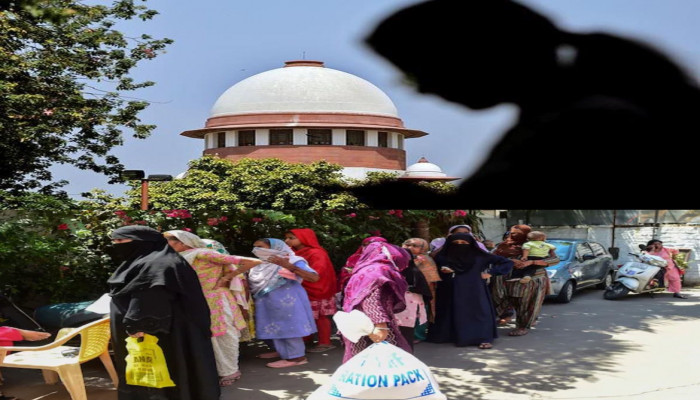
The Supreme Court of India has strongly criticised state governments for announcing “irresponsible” freebies, especially close to elections, warning that such schemes can seriously harm public finances and slow down the country’s economic development. The court questioned the timing of these announcements and asked why many states continue to introduce large welfare schemes without proper planning or financial preparation.
The remarks were made while the court was hearing a case related to electricity subsidies. During the hearing, the Supreme Court specifically asked the Tamil Nadu government to explain why a free-electricity scheme was announced suddenly. The court pointed out that the decision left power distribution companies, known as DISCOMs, struggling to adjust tariffs and financial calculations. According to the court, if such subsidies are announced without advance notice, it becomes difficult for electricity distribution companies to manage costs and maintain stability.
The bench also noted that several states in India are already facing revenue deficits. In such a situation, the court questioned how governments can afford to provide major subsidies and freebies without clear financial planning. It warned that unchecked spending on such schemes could affect the nation’s progress and create long-term economic problems.
The Supreme Court further observed that it was aware of similar cases across India where welfare schemes were announced suddenly just before elections. It questioned whether this pattern was becoming a political strategy rather than a genuine welfare effort. The court also raised a serious concern about the impact of cash transfer schemes. It asked whether people would remain motivated to work if governments continue giving direct cash benefits without limits.
The court also raised an important point about who ultimately pays for these schemes. It stated that if governments continue providing free electricity, free money, and other services, the burden will eventually fall on taxpayers. The court questioned whether such policies are fair, especially when benefits are given without checking who truly needs them.
The observations were made by a bench comprising Chief Justice of India Surya Kant, Justice Joymalya Bagchi, and Justice Vipul Pancholi. The bench was hearing a writ petition filed by Tamil Nadu Power Distribution Company Ltd. The petition challenged Rule 23 of the Electricity Amendment Rules, 2024. During the hearing, the court said that if the Tamil Nadu government had announced the subsidy earlier, DISCOMs could have included it in their tariff planning and future financial projections. However, sudden decisions create uncertainty and disturb the normal regulatory process.
The court also noted that institutions such as the Appellate Tribunal for Electricity and electricity distribution firms play an important role in deciding tariffs. If subsidies are introduced at the last minute, it becomes difficult for them to correctly fix electricity prices. This can lead to financial imbalance and poor planning in the power sector.
Commenting on the broader freebie culture, Chief Justice Surya Kant said that distributing freebies in this manner can harm the country’s economic growth. He explained that the government has a duty to provide support to those who cannot afford education, healthcare, or basic living needs. However, he warned that many people who are financially well-off are also taking advantage of such benefits.
The Chief Justice gave an example of states where electricity is free for everyone. He pointed out that even wealthy landlords continue to use electricity without paying, even though they can easily afford the bills. He said that such schemes use public money, which comes from taxpayers, and therefore governments must be more careful about how it is spent. He made it clear that the issue is not limited to Tamil Nadu, but is a wider problem across India.
He further questioned why such schemes are often announced just before elections. He said that political parties, sociologists, and people from different ideologies should rethink this pattern. He asked how long states can continue giving away benefits for free when they are already running at a loss. He also questioned why states, despite collecting a large portion of revenue every year, are unable to use it properly for development work.
During the hearing, the Chief Justice also questioned senior advocate Gopal Subramanium, who was representing the Tamil Nadu government. He asked whether it was truly in the public interest for governments to bear the full cost of such subsidies. He said the court was concerned because this issue reflects a national trend where freebie politics is becoming common.
The court also questioned what kind of policy culture is being created when benefits are given without distinguishing between those who genuinely need help and those who can pay. While the bench acknowledged that a welfare state must support poor and marginalised people, it warned that giving benefits to everyone without eligibility checks can become an appeasement-driven approach rather than real welfare support.
The Supreme Court’s strong remarks highlight growing concern over how states manage public money, especially when welfare schemes are introduced suddenly and without planning. The court stressed that such decisions must be made responsibly, keeping in mind long-term economic stability and fairness.



 Loading...please wait
Comments