




Supreme Court quashes FIRs against student protesters after CJP calls of Sept 5 March
- In Reports
- 08:41 PM, Sep 01, 2026
- Myind Staff
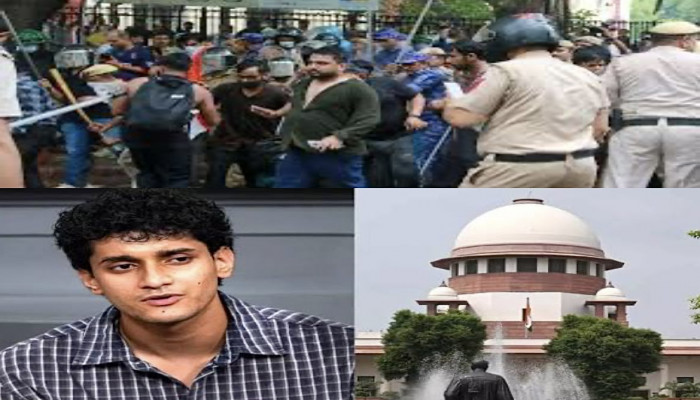
The Supreme Court on Tuesday ordered the closure of FIRs registered against student protesters in connection with incidents between July 20 and 25. The order came after the Cockroach Janata Party (CJP) called off its proposed September 5 march. The court also directed the Centre to provide compensation to the families of NEET-UG students who died by suicide.
A bench headed by Chief Justice of India Surya Kant and comprising Justices Joymala Bagchi and V Mohana exercised its extraordinary powers under Article 142 of the Constitution to quash the FIRs. The bench recorded an assurance from Solicitor General Tushar Mehta that no fresh FIRs would be registered in connection with incidents that took place between July 20 and 25.
The court made it clear that any FIR registered in any state in connection with those incidents would also be treated as closed. “If there is any other FIR in any of the states, pertaining to July 20-25 incidents, shall be considered to be closed," the bench said.
However, the Supreme Court made an exception for people with serious criminal backgrounds. It said the Delhi Police would register FIRs against 2,873 persons with serious criminal antecedents. The court clarified that this action would not prejudice the rights or claims of other parties involved in the matter.
During the hearing, Solicitor General Tushar Mehta urged the Supreme Court to use its powers to close all FIRs registered against NEET protesters between July 20 and July 25 across the country. His submission came as the Centre sought to resolve the issue of cases filed during the protests.
Mehta also told the bench that the Centre remained committed to an assurance given to CJP leaders. The assurance included providing compensation to the families of students who died by suicide following the cancellation of the NEET exam.
The Solicitor General informed the court that the Centre would pay compensation to the families of the students who died. He sought three months to work out the details and decide the process through which the compensation would be provided.
The Supreme Court accepted the request and directed the Centre to provide compensation to the families of NEET-UG students who died by suicide within three months. The direction formed an important part of the court's order along with the decision to close the FIRs linked to the July 20-25 incidents.
The proceedings began after the central government approached the Supreme Court seeking the quashing of FIRs registered by the Delhi Police against student protesters. The government sought the court's intervention to bring an end to the criminal cases arising from the protests during the specified period.
The development followed the CJP's decision to call off its planned protest march on September 5. The organisation informed the Supreme Court about the decision during the hearing. CJP co-convenor Saurav Das appeared before the bench and formally conveyed that the September 5 march had been cancelled.
The Supreme Court's order now provides relief to protesters facing FIRs linked to incidents between July 20 and 25. At the same time, the court has kept the provision for action against individuals with serious criminal antecedents. This allows the authorities to distinguish between ordinary protesters and those facing serious criminal allegations.
The Centre's assurance on compensation also adds another key element to the proceedings. The government has committed to compensating the families of students who died by suicide after the cancellation of the NEET exam. The Supreme Court has given the Centre three months to complete the process.
The order came after discussions with the Centre, the CJP and the Supreme Court on the FIRs and the demands linked to the NEET controversy. With the September 5 march now called off, the court has also recorded the Centre's commitment on the FIRs and compensation.
The case marks a significant intervention by the Supreme Court in the dispute surrounding the student protests. By invoking Article 142, the court has ordered the closure of FIRs connected to the July 20-25 incidents across states. At the same time, it has allowed Delhi Police to proceed against 2,873 people identified with serious criminal antecedents.



 Loading...please wait
Comments