




Starmer announces resignation as pressure mounts for leadership change
- In Reports
- 05:52 PM, Jun 22, 2026
- Myind Staff
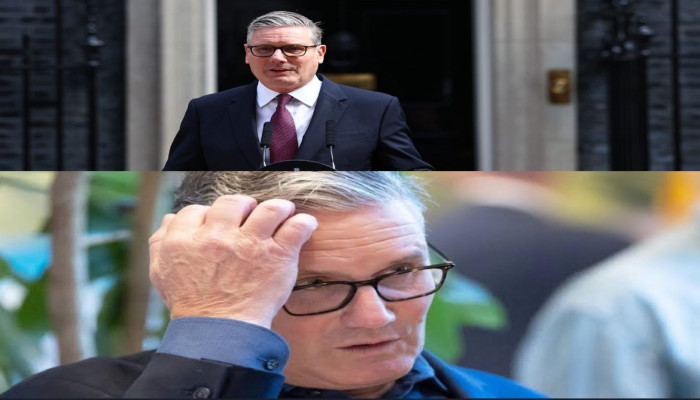
Starmer Announces Exit as Labour Pressure Forces Leadership Change
Keir Starmer has announced that he will step down as leader of the Labour Party and as the Prime Minister of the United Kingdom, bringing an end to months of political uncertainty and opening the race to choose his successor. His decision comes after growing pressure from within his own party following poor election results and increasing criticism of his leadership.
The announcement was made on Monday outside 10 Downing Street shortly after 9:30 a.m. in London. Starmer said he would continue serving as prime minister until the Labour Party completes its leadership contest. He stated that remaining in office during the transition period would help ensure a smooth and orderly transfer of power.
The resignation follows a difficult period for Labour despite the party's historic victory in the 2024 general election. Less than two years ago, Starmer led Labour to one of its biggest parliamentary majorities. However, in recent months, there has been growing dissatisfaction among Labour lawmakers. The situation worsened after the party suffered significant losses in local elections held in May.
In his speech, an emotional Starmer reflected on his time in office. He said entering Downing Street had been the “proudest moment of my life.” He also highlighted what he considered key achievements of his government. According to Starmer, Britain’s international reputation had improved during his tenure, investment had been secured and workers’ rights had been strengthened.
Despite defending his record, Starmer acknowledged that many Labour colleagues had begun questioning whether he remained the right person to lead the party into the next general election. Addressing those concerns directly, he said, “I have heard the answer from my parliamentary party. I accept that answer with good grace. I will resign as leader of the Labour Party.”
The leadership pressure intensified after Andy Burnham, Labour’s former Greater Manchester mayor, secured a convincing victory in a special election on June 18. His success has fuelled speculation that he could seek the Labour leadership and potentially become the country’s next prime minister.
Starmer and Finance Minister Rachel Reeves have also faced growing unrest over the government’s fiscal policies. Disagreements over welfare reforms added to tensions within the party. Another controversial issue was the appointment of Peter Mandelson as the United Kingdom’s ambassador to the United States. His association with the late convicted sex offender Jeffrey Epstein drew criticism and further strained relations among Labour members.
Public opinion has also turned increasingly critical. An Ipsos poll released on Friday showed that 52% of the British public believed Starmer should resign as prime minister. This represented an increase of five percentage points compared with May. Only 35% of respondents said he should remain in office.
Financial markets reacted cautiously to the political developments. The British pound fell 0.19% against the U.S. dollar and was trading at $1.3207 following the announcement. Meanwhile, yields on 10-year U.K. government bonds, known as gilts, remained largely unchanged at 4.8452% early on Monday.
Market concerns had already been visible before Starmer’s resignation. U.K. gilt yields rose sharply on Friday after Burnham’s by-election victory. Burnham has recently tried to reassure investors by distancing himself from earlier comments in which he suggested that Britain was “in hock to the bond markets.”
Kallum Pickering, chief economist at Peel Hunt, said Britain faces challenges because government borrowing remains high and public debt levels are elevated. However, he argued that the country is not unusual among major developed economies. According to Pickering, Britain is not a “fiscal outlier” compared with other G7 nations.
Pickering also pointed to some positive economic developments under Starmer’s leadership. He said Britain had become more open internationally, signed new trade agreements and achieved 1.5% real GDP growth. At the same time, he noted that the country continues to face serious economic concerns. Britain still has the highest borrowing costs in the G7 and has remained, on average, the most inflationary economy among G7 countries over much of the past decade.
Discussing the market reaction, Pickering said, “This is the thing that the market is concerned about. The market now has to price in what a Burnham premiership looks like.”
Starmer’s departure marks another major political change for Britain and sets the stage for a new leadership contest at a time when both Labour and the country face significant political and economic challenges.



 Loading...please wait
Comments