



Srinagar Court issues non-bailable arrest warrant against Farooq Abdullah in JKCA scam case
- In Reports
- 04:53 PM, Mar 13, 2026
- Myind Staff
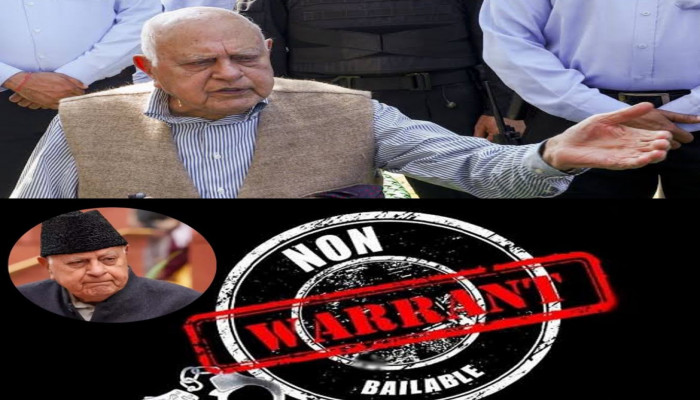
A court in Srinagar has issued a non-bailable warrant against senior political leader and former Jammu and Kashmir Chief Minister Farooq Abdullah in connection with the alleged misappropriation of funds in the Jammu and Kashmir Cricket Association (JKCA). The order was passed by the Chief Judicial Magistrate (CJM) court during proceedings in the long-running case related to financial irregularities within the cricket body.
The court hearing in the matter reached a stage where formal charges are to be framed against the accused. This stage is important in criminal proceedings because the judge examines whether there is enough material to proceed with the trial. Earlier, the court had already observed that there was sufficient material on record to continue the case against Abdullah and other accused persons in connection with alleged misuse of JKCA funds.
The case relates to allegations that money provided for the development of cricket in Jammu and Kashmir was misused by officials associated with the cricket association. Investigators have claimed that funds meant to promote the sport in the region were allegedly diverted or improperly spent. The allegations involve financial irregularities that occurred during Abdullah's tenure as the president of the JKCA.
During the hearing, the court was scheduled to move ahead with the process of framing charges against Abdullah and the other accused. However, Abdullah did not appear before the court on the scheduled date. His legal representative submitted an application seeking an exemption from his personal appearance in the court proceedings.
The defence requested the court to excuse Abdullah from attending the hearing in person. The lawyer argued that the accused should be allowed to skip the appearance for the day and that the proceedings could continue without requiring him to be physically present before the court.
After considering the request, the court declined to grant the exemption sought by the defence. The judge noted that the accused had not appeared before the court despite the case being listed for an important stage of the proceedings. The court also pointed out that arrangements such as virtual participation could have been used if appearing physically was difficult.
Since Abdullah failed to appear either physically or through other available means, the court decided to take stricter action to ensure his presence in the case. As a result, the Chief Judicial Magistrate ordered the issuance of a non-bailable warrant against him. A non-bailable warrant allows authorities to arrest the accused and bring them before the court if they do not appear voluntarily.
The order was issued to ensure the accused appears before the court so that the legal proceedings can move forward. The court has been hearing the case involving alleged financial irregularities in the cricket association for several years, and the next step in the process requires the formal framing of charges against the accused persons.
The JKCA case involves allegations of financial wrongdoing in an organisation responsible for promoting cricket in the region. Investigating agencies have previously stated that funds allocated to the association were allegedly misused through different transactions and withdrawals from the organisation’s accounts.
The court had earlier directed that charges be framed against Abdullah and others after examining the material available in the case. According to the court, the evidence on record was sufficient at this stage to proceed with charges related to criminal conspiracy and breach of trust under the applicable provisions of law.
Once the charges are formally framed, the trial will proceed with the recording of evidence. In this case, statements from certain accused persons who have turned approvers are expected to be recorded as part of the evidence during the trial. The court has indicated that appropriate action will be taken if these individuals change their earlier statements during the proceedings.



 Loading...please wait
Comments