




Spain could be ‘ruined’ Trump’s dig at Spain over Ceuta migrant crisis
- In Reports
- 05:11 PM, Sep 04, 2026
- Myind Staff
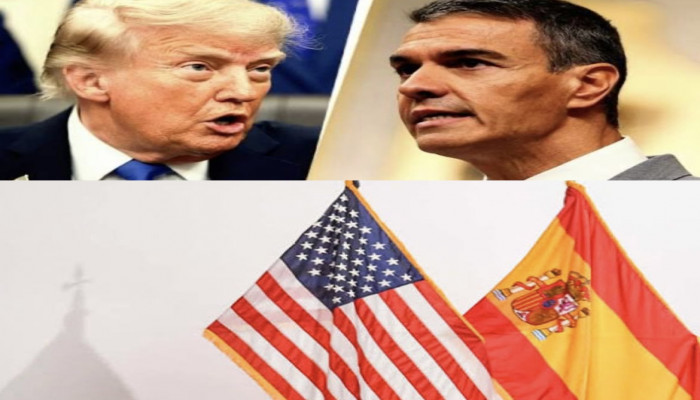
US President Donald Trump has again criticised Spain, this time over its handling of the migrant crisis in Ceuta. Thousands of Moroccan migrants entered the Spanish enclave in North Africa in July by swimming across the border. The situation led to hundreds of arrests and more than 140 deaths. While many migrants later returned voluntarily, thousands remained in Ceuta, turning the crisis into a major political issue in Europe.
Trump described the movement of migrants as an "invasion of a country" and warned that Spain could face serious consequences. "Spain will be a ruined country," he told GB News during an interview. The 80-year-old US President also compared the migrant crisis with a military invasion. "You know, you don't have thousands of people just bum-rushing your country. I've never seen anything like it." Trump also pointed to the United Kingdom, saying it was dealing with its own migrant crisis, although it was "not as visible as that (Ceuta)".
Ceuta has faced repeated attempts by migrants to cross its borders over the years. However, the events on July 30 and 31 were described as unprecedented. At least 60,000 migrants reportedly entered the small Spanish enclave by swimming or climbing fences. The huge influx placed intense pressure on border security forces and overwhelmed local authorities. Videos and photographs of migrants moving towards Ceuta in large numbers quickly spread across social media.
Spanish authorities said that by the afternoon of July 31, nearly 50,000 migrants had either returned to Morocco or had been sent back. The government led by Prime Minister Pedro Sanchez said about 5,000 migrants were still in Ceuta. More than 1,000 of them were minors. Ceuta's local government, however, put the number of remaining migrants at around 9,000.
Some reports suggested that Morocco may have allowed migrants to cross the border without proper restrictions. Sanchez rejected claims that Morocco had played a role in the situation. The Spanish Prime Minister has nevertheless faced growing political pressure over his government's response to the crisis. Opposition parties and citizens have criticised his handling of the situation. Protests have also taken place, with demonstrators demanding Sanchez's resignation as Spain prepares for general elections next year.
The migrant crisis has also added tension to Spain's relations with Italy. Rome introduced checks on Spanish visitors, while Madrid responded with similar measures. The move created a tit-for-tat situation between the two countries, which are part of the Schengen Area.
Spain's relationship with Washington has also worsened in recent months. Sanchez and Trump have clashed over several major issues. Spain previously refused to allow the US to use its military bases for launching strikes against Iran. The two countries also disagreed over NATO defence spending.
At the 2025 NATO Summit in The Hague, Spain rejected the target set by Trump for members to spend 5 per cent of their GDP on defence by 2035. Most of NATO's 32 members agreed to the target. Sanchez argued that Spain's existing commitment to spend 2 per cent of its GDP on defence was sufficient. He said increasing the figure would be both "unreasonable and counterproductive".
Trump used his GB News interview to again raise his concerns about Spain's position within NATO. "I've had my own problems with Spain because Spain doesn't behave very well with respect to NATO." His latest remarks add to the growing disagreement between Washington and Madrid over migration, military spending and Spain's broader role within the NATO alliance.



 Loading...please wait
Comments