



Southeast Asia shows growing interest in BrahMos missile system
- In Reports
- 05:01 PM, Mar 09, 2026
- Myind Staff
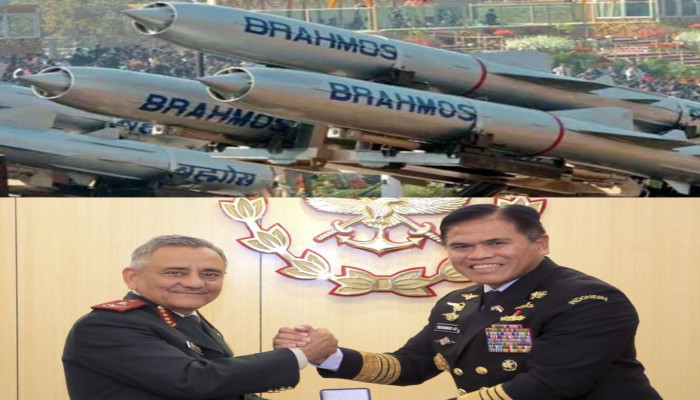
India’s defence exports are receiving strong international recognition, highlighted by praise from the Philippines’ Chief of Staff, General Romeo S. Brawner Jr. During his visit to New Delhi for the Raisina Dialogue 2026, the Philippine military leader spoke positively about the performance of the BrahMos supersonic cruise missile system that his country purchased from India.
The Philippines had signed a $375 million deal in 2022 to acquire three batteries of BrahMos missiles. These missiles were developed through a joint venture between India and Russia. The purchase marked an important step for the Philippines as it became the first country to import the BrahMos system from India.
Speaking during his visit, General Brawner said that the missiles have performed very well since their induction into the Philippine forces. According to him, two of the missile batteries have already been delivered to the Philippine Marine Corps since 2025, while the third battery is currently on its way to the country.
The acquisition is seen as a major upgrade for the Philippines’ maritime defence capabilities, particularly at a time when tensions in the South China Sea have been increasing. The country faces regular confrontations with China in disputed waters, and the BrahMos system is expected to strengthen its ability to defend its maritime territory.
In another significant development, General Brawner revealed that Indonesia has also moved forward with plans to procure BrahMos missiles. If confirmed, Indonesia would become the second country in Southeast Asia to adopt the missile system.
While India has not yet officially announced the deal with Indonesia, defence sources have indicated that the agreement is close to being finalised. The growing interest in the BrahMos missile highlights its importance for countries in the Indo-Pacific region that are looking for powerful yet cost-effective defence systems.
The BrahMos missile is known for its high speed and precision. It can travel at speeds of around Mach 3 and follows a low-altitude sea-skimming trajectory, making it difficult to detect and intercept. The missile can also be launched from multiple platforms, including ships, submarines, aircraft, and land-based launchers.
These features make the system particularly useful for coastal and island nations such as the Philippines and Indonesia. Both countries have several islands and large maritime territories. The missile system offers them a strong deterrent capability against larger military forces.
The missiles can also help these nations counter what are often referred to as “grey zone” tactics. These include actions such as water cannon attacks or the ramming of vessels in disputed maritime areas. By acquiring a system like BrahMos, countries can create a credible threat against hostile naval forces operating near their waters.
General Brawner had earlier praised Indian defence equipment in August last year as well. During that time, he highlighted the strong balance between quality and cost offered by Indian military hardware. He also said that the Philippines was interested in purchasing more defence equipment from India in the future.
“We want to order more equipment from India,” he had said earlier, emphasising the Philippines’ intention to diversify its defence procurement beyond traditional Western suppliers.
Apart from BrahMos missiles, the Philippines is also in talks with India regarding other military platforms. These discussions include helicopters, fighter aircraft, and submarines. The aim is to modernise the country’s armed forces, which have been under pressure due to China’s growing presence and assertive activities in nearby waters.
General Brawner also spoke about his discussions with India’s Chief of Defence Staff, General Anil Chauhan. During those talks, he requested India to conduct joint naval patrols with the Philippines.
According to Brawner, India responded quickly to the request. Within four months of the discussion, India deployed four warships to waters near the Philippines. These ships carried out freedom of navigation operations aimed at supporting a rules-based order in the Indo-Pacific region.
The cooperation between the two countries also includes support for defence industry development. India has offered technical assistance to help the Philippines build and strengthen its own naval ecosystem.
The cooperation is part of India’s broader “Act East” policy, which aims to strengthen relations with Southeast Asian countries. It also aligns with the broader framework of cooperation among countries that seek to maintain stability and balance in the Indo-Pacific region.
Indonesia’s reported interest in BrahMos missiles fits with its own security concerns. Jakarta has been working to strengthen its defences around the Natuna Islands, an area that has witnessed tensions involving Chinese fishing vessels and maritime militia groups.
To address these challenges, Indonesia is looking to modernise its defence forces. High-precision missile systems such as BrahMos are a strong addition intended to protect its maritime boundaries.
The success of BrahMos exports is also seen as a major achievement for India’s push to strengthen domestic defence manufacturing under the “Atmanirbhar Bharat” initiative.
India’s defence exports have grown significantly in recent years. They have increased from ₹686 crore in the financial year 2014 to more than ₹21,000 crore in the financial year 2024. Southeast Asia has emerged as one of the most important markets for Indian defence equipment.
The BrahMos system itself has also seen upgrades over time. Newer versions of the missile have an extended range of around 450 to 800 kilometres, and there are also air-launched variants. These improvements make the system more attractive for export under international guidelines such as the Missile Technology Control Regime.
The growing interest from countries such as the Philippines and Indonesia reflects a broader shift in defence strategies among Southeast Asian nations. Many of these countries are now focusing on versatile and affordable systems rather than relying only on older or more expensive platforms.
As these defence deals move forward and deliveries continue, BrahMos missiles are expected to play a significant role in shaping maritime security strategies in the region.
For India, these agreements not only generate revenue but also strengthen its strategic presence in the Indo-Pacific. They also create opportunities for deeper cooperation, including joint training and military exercises among partner countries.
The announcements and discussions on BrahMos during the Raisina Dialogue 2026 have drawn global attention to the changing security dynamics in the Indo-Pacific region.



 Loading...please wait
Comments