



South Korea’s former President Yeol sentenced to five years in prison over failed martial law attempt
- In Reports
- 06:02 PM, Jan 16, 2026
- Myind Staff
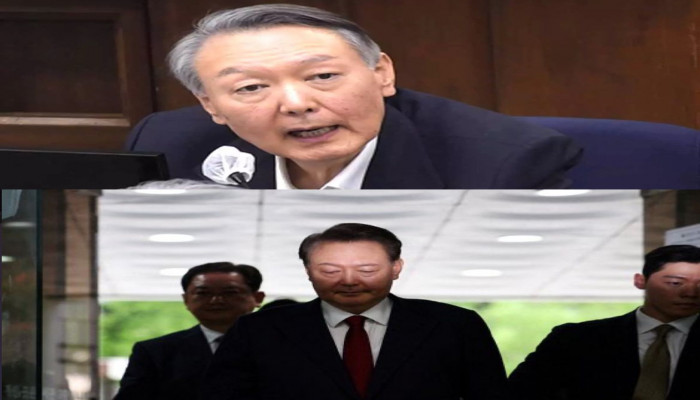
A South Korean court on Friday sentenced former President Yoon Suk Yeol to five years in prison in the first ruling connected to criminal charges arising from his failed attempt to impose martial law in December 2024. The decision marks a major legal milestone in a case that has shaken South Korea’s political system and raised serious concerns about the abuse of presidential power.
The Seoul Central District Court found Yoon guilty of obstructing authorities who were trying to arrest him after his martial law declaration. The court ruled that Yoon used the presidential security service to block investigators from executing a valid arrest warrant issued against him.
In televised proceedings, the court also convicted the 65-year-old former prosecutor on additional charges. These included fabricating official documents and failing to follow the legal process required to impose martial law, which under South Korean law must be discussed and approved at a formal cabinet meeting. The ruling is the first court judgment related to the multiple criminal cases Yoon faces over his short-lived martial law bid.
Delivering the verdict, the lead judge of the three-justice panel said, “The defendant abused his enormous influence as president to prevent the execution of legitimate warrants through officials from the Security Service, which effectively privatised officials ... loyal to the Republic of Korea for personal safety and personal gain.”
Yoon listened closely as the judgment was read out in court. Observers noted that he appeared noticeably slimmer than when he first came under investigation a year ago. His hair, streaked with grey, stood out as he remained expressionless throughout the proceedings. He showed no visible reaction when the sentence was announced, even though the courtroom was packed with many of his supporters.
Speaking to reporters outside the court, Yoon’s lawyer, Yoo Jung-hwa, criticised the ruling and confirmed plans to challenge it. “We express regret that the decision was made in a politicised manner,” she said, adding that Yoon would file an appeal. Prosecutors declined to answer questions from journalists on whether they would also appeal the ruling, although South Korean law allows them to do so.
In a separate trial, prosecutors have taken a far tougher stance, asking the court to sentence Yoon to death. They accuse him of masterminding an insurrection by attempting to impose military rule without justification and by trying to suspend parliament.
Yoon is currently being held at the Seoul Detention Centre, located on the outskirts of the capital. He has maintained that his actions were lawful, arguing that it was within his presidential authority to declare martial law. According to Yoon, the move was intended to warn the public about what he described as obstruction of government functions by opposition parties.
Security was tight around the courthouse on the day of the verdict. A few dozen supporters gathered outside the court complex, holding placards claiming that Yoon was the target of a political witch hunt. Some signs read, “History will be the judge,” while others insisted that Yoon remained the legitimate president. Police maintained a heavy presence in and around the court, which is located just a few blocks from Yoon’s upscale apartment in Seoul.
The obstruction charges stem from events in January last year, when Yoon barricaded himself inside his residential compound and ordered the presidential security service to stop investigators from entering. He could have faced up to 10 years in prison for these charges alone. After an initial failed attempt, Yoon was eventually arrested during a second operation involving more than 3,000 police officers. His detention marked the first-ever arrest of a sitting president in South Korea’s history.
Following Yoon’s surprise declaration of martial law, South Korea’s parliament, including some members of his own conservative party, moved swiftly to overturn the decree within hours. Lawmakers later voted to impeach Yoon, immediately suspending his presidential powers. In April last year, the Constitutional Court formally removed him from office, ruling that he had violated the duties of the presidency.
Although Yoon’s attempt to impose martial law lasted only about six hours, it sent shockwaves across the country. South Korea, Asia’s fourth-largest economy and a key U.S. security ally, has long been regarded as one of the world’s most resilient democracies. The incident raised deep concerns both domestically and internationally about democratic stability.
Yoon now joins a long list of former South Korean presidents who have been convicted and imprisoned. Among them is Chun Doo-hwan, a former general who was sentenced to death in 1996 for his role in the brutal suppression of mass protests in Gwangju in 1980. Chun’s sentence was later commuted, and he was pardoned after serving two years in prison.



 Loading...please wait
Comments