




Senate clears $70 billion package for Trump’s immigration enforcement agenda
- In Reports
- 06:04 PM, Jun 05, 2026
- Myind Staff
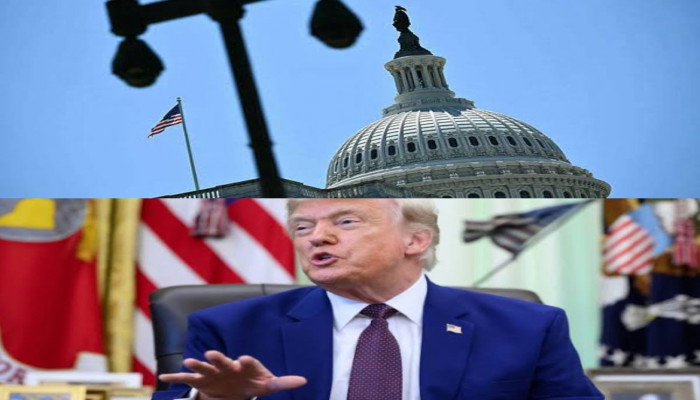
The US Senate has approved a $70 billion funding package for President Donald Trump's immigration enforcement agenda, marking a major legislative victory for the administration. The measure will provide funding for Immigration and Customs Enforcement (ICE) and the Border Patrol for the remainder of Trump's term. After months of intense political disagreements over immigration policy, the bill now moves to the House of Representatives, where Republican leaders aim to pass it early next week before sending it to the president for final approval.
The funding package comes after a record partial shutdown of the Department of Homeland Security (DHS) earlier this year. The shutdown occurred when Democrats refused to support additional funding for immigration enforcement agencies unless new restrictions were placed on their operations. Democratic lawmakers sought limits on practices such as conducting raids in sensitive locations and allowing officers to wear masks during enforcement activities.
Republicans rejected those conditions and instead chose to move the funding through the budget reconciliation process. This procedure allows legislation to pass with a simple majority vote, enabling Republicans to avoid Democratic opposition as long as they maintain support within their own party.
The Senate's approval followed a lengthy series of amendment votes known in Washington as a "vote-a-rama." During this process, lawmakers can propose and vote on numerous amendments before final passage of a bill. The procedure brought renewed attention to several controversial proposals linked to Trump's broader policy agenda.
Among the issues that received significant attention was a proposed "anti-weaponisation" compensation fund. The Justice Department had originally requested $1.8 billion for the program, which supporters argued would help individuals who claimed they had been unfairly targeted by government actions. Critics, however, described it as a "slush fund" and warned that it could potentially allow people convicted for their involvement in the January 6, 2021, attack on the US Capitol to receive taxpayer-funded compensation.
Another issue that generated debate was a previously proposed allocation of $1 billion for security related to Trump's planned White House ballroom project. Although the final immigration funding bill no longer included money for the ballroom, the proposal became a symbol of wider concerns among some Republicans. Many lawmakers are increasingly cautious about defending certain Trump priorities as they prepare for upcoming midterm elections, where voters are expected to focus heavily on the rising cost of living.
The legislation faced delays for several weeks because of opposition from some Republican senators over the anti-weaponisation fund. Acting Attorney General Todd Blanche informed lawmakers earlier this week that the administration would not proceed with the compensation program. However, Trump continued to publicly support the proposal.
Calling the fund "beautiful," Trump said he would have to "ask the lawyers" whether it was completely cancelled or simply paused.
The uncertainty surrounding the proposal led several Republican lawmakers to push for legislation that would permanently eliminate it. North Carolina Senator Thom Tillis was among those seeking clearer action.
"When you're explaining, you're losing. There's no way to explain the $1.776 (billion) fund. So, the only way you can explain it is explain that you got rid of it," North Carolina Senator Thom Tillis told reporters.
While the amendment process did not significantly weaken Trump's immigration agenda, it exposed divisions within the Republican Party. Several Republican senators broke ranks on votes related to the anti-weaponisation fund, future funding connected to the White House ballroom project, and Trump's decision to place a loyalist housing official in a senior intelligence position.
Democrats used the amendment process to advance their own priorities. They proposed redirecting some immigration enforcement funding toward housing programs and measures aimed at reducing affordability pressures. Democratic lawmakers argued that Republicans were focusing too heavily on Trump's deportation policies instead of addressing everyday economic concerns facing American families.
In a separate development, a group of Republican senators joined Democrats in supporting an effort to bypass House leadership on legislation concerning Russia and Ukraine. The proposal would impose additional sanctions on Russia for its invasion of Ukraine and provide $8 billion in military financing loans to Kyiv. The vote was widely viewed as another sign of disagreement within Republican ranks over certain aspects of Trump's broader policy direction.
Republicans defended the immigration funding package by arguing that it was necessary to restore funding that remained unresolved after the earlier DHS shutdown. They said the legislation would ensure that immigration enforcement agencies have the resources needed to carry out their responsibilities.
The temporary funding measure passed earlier this year kept most DHS operations running through September 30. Agencies covered under that measure included the Federal Emergency Management Agency (FEMA), the Coast Guard, the Transportation Security Administration (TSA), and the Secret Service. However, ICE and Border Patrol were excluded, creating a separate political battle that continued until Friday's Senate vote.
With the Senate's approval, Trump has secured an important legislative achievement on one of the central issues of his presidency. At the same time, the debate surrounding the bill highlighted an ongoing challenge for Republican leaders. Despite controlling Congress, they continue to face internal disagreements over policies that some members believe could become political liabilities in future elections.
The outcome strengthens Trump's immigration agenda and provides long-term funding for federal immigration enforcement agencies. However, it also demonstrates that divisions within the Republican Party remain a significant factor as lawmakers navigate some of the administration's most controversial priorities.



 Loading...please wait
Comments