




SC refers petitions challenging DPDP Act’s RTI amendment to a larger bench
- In Reports
- 08:45 PM, Feb 16, 2026
- Myind Staff
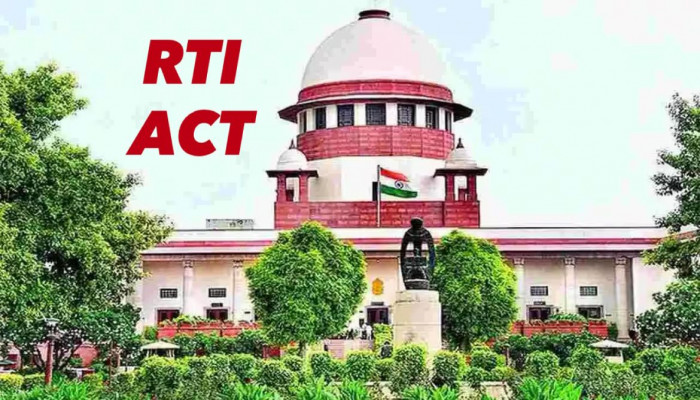
The Supreme Court of India has agreed to examine several petitions that challenge certain changes made to the Right to Information (RTI) Act through amendments introduced by the Digital Personal Data Protection (DPDP) Act, 2023 and the Digital Personal Data Protection Rules, 2025. However, the Court made it clear that it will not put the law on hold while the case is being heard.
A three-judge bench led by Chief Justice of India Surya Kant, along with Justices Joymalya Bagchi and Vipul M. Pancholi, decided that the legal questions involved are important and need to be considered by a larger bench of the Supreme Court. This means more judges will hear the matter in the coming weeks.
At the centre of the dispute is Section 44(3) of the DPDP Act, which amends Section 8(1)(j) of the RTI Act. The original RTI provision allowed public authorities to refuse personal information only if disclosure would be an unwarranted invasion of privacy — unless a larger public interest justified making it public. Critics say this “public interest override” was a balance between privacy and transparency.
Under the amended law, however, personal information is broadly exempt from disclosure without considering the public interest. Petitioners argue that this significantly weakens transparency and undermines the right to know, especially in matters of public importance.
The bench reviewed three writ petitions challenging the amendments:
1. Venkatesh Nayak – Petitioner acting on behalf of various applicants.
2. The Reporters Collective & Journalist Nitin Sethi – A digital news outlet and an individual journalist.
3. National Campaign for People’s Right to Information (NCPRI) – A long-standing NGO focused on transparency issues.
These petitions argue that the DPDP Act’s changes damage the RTI Act’s purpose by making it harder to access personal data that can be critical in revealing corruption, conflict of interest, wrongdoing, or other matters of public accountability.
Arguments Raised by Petitioners
Balance Between Rights:
Advocate Vrinda Grover, representing one petitioner, said in court that the amendment was disproportionate — like using a “sledgehammer instead of a chisel” — to deal with privacy concerns. This metaphor stressed that the changes may be too broad and heavy-handed.
Public Interest:
Advocate Prashant Bhushan for NCPRI pointed out that the earlier law still allowed personal information to be shared when public interest was strong enough. That kind of balance between privacy and transparency has been upheld in key past cases. The petitioners argue that removing this balance harms democratic objectives.
Journalism and Accountability:
The Reporters Collective and Nitin Sethi also highlighted another concern: Section 36 of the DPDP Act read with Rule 23 of the DPDP Rules gives wide powers to the Central Government to call for data from companies and data handlers without clear safeguards. Petitioners argue this could allow the government to access and store personal data without proper checks, threatening privacy and freedom of expression.
Institutional Independence Questioned:
The petitions also challenge the manner in which the Data Protection Board is structured. Petitioners argue that the way its members and chairperson are chosen might make it too closely tied to the government, eroding its independence.
After listening to arguments, the Supreme Court said the issue is complex because it involves competing fundamental rights — the right to privacy and the right to information. The bench agreed there are important questions of law that need deeper discussion, and therefore, the matter should be referred to a larger bench.
Importantly, when petitioners asked the Court to temporarily stop the new legal changes from taking effect, the bench refused. CJI Surya Kant said that the Court will not use an interim order to block a law passed by Parliament without a full hearing. As a result, the DPDP Act’s changes remain in force while the case continues.
The Supreme Court has not yet set a specific date for the larger bench hearing. The case will likely be listed on a miscellaneous day in March 2026. At that time, more judges will review the petitions and decide how the law should be interpreted, including whether it strikes the right balance between privacy and transparency.



 Loading...please wait
Comments