




SC Questions Plea for Fresh Bengal Polls Over SIR Voter Deletions
- In Reports
- 07:57 PM, Aug 26, 2026
- Myind Staff
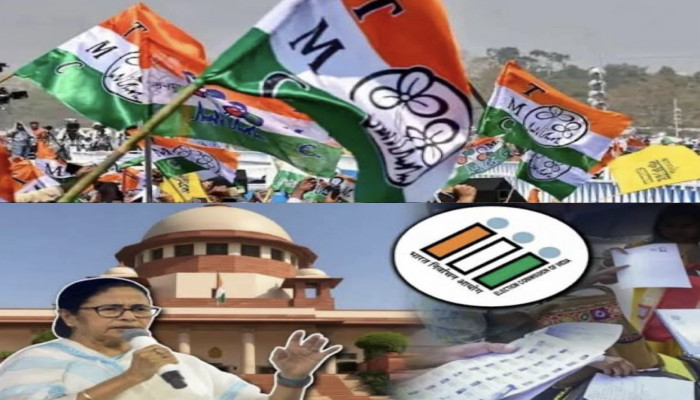
The Supreme Court on Wednesday questioned whether it could order fresh elections in West Bengal after the Trinamool Congress (TMC) raised concerns over voter deletions during the Special Intensive Revision (SIR) of electoral rolls. The matter came up during a hearing on a plea linked to the SIR exercise in the state.
A bench headed by Chief Justice of India Surya Kant, along with Justice Joymalya Bagchi and Justice V Mohana, heard submissions made by senior advocate Kalyan Bandhopadhyayon behalf of a TMC member. The counsel pointed to several Assembly constituencies where the number of voters deleted during the SIR process was higher than the victory margin of the winning BJP candidates.
Bandhopadhyay presented details of 31 Assembly constituencies where the gap between the winning and losing candidates was smaller than the number of voters removed from the electoral rolls. The petitioners argued that such deletions could have affected the results of the elections.
In one of the constituencies, AC-145, the winning candidate's margin was only 401 votes. The SIR process, however, resulted in the deletion of 8,785 voters. In another constituency, a candidate lost by just 316 votes, while the number of voters excluded from the rolls was much higher. The petitioners said the figures raised serious questions about whether the deletions had influenced the election results.
The TMC also told the court that it was difficult to determine the number of appeals filed against voter deletions in each Assembly constituency. The Election Commission of India (ECI) has not made assembly-wise appeal data available in the public domain, the counsel submitted.
During the hearing, Chief Justice Surya Kant questioned whether the Supreme Court could order fresh elections based on the figures presented by the petitioners. “You can file the application on this, but can the court direct fresh elections like this?” he asked.
The Chief Justice also asked whether the candidates affected by the alleged voter deletions had filed formal election petitions in the 31 constituencies. Bandhopadhyay said election petitions had been filed in some of the constituencies, but not in all of them.
The bench also focused on the number of voters who had actually challenged their deletions. Justice Joymalya Bagchi said the court would need to know how many people removed from the electoral rolls had filed appeals against the decision.
The court indicated that the impact of the deletions would depend on whether the affected voters had taken steps to challenge their removal. If a voter was deleted but did not file an appeal, using that deletion later to question the election result could remain only a theoretical issue.
Justice Bagchi explained the importance of the numbers through a hypothetical situation. If 100 voters were deleted, the winning candidate secured the seat by a margin of 50 votes, and 60 or 70 of those deleted voters had filed appeals that were still pending, the issue would carry much greater significance. Such figures could indicate that the deletion process had a direct connection with the election outcome.
The petitioners have argued that large-scale deletion of voters could deny eligible citizens their right to participate in elections. They maintained that the issue becomes particularly important in constituencies where the number of deleted voters is far greater than the winning margin.
The Supreme Court, however, made it clear that its examination would not be restricted to the 31 constituencies highlighted by the TMC. The bench said it would look at the wider issue of pending appeals against voter deletions across West Bengal.
The court plans to examine the status of these challenges before deciding the larger legal questions raised by the SIR exercise. It also stressed the need for pending appeals before the appellate tribunals to be resolved in a timely manner.
The hearing comes amid continuing legal and political debate over the revision of electoral rolls in West Bengal. The TMC has raised concerns over the deletion of voters and its possible impact on electoral outcomes. The Supreme Court's observations indicate that it will examine the issue through the available appeal data and the legal challenges filed by affected voters and candidates.
For now, the court has not directed fresh elections in any of the constituencies. It will first assess whether the voter deletions were challenged, how many appeals remain pending and whether the alleged deletions had a measurable impact on election results.



 Loading...please wait
Comments