




SC questions maintainability of Telangana’s plea against Andhra Pradesh’s Godavari water diversion project
- In Reports
- 06:51 PM, Jan 05, 2026
- Myind Staff
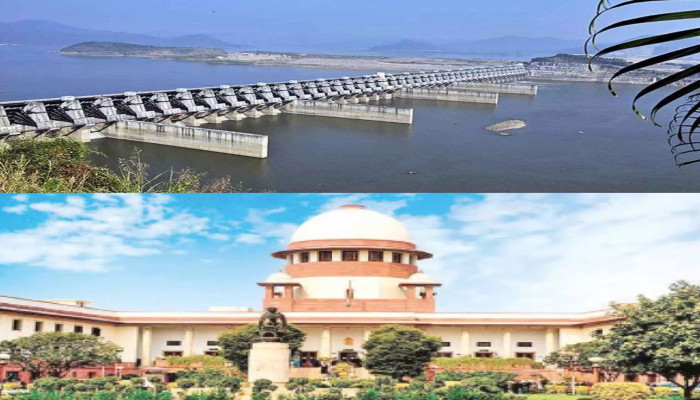
The Supreme Court on Monday expressed doubts over whether a writ petition filed by the Telangana government against Andhra Pradesh’s proposed Godavari water diversion project was maintainable. The court indicated that since the core issue involved an inter-state water dispute, a suit under Article 131 of the Constitution would be a more appropriate and effective remedy.
A bench comprising Chief Justice of India Surya Kant and Justice Joymalya Bagchi was hearing Telangana’s plea seeking directions to restrain Andhra Pradesh and its agencies from moving ahead with preparatory and project-related activities for the Polavaram–Banakacherla/Nallamalasagar Link Project (PBLP/PNLP).
While raising concerns over the maintainability of the writ petition filed under Article 32, the bench observed that the dispute essentially involved competing claims over the waters of the Godavari River. It noted that Andhra Pradesh’s proposed project could potentially affect Telangana’s share of water as determined by existing tribunal awards.
Addressing senior advocate Abhishek Manu Singhvi, who appeared for the Telangana government, the bench said, “Ultimately, at the end of the day, it is a water dispute…and you apprehend that their project might affect your share of the Godavari water.”
The judges emphasised that when the Constitution provides a specific mechanism to resolve inter-state disputes, courts should be cautious in entertaining writ petitions. “Our issue is maintainability. If the constitutional scheme envisages a different remedy, should we not resort to that?” the bench asked.
Singhvi argued that the present case deserved the court’s intervention under Article 32. He pointed out that the Union government had already allowed the setting up of a high-powered committee to examine the project. According to him, Telangana had no other immediate remedy to stop the committee from proceeding. “I have no other remedy to stop the committee from going into the issue,” he submitted, adding that the very constitution of the committee justified the court’s interference.
The bench, however, responded that Telangana’s primary concern appeared to be that Andhra Pradesh’s proposed actions could affect the existing award of the Godavari Water Disputes Tribunal. It reiterated that the dispute was fundamentally about water sharing between the two states.
Singhvi further contended that Andhra Pradesh was likely to “siphon off several hundreds of tmc of flood water” despite the earlier tribunal award being frozen. He also argued that the availability of a remedy under Article 131 did not automatically bar the maintainability of a writ petition under Article 32.
Despite these submissions, the bench remained unconvinced. It reiterated that a suit filed directly between states would provide a broader and more effective framework to resolve the issue. “We think a suit will be a more comprehensive remedy,” the court observed.
At this point, Singhvi sought time from the court. He said that if the bench was inclined to take this view, Telangana would consider its options. He requested that the matter be taken up again after obtaining instructions on two issues — whether the Supreme Court could direct the high-powered committee to halt the project, and whether Telangana should file a suit under Article 131 of the Constitution.
Appearing on behalf of Andhra Pradesh, senior advocate Mukul Rohatgi defended the state’s actions. He argued that there could be no legal bar or estoppel against the preparation of a project report aimed at public welfare. “A report that we want for our state…how can there be an estoppel against that?” Rohatgi asked. He also assured the court that the project was being planned to address drought conditions in the region.
After hearing both sides, the Supreme Court adjourned the matter for a week.
The case arises from a writ petition filed by the Telangana government last month. In its plea, Telangana sought directions to restrain Andhra Pradesh from proceeding with the preparation of a detailed project report, issuance of tenders, and execution of the Polavaram–Banakacherla/Nallamalasagar Link Project.
Telangana has challenged Andhra Pradesh’s proposal to divert Godavari river water into the Krishna basin. It has been argued that the project threatens its lawful share of water and violates established inter-state water-sharing norms.
According to the project plan, surplus water from the Godavari at the Polavaram reservoir in Andhra Pradesh is proposed to be transferred to the drought-prone Banakacherla region in Rayalaseema. The stated objectives of the project include improving irrigation, ensuring drinking water supply, and recharging groundwater levels.
Telangana has claimed that the proposal goes far beyond earlier approvals. While only 80 thousand million cubic feet (tmc) of water had earlier been sanctioned for transfer to the Krishna basin, the new plan allegedly aims to divert up to 200 tmc of water.
In its petition, Telangana alleged that the project violates the Inter-State Water Disputes Act and existing tribunal awards, as it is being pursued without the mutual consent of other co-basin states. The state has also accused Andhra Pradesh of bypassing statutory and regulatory procedures by advancing project planning and floating tenders without in-principle approval from the Central Water Commission (CWC) and without the necessary clearances from the Union Ministry of Jal Shakti.
Telangana has further argued that the project is contrary to the Andhra Pradesh State Reorganisation Act, 2014, which stresses cooperative federalism and equitable utilisation of shared water resources following the bifurcation of the erstwhile state.
The dispute has also taken a political turn. BRS leader T Harish Rao alleged that Andhra Pradesh had secured approvals from the CWC through political manoeuvring, taking advantage of what he described as inaction by the Revanth Reddy government. These allegations were rejected by Telangana’s irrigation minister, who termed them “misinformation.”
Last week, Telangana irrigation minister N Uttam Kumar Reddy said that the state government had strongly defended Telangana’s irrigation interests. He reiterated that the proposed project violates the water tribunal award as well as the 2014 Reorganisation Act. Andhra Pradesh, meanwhile, has consistently maintained that the project is crucial for regional development and long-term water security.



 Loading...please wait
Comments