



SC keeps 100 metre definition on hold amid mining concerns
- In Reports
- 08:03 PM, Dec 29, 2025
- Myind Staff
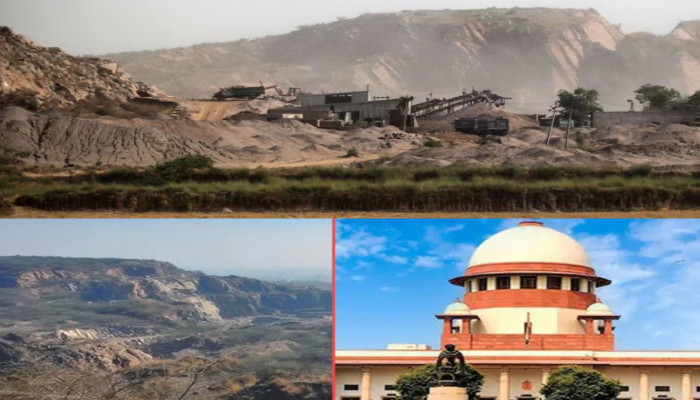
The Supreme Court of India has temporarily stayed its earlier decision on how the Aravalli Hills and ranges are defined. This earlier decision from November 20, 2025, had approved a uniform definition that used a 100-metre height rule to identify parts of the Aravalli landscape. That definition was widely seen as a way that could open doors for mining in large areas of the ecologically sensitive Aravalli region.
The bench led by Chief Justice of India Surya Kant put the November 20 order on hold after hearing concerns that the new definition could harm the environment. The court’s order says that the earlier judgment will not be applied until further review.
The Supreme Court noted that there are important issues which need more examination before the new definition can be put into effect. So the court has asked for a new expert committee to study the matter and give its views.
The court has also issued notices to the Central Government and the four states that share the Aravalli range Rajasthan, Gujarat, Haryana and Delhi asking them to respond to the matter.
In its earlier judgment, the Supreme Court had accepted recommendations by a committee set up by the Ministry of Environment, Forest and Climate Change (MoEF&CC). That committee recommended a uniform way to define what counts as Aravalli Hills and Aravalli Range across all states.
According to those recommendations: An “Aravalli Hill” is “any landform located in designated Aravalli districts, having an elevation of 100 metres or more above its local relief.”
The committee defined “Aravalli Range” as “two or more Aravalli Hills, located within the proximity of 500 metres of each other.”
The definition also said that the entire land within certain contour lines around the hills, including slopes, hillocks and supporting landforms, should be treated as part of the Aravalli Hills or Range for legal purposes.
By keeping its own November 20 order in abeyance, the Supreme Court has stopped the full implementation of the new definition for now. This means:
-
The 100-metre definition will not be fully applied until the expert committee reports back.
-
The mining and environmental rules related to this definition will remain under review.
-
The government and the states will have a chance to respond to the court’s questions.
The court’s latest order shows that it wants to be sure the definition protects the environment before it becomes legally binding.
The Aravalli range is one of the world’s oldest mountain systems, running through parts of northwestern India. It plays an important role in ecology, water recharge, biodiversity protection and climate balance across several states. The way it is defined legally influences whether mining and other activities are permitted or restricted in these areas.
While the November 20 order was meant to create a uniform standard for identifying hills and ranges, many experts and environmental groups raised concerns that the 100-metre rule could leave many key areas outside legal protection.
In the latest hearing, the Supreme Court made it clear that several aspects of the earlier definition need clarification. The bench said that these points are important before the rule can be applied across the entire Aravalli belt.
This indicates that the apex court is not rejecting the idea of defining the landscape uniformly, but it wants greater clarity and stronger safeguards for the environment.
The court has asked for responses from the Centre and state governments. It has also ordered the formation of a new expert committee to reexamine the definition and possibly make improvements.
The stay order means that the Aravalli region’s legal status remains under reconsideration until the committee reports back and the court takes a final view.



 Loading...please wait
Comments