




SC directs States, UTs to raise judicial officers' retirement age to 61 wef April 2026
- In Reports
- 06:57 PM, Jul 22, 2026
- Myind Staff
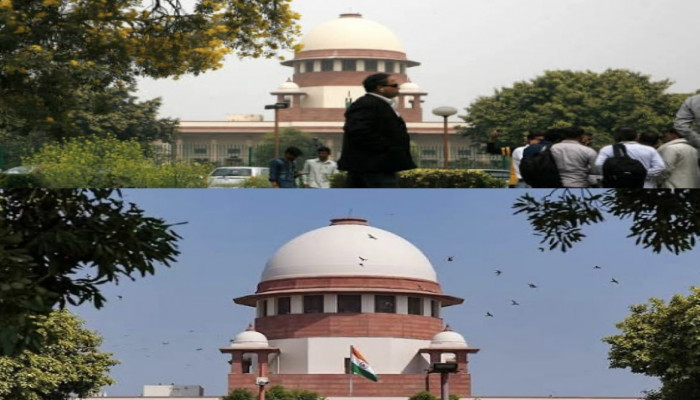
The Supreme Court on Wednesday directed all states and Union Territories to consider increasing the retirement age of judicial officers from 60 to 61 years. The top court asked every state government and UT to take the decision after consulting its respective high court. If both agree, judicial officers in that state can continue in service until the age of 61 years. This arrangement will remain in force until the Supreme Court delivers its final verdict on the matter.
A bench comprising Chief Justice Surya Kant and Justices Joymalya Bagchi and V Mohana issued the direction while hearing a petition seeking a uniform increase in the retirement age of district judiciary judges from 60 to 62 years across the country.
The bench said, "All state governments and union territories (UTs) are directed to take a decision, in consultation with their respective jurisdictional high courts, on this issue. In case they agree, judicial officers in such states shall be permitted to continue in service up to the age of 61 years. Such continuation shall remain subject to the final outcome of these proceedings."
The court said this interim arrangement will come into effect from April 1, 2026. At present, Supreme Court judges retire at the age of 65, while High Court judges retire at 62. The petition before the court seeks a uniform retirement age of 62 years for district judiciary judges across India.
The bench clarified that the interim decision will not affect its final ruling on the legal issue. It said the court will independently decide whether the retirement age of district judicial officers should increase from 60 to 62 years across the country.
The bench stated, "We clarify that the question of law formulated at the outset shall be decided by this court independently, irrespective of the stand that may be taken by the states or the high courts."
The Supreme Court directed all states and Union Territories to place their stand on record within two weeks after consulting their respective high courts. It also asked the jurisdictional high courts to file their responses within the same period.
The bench, however, relaxed the requirement for states and high courts that already support the proposal. It said they do not need to submit detailed counter affidavits. A brief statement confirming their agreement will be enough.
The matter comes from the Supreme Court's 2002 judgment, which rejected the recommendation of the Justice K. Jagannatha Shetty Commission. The commission had suggested raising the retirement age of district judges to 62 years. Since then, a few states have moved towards increasing the retirement age of judicial officers.
During the hearing, the bench was informed that the Full Court of the Madhya Pradesh High Court has passed a resolution recommending an increase in the retirement age of judicial officers from 60 to 62 years. Telangana has also taken similar steps in the past.
The court also noted that some high courts still oppose the proposal. These include the Punjab and Haryana High Court. They have argued that the retirement age of state government employees in their respective states remains 60 years or lower.
The bench observed that different positions taken by states and high courts have created uncertainty. It said the issue requires an early resolution. Until then, the court has allowed states to increase the retirement age to 61 years if both the state government and the concerned high court agree.
The Supreme Court also referred to an earlier interim order passed on November 20 last year by a bench headed by the then Chief Justice of India B. R. Gavai, who has since retired. That bench had raised the retirement age of judicial officers in Madhya Pradesh from 60 to 61 years.
While passing the earlier order, the bench had referred to a similar decision taken by the Telangana High Court. It had questioned why judicial officers should not receive the same benefit when the state government was ready to support the move.
The bench had observed, "It is needless to say that judicial officers as well as other employees of the state government draw salaries from the same public exchequer," and noted that the retirement age of other state government employees was 62 years.
The Supreme Court will now examine the responses from the states, Union Territories and high courts before deciding whether district judicial officers across the country should retire at 62 years. Until then, states that reach a consensus with their respective high courts can allow judicial officers to continue in service until the age of 61 years from April 1, 2026.



 Loading...please wait
Comments