




SC delivers split verdict on CEC appointment, matter may go to Constitution Bench
- In Reports
- 05:20 PM, Sep 23, 2026
- Myind Staff
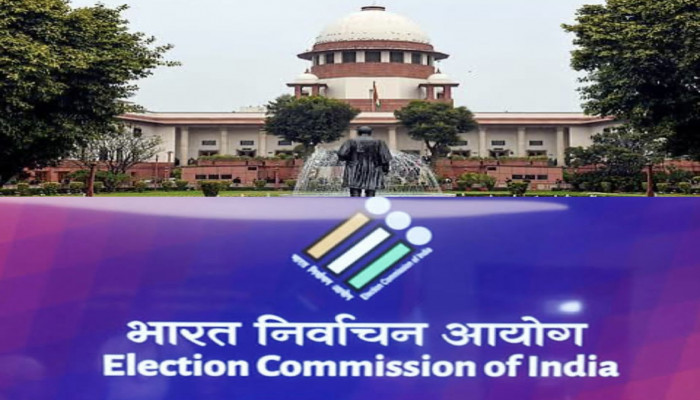
The Supreme Court on Wednesday delivered a split verdict on the Centre’s plea seeking to refer to a larger bench the petitions challenging the Chief Election Commissioner and Other Election Commissioners (Appointment, Conditions of Service and Term of Office) Act, 2023.
A Bench of Justices Dipankar Datta and Satish Chandra Sharma differed on whether the matter should be referred to a larger bench. Justice Datta rejected the Centre’s request, while Justice Sharma held that the petitions raised a substantial question of law that required consideration by a larger bench.
Justice Datta also expressed a prima facie view on the constitutional challenge to the 2023 law. The legislation replaced the Chief Justice of India with a Union Cabinet Minister in the selection panel for appointing the Chief Election Commissioner and other Election Commissioners.
Justice Datta questioned the independence of a Cabinet minister serving on the selection panel. “It is far-fetched to expect that a minister who is part of the Cabinet of Ministers would adopt a stand disagreeing with the leader or government," he said.
He further said that the inclusion of a Cabinet minister “fails to provide an independent counterweight that a neutral selector would".
Justice Datta stressed that the Election Commission of India must not only function independently but also maintain the public perception of independence. “It must appear to be independent also."
Justice Sharma differed with these observations and held constitutional issue should be examined by a larger bench. The matter will now be placed before the Chief Justice of India, who will consider whether a Constitution Bench should hear the case.
Justice Datta, in his ruling, also reflected on the difference between the two judges. “We heard these petitions for over 5 days; speaking in one voice would have served the voice of institutional cohesion. Unfortunately, we are divided in our opinion. It is a foundational principle of the constitutional scheme that rulers are bound by law and not above it."
The dispute stems from the Supreme Court’s 2023 Constitution Bench judgment in Anoop Baranwal v Union of India. The court directed that Election Commission appointments be made by a panel comprising the Prime Minister, Leader of Opposition and Chief Justice of India until Parliament enacted a law on the issue.
Parliament later passed the 2023 Act and replaced the CJI with a Union Cabinet Minister in the selection panel. During the proceedings, Solicitor General Tushar Mehta argued that the Anoop Baranwal judgment had only filled a legislative vacuum. He submitted that after Parliament enacted a law, its legislative choice should prevail.



 Loading...please wait
Comments