



SC approves six-month extension for Delhi Chief Secretary
- In Reports
- 05:19 PM, Nov 30, 2023
- Myind Staff
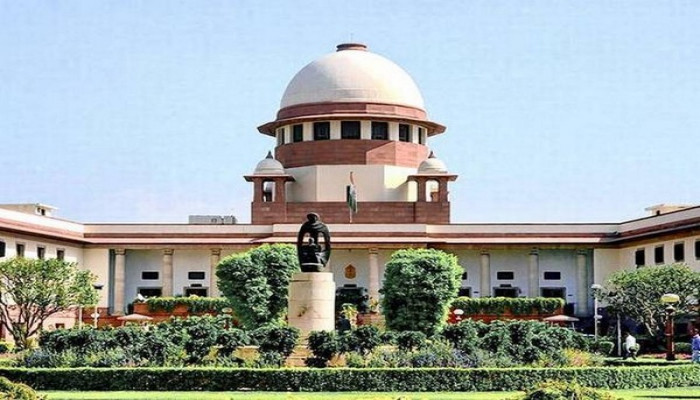
The Supreme Court has affirmed that, under the 2023 law governing the administration of Delhi, the Union government possesses the authority to independently designate the chief secretary of the capital. The Court has chosen not to intervene in the Centre's decision to grant a six-month extension to the current chief secretary, Naresh Kumar.
The Centre secured a victory while dealing a blow to the elected Aam Aadmi government of the Union Territory. This development follows an ongoing political and legal dispute between the Union Territory's government and the Centre regarding control over the bureaucracy of the city-state.
Chief Justice Dhananjaya Y. Chandrachud, leading a bench with Justices JB Pardiwala and Manoj Misra, stated that the Centre's extension of Delhi Chief Secretary Naresh Kumar's tenure, sans the elected government's concurrence, is not a violation of the law. The bench highlighted the 2023 Government of National Capital Territory of Delhi (GNCTD) Act, which grants control over officers handling excluded subjects to the central government.
“Therefore, it would not be possible nor practical to divide functions of chief secretary or bifurcate them between those areas which fall within the domain of GNCTD or those which fall outside, nor can such a bifurcation be attempted on numerical strength. It would be far-fetched to postulate that the central government is divested with the power to appoint the chief secretary,” held the bench.
The Supreme Court clarified that its current perspectives are preliminary and apply specifically to the present case. This is due to an ongoing challenge before a constitution bench related to provisions in the 2023 Act. These provisions pertain to the control of bureaucrats in the Capital and the distribution of power between the elected government and the Centre.
The court dismissed the Delhi government's claim to influence the chief secretary's appointment under the 2023 Act, emphasizing that the Act hasn't been stayed. It rejected the argument that the Delhi government should have a say, highlighting that only three subjects fall outside its control. Additionally, it refuted the Aam Aadmi Party government's stance, stating that, unlike other states, Delhi's situation doesn't necessitate prior approval for extending Kumar's tenure.
“The position for GNCTD is different as the chief secretary performs several executive functions not within the purview of the state government. Consequently, the restrictions that operate on the ground as per the rules would not in a strict sense apply in relation to GNCTD. Such rules (on prior consultation) would apply in relation to the extension of service of such other officers whose power do not extend to excluded subjects,” it maintained.
The court order stated, "The post of chief secretary in the GNCTD is a post entrusted with significant functional responsibilities, including overall administrative control and supervision over subjects which also stand excluded from legislative domain and executive powers of the GNCTD. The decision of the Union government to extend the services of chief secretary for six months cannot be construed to be violative of law."
The bench rejected the Delhi government's plea for a consultative process in appointing the next chief secretary, supporting the Centre's exclusive decision-making powers under the 2023 Act. Despite Delhi's proposal for a list of 10 officers, the Centre maintained authority without the need for consultation.
The Delhi government challenged the ordinance on June 30, arguing it undermines democratic governance and the regional will of Delhi's electorate, allowing the Union government to take over the Capital's governance. Despite the AAP government's request for a stay, the court declined, referring the challenge to a constitution bench of five judges on July 20.
Image source: ANI



 Loading...please wait
Comments