




SC announces nationwide ‘Samadhan Samaroh 2026’ to reduce case backlog
- In Reports
- 07:20 PM, Apr 22, 2026
- Myind Staff
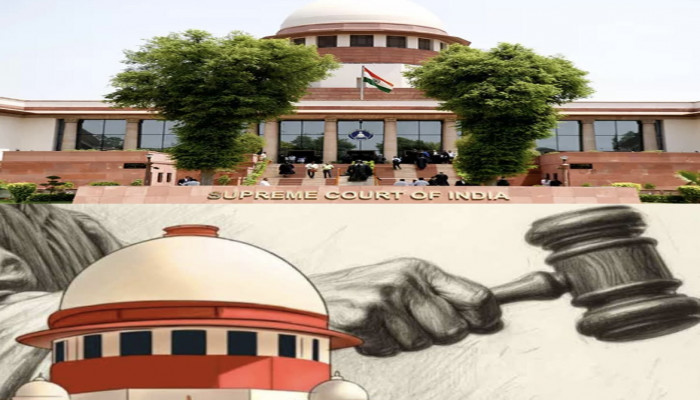
The Supreme Court of India has announced a major nationwide initiative aimed at speeding up dispute resolution through mutual agreement. Titled “Supreme Court Action for Mediated Adjudication and Disputes Harmonisation Across Nation” — Samadhan Samaroh 2026 — the programme will conclude with a special Lok Adalat scheduled from August 21 to 23. The move is part of a broader effort to promote faster justice delivery by encouraging parties to settle disputes amicably.
According to a public notice issued by the court, the initiative focuses on advancing “participative justice” and ensuring “doorstep delivery of justice”. It invites litigants, lawyers, and other stakeholders to resolve pending cases through consent-based mechanisms instead of prolonged litigation. The court aims to make the justice system more accessible and less intimidating by encouraging voluntary settlements.
The programme officially began on April 21 and will run for four months. During this period, parties can register to participate and attempt to resolve their disputes through both physical and virtual modes. These efforts will lead up to the special Lok Adalat sittings in August. To manage the scale of participation, the court has set up a dedicated “war room” along with an online portal to streamline coordination. As of April 2026, more than 94,000 cases are pending before the Supreme Court, highlighting the urgency behind such initiatives.
The initiative is being implemented under the leadership of Chief Justice of India Surya Kant. In recent months, he has consistently stressed the importance of alternative dispute resolution (ADR), especially mediation, as a key part of judicial reform. His focus has been on reducing delays and making dispute resolution more efficient and people-friendly.
This emphasis on mediation was clearly visible during his address at the Hindustan Times Leadership Summit in December 2025. He described mediation as one of the “game changers” for India’s judicial future and referred to the ongoing “Mediation for the Nation” mission as an important reform step. Highlighting its benefits, he said, “Mediation creates a win-win situation,” and explained that, unlike adversarial litigation, it allows both parties to leave “with smiling faces”, preserving relationships and strengthening the social fabric. He also pointed out that mediation processes should be conducted in a way that is accessible and relatable to the “consumer of justice”, using language and settings that do not create fear or discomfort.
In another address at a symposium organised by the High Court Bar Association of Orissa in December 2025, the Chief Justice again underlined the potential of ADR. He described mediation as a solution with “immense immediate potential” to deal with the growing backlog of cases. However, he also made it clear that structural changes alone would not be enough. A shift in mindset is equally important. He urged litigants to stop viewing settlements as a sign of defeat. “Settlement is not surrender but strategy,” he said. He also called on government departments to change their approach of routinely challenging adverse decisions, which adds significantly to the burden on courts.
Earlier this month, while speaking at an international conference organised by the Indian Council of Arbitration in Delhi, the Chief Justice highlighted India’s ambition to become a preferred hub for resolving complex cross-border disputes. He stressed that achieving this goal would require building a strong and integrated ADR system. According to him, mediation and arbitration should not be seen as competing methods but as complementary tools that work together to improve dispute resolution.
The Supreme Court’s latest initiative is an attempt to turn these ideas into action on a large scale. It is particularly notable because Lok Adalats are usually associated with district and lower courts, not the apex court. By organising such an exercise at the highest level of the judiciary, the court is signalling a strong institutional commitment to promoting consensual dispute resolution.
Overall, Samadhan Samaroh 2026 reflects a clear shift in approach within the judicial system. It aims to reduce the heavy case backlog while also making justice more collaborative and less adversarial. By encouraging settlements and strengthening mediation practices, the Supreme Court is trying to create a system where disputes are resolved faster, relationships are preserved, and access to justice becomes easier for all.



 Loading...please wait
Comments