




Savitri: When a Glance Says It All
- In LifeStyle & Sports
- 01:08 PM, Nov 14, 2026
- Dr. Srikanth Appikonda
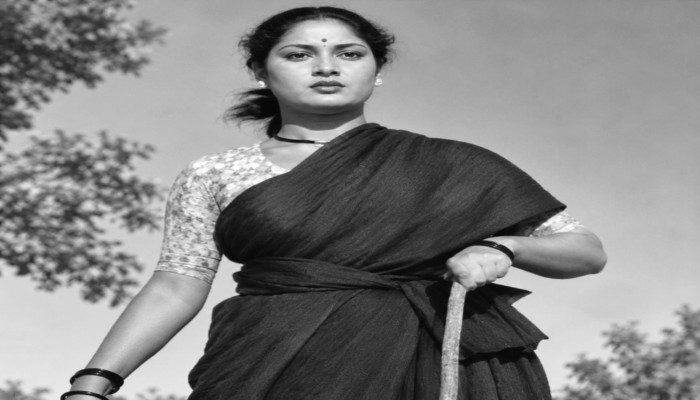
There was something truly special about the way Savitri brought characters to life on screen. Her performances had an effortless ease and authenticity, as though she wasn't acting at all, but simply living the moment. A fleeting glance, the hint of a smile, the slightest flicker of emotion - she could convey so much through the smallest of expressions.
This was particularly remarkable in an era when Indian cinema still carried a considerable theatrical hangover. Screen acting often leaned towards exaggerated gestures, pronounced expressions, and overt displays of emotion. Savitri, by contrast, seemed to instinctively understand the intimacy of the camera. She allowed emotions to emerge naturally, often through the smallest of gestures. Her expressions felt less like acting and more like glimpses into a person's inner thoughts.
One can see this beautifully in Aadutu Paadutu Pani Chestunte, from Thodi Kodallu (1957). Set in a rural landscape, the song portrays a couple drawing water to irrigate their little field. It brings together romance and the everyday realities of married life: a husband and wife working alongside each other, sharing responsibilities, lending a hand, exchanging playful glances, teasing each other, and finding joy in the simplest of things.
Savitri and ANR bring to these exchanges the ease and familiarity of two people who have lived together long enough to find romance in the smallest things. One such exchange leads to what I consider the heart of the song: the husband notices a tiny detail about his wife that catches his eye. What follows is perhaps the most intimate moment in the song. When the husband sings, "Chedari jaarina kumkuma rekhalu, pedavulapaina merustuvunte; teeyani talapulu naalo emo, tikamaka jestu unnavi," he is playfully admiring the soft, vermilion-like flush glistening on her lips. That sight awakens sweet thoughts within him, leaving his heart delightfully flustered.
Savitri captures the wife's reaction through a remarkable blend of subtle expressions. There is a playful protest in her gaze, almost as though she is saying, "Here we are, toiling away, and you can’t help but flirt!" . Yet her smile quietly betrays her. She tries to suppress her amusement, but the affection behind the mock protest is unmistakable.
For a fleeting moment, her eyes say one thing while her smile says another, and that delightful contradiction is the magic of the scene. It is the kind of spontaneous reaction one might see in everyday life when someone we love catches us off guard. That naturalism was one of Savitri's greatest gifts.
The shift from theatre to celluloid transformed both storytelling and the audience's relationship with what they saw. Cinema could take stories beyond the confines of the stage, exploring wider worlds, more varied characters, and a broader range of emotions. Yet the screen also created a certain distance between the audience and the characters.
Great performers like Savitri knew how to bridge that distance and draw viewers into the world of the characters they portrayed. She never appeared to be simply acting. She seemed to be thinking and feeling in front of the camera, allowing the audience to read those thoughts in her expressions. That ability to reveal thought rather than merely display emotion is an exceptionally rare quality in cinema.
Savitri had a rare gift for making silence speak more eloquently than words ever could.



 Loading...please wait
Comments