



Saudi Arabia urges US to stop Iranian ports blockade over fears of wider global disruptions
- In Reports
- 04:17 PM, Apr 14, 2026
- Myind Staff
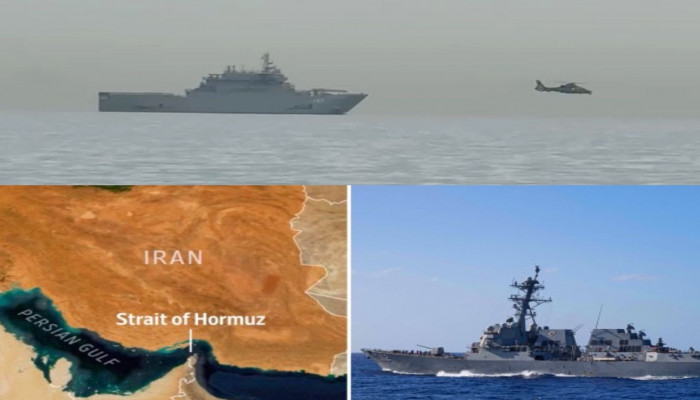
Saudi Arabia is reportedly urging the United States to step back from its plan to block Iranian shipping routes, fearing that the move could trigger a larger crisis across key global oil pathways. According to a Wall Street Journal report, Riyadh is concerned that escalating pressure on Iran may provoke retaliation that disrupts other vital maritime routes, especially those linked to its own oil exports.
The ongoing US-Israel conflict with Iran and the closure of the Strait of Hormuz have already shaken a long-standing balance among Middle Eastern energy producers. This waterway is one of the most important oil transit routes in the world, and its shutdown has created uncertainty across global markets. In response, Saudi Arabia has managed to maintain its oil exports by redirecting crude through pipelines across the desert to the Red Sea. However, this alternative route is also under threat if tensions continue to rise.
Saudi officials have reportedly communicated to the administration of President Donald Trump that continuing the blockade of Iranian ports could worsen the situation. They have pushed for a return to negotiations instead of further escalation. Their concern is that Iran, already under economic strain, may respond aggressively if its shipping access is completely cut off.
The US move to blockade Iranian shipments aims to increase pressure on Tehran’s economy. However, Saudi Arabia has warned that Iran could retaliate by targeting the Bab al-Mandeb Strait, a critical chokepoint at the southern end of the Red Sea. This route is essential for Saudi Arabia’s current oil export strategy. Any disruption here would directly affect its ability to supply oil to global markets.
Over the past six weeks of conflict, Iran has shown that it has both the capability and willingness to disrupt key maritime routes and strike important infrastructure. This has forced Gulf countries to rethink their long-term energy strategies. Saudi Arabia recently managed to restore its oil exports to around seven million barrels per day despite the Hormuz blockade. Still, officials worry that this recovery is fragile and could collapse if the Red Sea route is also compromised.
The situation is further complicated by the presence of Iran-backed Houthi forces in Yemen, who control large parts of the coastline near the Bab al-Mandeb. These groups have previously disrupted shipping during the Gaza conflict and are seen as capable of doing so again. There are growing concerns that Iran could rely on these allies to target the chokepoint if tensions escalate further.
“If Iran does want to shut down Bab al-Mandeb, the Houthis are the obvious partner to do it, and their response to the Gaza conflict demonstrates that they have the capacity to do it,” Adam Baron, an expert on Yemen and fellow at New America, a policy institute in Washington, told WSJ.
Iran has also issued direct warnings regarding the potential consequences of the US blockade. Its semi-official Tasnim news agency reported that blocking Iranian ports could lead to actions against the Red Sea gateway. Ali Akbar Velayati, a senior adviser to Iran’s supreme leader, made a strong statement on April 5, saying Tehran views Bab al-Mandeb in the same strategic way as Hormuz.
“just as it looks at Hormuz. And if the White House thinks of repeating its stupid mistakes, it will quickly realise that the flow of global energy and trade can be disrupted with a single signal.”
Iran has also warned neighbouring countries about broader risks. In a statement released by state-run IRIB News, its armed forces said, “If the security of Iran's ports in the Persian Gulf and the Sea of Oman is threatened, no port in the Persian Gulf and the Sea of Oman will be safe.”
These developments highlight the vulnerability of energy infrastructure across the Middle East. The conflict has shown how quickly key supply routes can be disrupted, impacting global oil prices and trade. Around 20 per cent of the world’s oil and liquefied petroleum gas passes through the Strait of Hormuz during normal times. Its closure has already cut off nearly 13 million barrels per day in exports, pushing oil prices above $100 per barrel.
Despite these risks, the US administration has defended its decision. The blockade came into effect recently, with officials stating that Gulf allies are supportive of the move. White House spokeswoman Anna Kelly said, “President Trump has been clear that he wants the Strait of Hormuz to be fully open to facilitate the free flow of energy... The administration is in frequent contact with our Gulf allies, whom the President is helping by ensuring that Iran cannot extort the United States or any other country.”
At the same time, the crisis has exposed deeper tensions between Iran and its regional neighbours, including Saudi Arabia, the United Arab Emirates, Qatar, Bahrain, and Iraq. These countries have traditionally avoided direct confrontation with Iran due to shared economic interests and the risks of conflict. However, the current war has disrupted that fragile balance.
Iran’s unprecedented move to close the Strait of Hormuz has delivered a major shock to both the region and the global economy. While Gulf states do not want Iran to maintain control over such a critical route, they are also wary of further escalation. Many now prefer a diplomatic solution and are pushing for renewed talks to stabilise the situation.
The unfolding crisis reflects a complex mix of military pressure, economic risk, and geopolitical tension. As the situation evolves, the focus remains on whether diplomacy can prevent further disruption to global energy supplies and avoid a wider regional conflict.



 Loading...please wait
Comments