




Saudi Arabia turns to Yanbu pipeline route as Hormuz disruption threatens global oil flow
- In Reports
- 06:44 PM, Mar 23, 2026
- Myind Staff
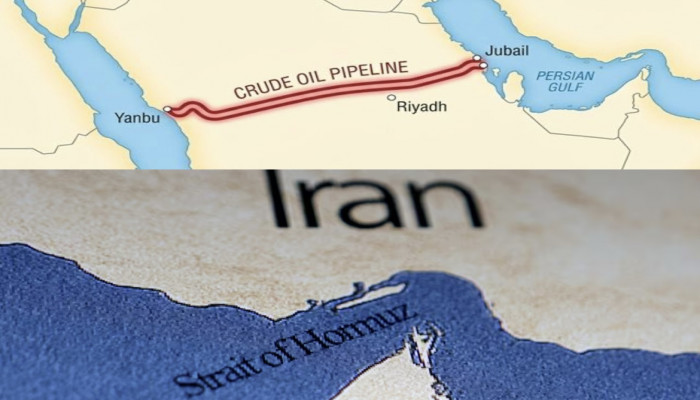
The ongoing crisis in the Strait of Hormuz has created serious concerns for global energy supplies, as the conflict in West Asia continues to disrupt one of the world’s most important oil transit routes. With shipping through the Strait heavily affected following US and Israeli strikes on Iran, countries dependent on oil exports have been forced to look for alternatives. In this situation, Saudi Arabia has activated a long-prepared contingency plan to maintain the flow of crude oil to international markets.
The kingdom has shifted its focus to an inland pipeline system that transports oil from its eastern fields to the Red Sea coast, bypassing the disrupted Gulf route. This pipeline directs crude to the port city of Yanbu, which has now become central to Saudi Arabia’s export operations. By rerouting oil through this network, the country has managed to continue supplying global markets despite the challenges posed by the crisis.
Saudi Arabia’s ability to respond quickly reflects years of planning for such worst-case scenarios. The pipeline, often referred to as a strategic backup, allows oil to move across the country without relying on the Strait of Hormuz. This has proven critical at a time when tensions have escalated, and maritime traffic in the region has been severely affected. The swift activation of this route shows how seriously the kingdom has prepared for disruptions in global oil supply chains.
As a result of this shift, Yanbu has emerged as a key hub for Saudi oil exports. The port, located along the Red Sea, is now handling a significant share of the country’s crude shipments. Tankers that would normally pass through the Gulf are instead being redirected to load oil from Yanbu, ensuring that supplies continue to reach international buyers. This transition highlights the importance of having alternative infrastructure in place during times of geopolitical uncertainty.
However, while the pipeline offers a vital solution, it is not without its limitations and risks. The capacity of the system, although substantial, cannot fully replace the volume of oil that typically flows through the Strait of Hormuz. This means that even with the rerouting, global supply remains under pressure. Additionally, concentrating exports through a single route increases vulnerability, especially in a region where tensions remain high, and infrastructure could become a target.
The broader impact of the crisis is being felt across global markets. The disruption of the Strait of Hormuz, which normally handles a significant share of the world’s oil shipments, has raised concerns about energy security and price stability. Even though Saudi Arabia’s pipeline has helped ease some of the pressure, the situation remains fragile. Any further escalation could affect not just regional exports but also the global economy.
Saudi Arabia’s response also underlines its role as a key stabilising force in global energy markets. As one of the world’s largest oil exporters, the country’s ability to maintain supply is crucial for many economies. By keeping oil flowing through alternative routes, it has helped reduce the immediate impact of the crisis. At the same time, the situation has exposed how dependent the world remains on a few critical chokepoints for energy transportation.
The crisis highlighted the importance of infrastructure resilience. The East-West pipeline, built decades ago, has now become a critical asset in maintaining supply during disruptions. Its use in the current situation demonstrates the value of long-term planning and investment in energy infrastructure. However, it also highlights the challenges of scaling such systems to meet global demand during emergencies.
At the same time, the shift to Yanbu is not a complete solution. While it allows Saudi Arabia to continue exports, it does not fully offset the loss of capacity caused by the disruption in the Strait of Hormuz. Other countries in the region are also exploring similar alternatives, but the overall supply situation remains tight. This has led to continued uncertainty in global markets, with concerns about potential shortages and rising prices.
The ongoing conflict has made it clear that global energy systems are highly interconnected and sensitive to geopolitical developments. A disruption in one region can quickly affect supply chains across the world. Saudi Arabia’s ability to adapt has helped prevent a more severe crisis, but the situation remains uncertain as long as tensions persist.
The blockage of the Strait of Hormuz has forced Saudi Arabia to rely on its inland pipeline network and the port of Yanbu to keep oil exports moving. While this strategy has provided a temporary solution, it also highlights the vulnerabilities in global energy systems. As the conflict continues, the focus will remain on how effectively such alternative routes can sustain supply and prevent a larger economic impact.



 Loading...please wait
Comments