




Saudi Arabia tightens regulatory scrutiny on bank transfers to UAE
- In Reports
- 06:42 PM, Aug 18, 2026
- Myind Staff
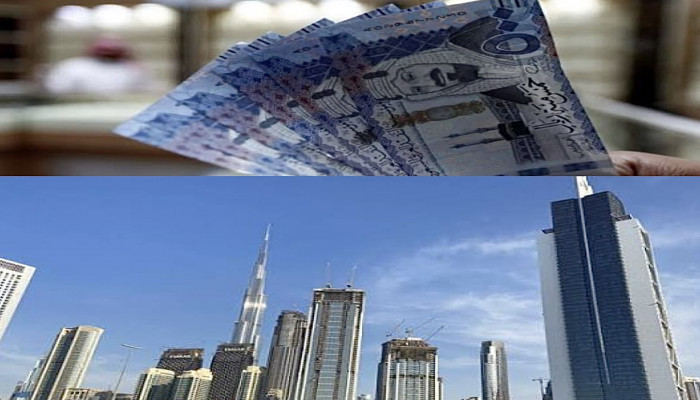
Saudi Arabia has placed bank transfers to the United Arab Emirates under increased regulatory scrutiny, putting the UAE in a category of jurisdictions that Saudi authorities consider more exposed to financial crimes. Three people with direct knowledge of the matter told Reuters that Saudi Arabia's central bank earlier this year instructed major banks to apply additional checks when processing settlements with the UAE. The move has not been announced publicly and adds to signs of growing tensions between the two wealthy Gulf countries.
The tighter checks could explain why several companies have faced delays or failed transfers from Saudi Arabia to the UAE in recent months. Bloomberg and the Financial Times first reported problems with such transfers in July. Six businesspeople told Reuters that Saudi banks had delayed or returned transfers in different currencies without giving their companies an official reason. A Western executive with operations in Saudi Arabia said the bank gave the same explanation when asked about delays.
Saudi Arabia's central bank requires banks to carry out additional checks when customers or jurisdictions present higher risks linked to money laundering, terrorism financing and other financial crimes. Three people familiar with the matter said the central bank notified key Saudi banks earlier this year to apply these measures to transactions involving the UAE.
The Saudi central bank rejected the suggestion that it had imposed direct restrictions on the UAE. Responding to Reuters, it said: "There are no direct restrictions on specific countries." It added that Saudi Arabia has a strong regulatory system to fight money laundering and terrorism financing in line with standards set by the Financial Action Task Force, or FATF, a global watchdog based in Paris.
The central bank also said: "All banks in the Kingdom apply necessary controls and preventive measures to mitigate risks based on their own internal assessments and institutional risk appetite, while also assessing various risk factors, including country and geographic risk," it said.
The UAE has also denied receiving reports of unusual problems with bank transfers. A UAE official said its economy ministry had not received complaints from private-sector companies about difficulties or unusual delays in transfers between the two countries. "The UAE and Saudi Arabia maintain deep and longstanding economic and commercial ties, supported by significant trade and investment flows," the official said. "We remain in regular engagement with the private sector and relevant stakeholders, and would review any specific concerns brought to our attention through the appropriate channels."
Two sources said the UAE is now among more than half a dozen countries in the region that Saudi Arabia treats as higher-risk jurisdictions for financial crimes. The group includes Lebanon, South Sudan and Iraq. These countries are also on the FATF's "grey list", which covers jurisdictions subject to increased monitoring. The FATF removed the UAE from its grey list in 2024 after the country improved its anti-money laundering system. Some anti-corruption organisations have criticised that decision and said the removal came too early.
The UAE has also faced scrutiny from the United States. Washington has sanctioned several UAE-based individuals and entities accused of raising or laundering money for groups including Iran's Islamic Revolutionary Guard Corps and Somalia's al Shabab militants. Saudi and UAE authorities did not respond to questions about what led to the new measures.
One Saudi insider described the enhanced scrutiny as a "subtle message" to Emirati leaders about the need to maintain good relations. Four regional financial-sector sources who were not briefed on the reason for the measures shared a similar interpretation. The move comes after several disagreements between Riyadh and Abu Dhabi over regional and economic issues.
Saudi Arabia and the UAE remain major trading partners, despite their differences. Their interests have increasingly diverged over oil production quotas, regional influence and competition for foreign investment and skilled workers. Their disagreements became more visible late last year over their positions in Yemen. Saudi Arabia accused the UAE of threatening its security by supporting separatist forces that moved toward the Saudi border.
The two countries have also differed over responses to the war involving Iran, the United States and Israel. Despite these tensions, Riyadh and Abu Dhabi have tried to maintain a united position against Iranian attacks on Gulf countries. Analysts say a complete economic break remains unlikely. Their economies are too closely linked through trade, investment and logistics.
Saudi Arabia is the UAE's largest trading partner in the Arab world. The UAE ranked as Saudi Arabia's fifth-largest export destination and fourth-largest source of imports in 2024, according to data from the Observatory of Economic Complexity. Justin Alexander, director of Gulf-focused consultancy Khalij Economics, said the Iran war had "solidified the rationale for cooperation" to protect vital interests, including efforts to reopen the Strait of Hormuz.
Showcasing their close relationship, senior media officials from Saudi Arabia and the UAE posted coordinated statements on social media last month highlighting the countries' brotherly ties.
At the same time, economic competition between Riyadh and Abu Dhabi has grown for years. Both countries are trying to reduce their dependence on oil and gas and establish themselves as major global financial and business centres. Dubai remains the Gulf's main business hub, while Saudi Arabia has pushed multinational companies to move their regional headquarters to Riyadh. The kingdom has made such relocation a condition for companies seeking major government contracts.
Several companies say the transfer problems started within weeks of the UAE announcing on April 28 that it would leave OPEC, the oil producers' group largely led by Saudi Arabia. The head of a Dubai-based consultancy said some Saudi clients struggled to pay the company and advised him to establish operations outside the UAE. An investor with stakes in two UAE-based companies said both firms received similar requests from Saudi clients. The clients said Saudi authorities had asked them not to do business with UAE companies.
Some payments have remained pending for weeks, including transactions worth less than 1 million dirham ($272,257). Such transfers had previously taken only a few days, the investor said. Saudi and UAE authorities did not respond to questions about these specific cases.
Three bankers said the additional checks mean UAE-bound transfers now pass through more departments and face closer examination by compliance teams. Some transactions take weeks to clear, while others fail to go through altogether. Three businesspeople told Reuters that their companies have started routing payments through third countries to avoid the delays.



 Loading...please wait
Comments