




Saudi Arabia struck Iran-backed militia in Iraq during Middle East escalations: Report
- In Reports
- 01:47 PM, May 14, 2026
- Myind Staff
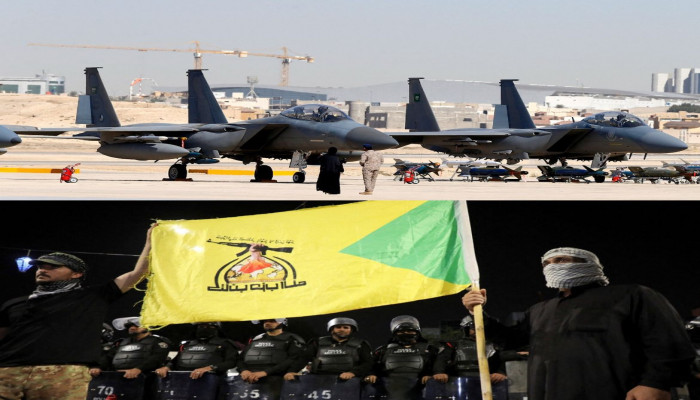
Saudi fighter jets secretly carried out airstrikes on Iran-backed Shi’ite militia targets inside Iraq during the ongoing Iran war, according to multiple sources familiar with the developments. The strikes were part of a wider regional military response that largely remained hidden while tensions across the Middle East sharply escalated after joint Israeli-U.S. strikes on Iran on February 28.
The conflict quickly expanded beyond Iran and Israel. Iranian retaliatory attacks targeted Gulf countries and Israel, creating major instability across the region. The situation also disrupted global markets and forced the closure of the Strait of Hormuz, a critical shipping route through which nearly one-fifth of the world’s oil and liquefied natural gas passes.
According to three Iraqi security and military officials, a Western official, and two people briefed on the matter, Saudi Arabia carried out attacks on militia positions near its northern border with Iraq. The militias were allegedly linked to Tehran and were believed to be involved in launching drone and missile attacks against Gulf states.
One Western official and another source briefed on the matter said the Saudi air force used fighter jets for the operation. Some of the strikes reportedly happened around the time of the April 7 ceasefire agreement between the United States and Iran. The targets included locations used to launch attacks on Saudi Arabia and other Gulf nations.
At the same time, retaliatory strikes were also launched from Kuwaiti territory into Iraq. Iraqi military assessments cited by the sources claimed rockets were fired on at least two occasions from Kuwait toward militia positions in Iraq. One of those attacks took place in southern Iraq in April. Several fighters were killed and a facility used by the Iran-backed militia Kataib Hezbollah for drone operations and communications was destroyed.
Reuters could not independently confirm whether the rockets fired from Kuwait were launched by Kuwaiti forces or by the U.S. military, which maintains a major presence in the country. The U.S. military declined to comment on the matter. Kuwait’s information ministry and the Iraqi government also did not immediately respond to requests for comment.
Saudi Arabia also reportedly carried out strikes directly on Iranian territory during the war. Reuters had earlier reported that Riyadh launched attacks on Iran in response to strikes targeting the kingdom. It marked the first known instance of Saudi Arabia hitting Iranian soil directly. Sources also said the United Arab Emirates conducted similar strikes against Iran.
Even as Gulf states increased military action, officials said a large number of drones targeting the region were launched from Iraq. According to the sources, Iran-backed militias inside Iraq played a major role in these operations. Militia-linked Telegram channels repeatedly shared statements during the war claiming responsibility for attacks on Gulf targets, including Saudi Arabia and Kuwait. However, Reuters could not independently verify the authenticity of those claims.
The continued attacks from militia groups operating in Iraq reportedly pushed Saudi Arabia and Kuwait to respond more aggressively. These armed groups control large numbers of fighters and possess extensive missile and drone arsenals. Gulf countries have repeatedly accused them of operating with little restraint and acting independently despite being inside Iraqi territory.
Diplomatic tensions also increased during the conflict. Kuwait summoned Iraq’s representative three separate times during the war to protest cross-border attacks and the storming of the Kuwaiti consulate in Basra on April 7. Saudi Arabia also summoned Iraq’s ambassador on April 12 to raise concerns over attacks targeting the kingdom.
Relations between Iraq and Gulf Arab countries have historically remained tense and shaped by mistrust. The relationship suffered major damage in 1990 after Iraqi forces under Saddam Hussein invaded Kuwait and launched Scud missile attacks on Saudi Arabia. Tensions continued for decades afterwards.
The 2003 U.S.-led invasion of Iraq further complicated the situation. It strengthened Shi’ite political factions and armed groups closely linked to Tehran, increasing Iran’s influence in Iraq. Gulf nations have long viewed Iraq as a key part of Iran’s regional network of proxy groups. Saudi Arabia and other Gulf states have repeatedly accused Baghdad of failing to control these militias, which often operate with significant independence and launch attacks beyond Iraq’s borders.
There had been hopes for regional stability after the China-brokered diplomatic rapprochement between Iran and Saudi Arabia in 2023. The agreement had eased tensions between the longtime rivals and opened the door for better regional cooperation. However, the current war has severely tested that progress and drawn Gulf countries deeper into a conflict they had earlier tried to avoid.
In March, Saudi Arabia and Kuwait reportedly warned Iraq through diplomatic channels to stop rocket and drone attacks by pro-Iranian groups against Gulf states. Two Iraqi security officials and a government security adviser confirmed those warnings.
Iraqi forces said they managed to intercept some attempted attacks during the conflict. Officials claimed they seized a rocket launcher west of Basra that was allegedly meant to target Saudi energy facilities.
Despite these efforts, Iraqi security sources and another person briefed on the situation said Iran-backed militias continue to operate surveillance drones along Iraq’s borders with Kuwait and Saudi Arabia. The groups are reportedly conducting reconnaissance missions and sharing intelligence with Iran.
“They are gathering information on what has been damaged, what is still working. They are preparing for the next strike,” the person briefed on the matter said.



 Loading...please wait
Comments