




Saudi Arabia says no to normalising Israeli ties without Palestinian statehood
- In Reports
- 06:35 PM, May 26, 2026
- Myind Staff
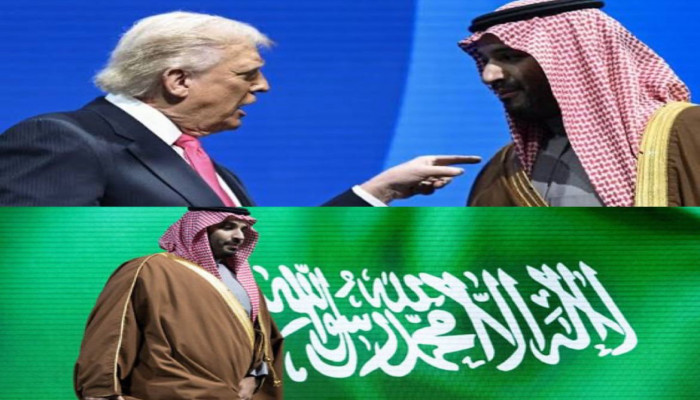
Saudi Arabia has once again made it clear that it will not normalise relations with Israel unless there is a definite and permanent path towards the creation of a Palestinian state. The statement comes after US President Donald Trump renewed pressure on several countries to join the Abraham Accords as part of a wider diplomatic arrangement linked to ongoing talks with Iran.
A Saudi source told CNN that Riyadh’s position has not changed despite increasing calls from Washington for more Arab and Muslim-majority nations to recognise Israel. The source said Saudi Arabia’s stance was “the same as always", stressing the need for an “irreversible pathway to a Palestinian state" before any diplomatic ties with Israel can move forward.
The remarks came shortly after Trump publicly called for a broader expansion of the Abraham Accords. He said countries such as Saudi Arabia, Qatar, Pakistan, Turkey, Egypt and Jordan should be required to join the agreement framework. According to Trump, wider participation in the accords could become part of a larger regional settlement connected to negotiations involving Iran.
Trump has been actively promoting the Abraham Accords since they were first signed in 2020. The agreements led to the United Arab Emirates and Bahrain formally establishing relations with Israel. Morocco and Sudan later followed the same path. Egypt and Jordan had already maintained diplomatic relations with Israel for years, though those ties have remained politically sensitive within the region.
In a post shared on Truth Social, Trump said he had spoken with leaders from several countries over the weekend. He urged them to become part of what he described as a “historic" diplomatic framework. Trump also suggested that joining the accords should become mandatory for regional countries as part of efforts to reshape Middle East politics and security arrangements.
The former US president linked the accords to ongoing discussions involving Iran. However, reports suggest that progress in those negotiations has slowed in recent weeks. Different signals from both Washington and Tehran have raised doubts over how close the two sides are to reaching any final agreement.
Despite Trump’s strong push, Saudi Arabia has maintained a cautious and consistent approach on the issue of Israel. The kingdom has repeatedly stated that it cannot establish official ties with Israel unless there are clear and concrete steps towards Palestinian statehood.
For Saudi Arabia, the issue carries major political, diplomatic and religious importance. The kingdom is home to Islam’s two holiest sites, Mecca and Medina, which gives it a unique position in the Muslim world. Any decision involving Israel is therefore viewed not only as a political matter but also as one that carries wider significance across the region.
Saudi officials have long maintained that recognition of Israel cannot happen without meaningful progress on Palestinian rights and statehood. Riyadh sees the Palestinian issue as a central condition for any future agreement with Israel.
The kingdom’s latest response signals that it is unwilling to shift its position even under pressure from Washington. While the Abraham Accords have changed diplomatic relations in parts of the Middle East, Saudi Arabia continues to insist that Palestinian statehood remains a necessary requirement before any normalisation process can begin.
Trump, meanwhile, continues to argue that expanding the accords could bring long-term stability to the Middle East. He has frequently described the agreements as one of the most important diplomatic developments in the region in recent years. His latest comments show that he still views Saudi Arabia as a key country in any future expansion of the framework.
However, Riyadh’s latest stand makes it clear that the kingdom is not ready to move ahead without guarantees related to Palestine. By repeating that its position remains unchanged, Saudi Arabia has underlined that the issue of Palestinian statehood remains its political red line in any discussion involving Israel.



 Loading...please wait
Comments