



Saudi Arabia pumps billions into Yemen after pushing UAE out, sources say
- In Reports
- 02:50 PM, Feb 06, 2026
- Myind Staff
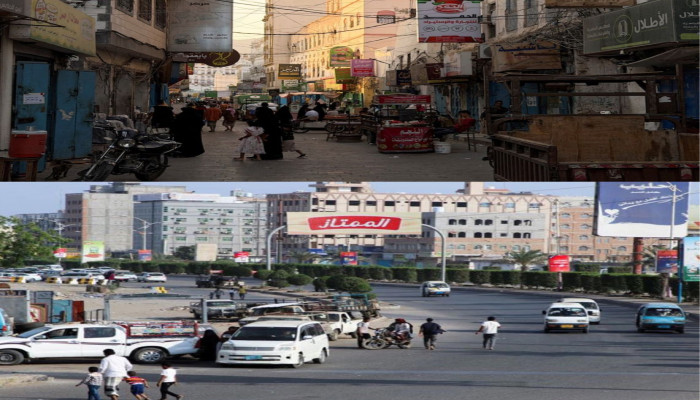
Saudi Arabia is increasing its political and financial involvement in Yemen after pushing the United Arab Emirates out of the country late last year, according to six officials who spoke to Reuters. The move shows Riyadh trying to reassert its influence in the region after focusing for years mainly on its domestic development agenda.
However, the task is not easy. Saudi Arabia is trying to manage different armed groups and tribal forces in Yemen, while also supporting a government that has been struggling due to a collapsed state system. At the same time, the long-running conflict with the Iran-aligned Houthi rebels in northern Yemen remains unresolved, although it has been paused under a fragile truce. This is happening as Saudi Arabia is also facing financial pressure at home due to budget constraints.
According to four Yemeni and two Western officials, Saudi Arabia has budgeted nearly $3 billion this year to cover salaries for Yemeni forces and civil servants. They said the package includes around $1 billion specifically planned for salaries for southern fighters who were previously paid by Abu Dhabi.
Yemeni Information Minister Muammar Eryani confirmed Saudi support, telling Reuters: "Saudi Arabia has cooperated with us and expressed its readiness to pay all salaries in full." He did not mention a total figure. Eryani added that the financial support would help Yemen reorganise armed factions and bring them under government control.
Officials said Saudi Arabia wants to show success in the areas controlled by the internationally recognised Yemeni government, which Saudi Arabia supports. That government is currently in exile from Yemen’s capital Sanaa, which remains under Houthi control.
Saudi Arabia hopes that stabilising the government-controlled parts of Yemen will increase pressure on the Houthis to agree to talks. At the same time, Riyadh is strengthening Yemeni government forces in case military action becomes necessary, according to the sources.
Saudi Arabia has also offered political incentives. Three officials told Reuters that Riyadh has told Yemeni secessionists their long-standing goal of an independent southern state could become possible, but only after the conflict with the Houthis is resolved.
The overall Saudi financial package for Yemen and its openness toward the idea of a separatist state had not been previously reported. Reuters spoke to seven officials in the Yemeni port city of Mukalla and in Saudi Arabia’s capital, Riyadh. Most requested anonymity as the discussions were not publicly announced.
The Saudi government media office and the Yemeni government did not respond to Reuters’ requests for comment, including on the financial figures and political discussions. Reuters also said it could not independently verify what Saudi officials told Yemeni counterparts about these policies.
Responding to Reuters questions, a UAE government media office official said the UAE had spent "signficant resources" over more than a decade to improve security and humanitarian conditions in Yemen. The official added that after withdrawing its forces last year, the UAE "is no longer involved in the Yemeni file in any aspect."
Reuters reported that Saudi Arabia is also becoming more active in post-Assad Syria and in Sudan, where it competes with the UAE for influence. This signals a shift from the period when Crown Prince Mohammed bin Salman was focused heavily on the Vision 2030 domestic modernisation drive.
Despite Saudi Arabia’s financial pressures, analysts say the kingdom cannot afford instability in Yemen. Farea al-Muslimi, a research fellow at Chatham House, said unrest in Yemen could threaten Saudi Arabia’s plans to attract tourism and investment. He also noted that Houthi attacks on Saudi energy infrastructure in 2022 were followed quickly by the ceasefire.
Yasmine Farouk, Gulf project director at the International Crisis Group, said Saudi Arabia will continue prioritising Yemen because "it is now the sole owner of this problem."
Saudi Arabia first intervened in Yemen in 2015, leading a coalition that included the UAE against the Houthis, who had taken over the capital the year before. Both countries supported the internationally recognised Yemeni government, along with different factions divided over whether Yemen should split into northern and southern states, as it was before unification in 1990.
After years of war that led to one of the world’s worst humanitarian crises, the 2022 truce has continued. This has held even during wider regional escalation connected to the Israel-Gaza war, during which the Houthis attacked Red Sea shipping.
In December, Emirati-backed separatists launched a surprise attack against Saudi-backed forces, highlighting increasing rivalry between Saudi Arabia and the UAE. Reuters reported that Riyadh responded by bombing an Emirati military shipment, ordering Emirati forces to leave Yemen, and supporting a counter-attack against the UAE-backed Southern Transitional Council (STC).
Later, Saudi Arabia invited STC members to Riyadh for talks in January. According to three people familiar with the events, Saudi officers confiscated their phones and questioned them for two days about the attack. But in the following weeks, Saudi Arabia placed them in five-star hotels, paid their expenses, and offered to fly in their families.
One separatist official told Reuters: "It's good to be on the winning side, even if you were the loser."
Saudi Arabia has now started paying salaries to hundreds of thousands of state workers and tens of thousands of STC fighters, including those who fought against Saudi-backed forces in December. Two officials said Saudi Arabia’s total spending on salaries, development projects, and energy support could exceed $4 billion this year.
One Western official said: "There is now one captain for this ship instead of multiple. That should mean it is less likely to sink." The official added that Saudi Arabia was now “buying loyalty and stability, but everyone is wondering whether they will sustain it.”
Saudi Arabia is also using pressure tactics. Sources said Riyadh viewed Yemeni Defence Minister Mohsen al-Daeri’s lack of opposition to the STC offensive as betrayal. He was dismissed and reportedly detained in Riyadh for weeks before being moved to a hotel.
Saudi Arabia has told some officials it hopes to see the conflict resolved by the end of this year. Eryani said he hoped military operations would stop by the end of 2026.
Muslimi warned that the timeline is ambitious. He said it could take up to five years for negotiations and a referendum on the south’s future.
Meanwhile, Yemen’s war economy continues to affect daily life. Teacher Mohammad Al-Akbari said his salary is around $30 a month, while an 18-year-old fighter earns at least $250. He said students often question the value of education, asking what they can do with it.
Muslimi warned: "The most dangerous thing facing Yemen today is the impossibility to imagine a peaceful life outside of militarism and war and fighting."



 Loading...please wait
Comments