




Saudi Arabia forms 14-nation naval alliance to secure Red Sea trade routes
- In Reports
- 06:32 PM, Jul 31, 2026
- Myind Staff
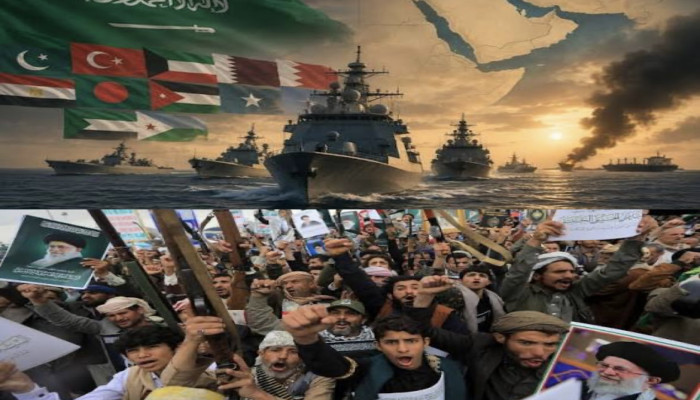
Saudi Arabia and 13 other countries have signed a joint statement to establish a multinational defensive maritime coalition aimed at protecting shipping routes in the Bab el-Mandeb Strait, the Red Sea and the Gulf of Aden. The agreement was signed in Riyadh on Thursday as security concerns continue to grow in the region. The coalition comes at a time when the Iran-aligned Houthis continue their naval blockade against Saudi Arabia and the Strait of Hormuz remains closed to commercial shipping.
The Saudi Ministry of Defence said Saudi Arabia, Kuwait, Bahrain, Qatar, Pakistan, Turkey, Egypt, Jordan, Yemen, Bangladesh, Nigeria, Sudan, Djibouti and Somalia signed the agreement. The ministry also said military chiefs of staff and representatives from 43 countries, along with a delegation from the European Union, attended the meeting in Riyadh either in person or through video conferencing. The participants reviewed the draft charter of the proposed coalition during the meeting.
Saudi Arabia will serve as the founding nation of the alliance and will host its headquarters in the kingdom. According to the Ministry of Defence, the coalition will operate through a joint command and leadership structure. It will also have a joint operations control centre and a general secretariat to coordinate its activities. The ministry added that other countries can join the alliance after completing their own domestic approval procedures.
The Saudi Ministry of Defence described the coalition as a strictly defensive alliance. It said the group does not target any state or organisation. It also stated that all operations will remain within the framework of international law and respect the national sovereignty of every member country.
The coalition aims to protect freedom of navigation across key international waterways. It also plans to secure global trade routes and energy shipments passing through the Bab el-Mandeb Strait. Member countries will coordinate intelligence sharing, exchange information and conduct joint naval exercises to improve maritime security across the region.
The announcement followed Saudi Defence Minister Prince Khalid bin Salman's recent visit to the United States. During the visit, Saudi and US officials discussed regional security issues. Their discussions included attacks on Saudi infrastructure linked to the Houthis and Iran-aligned groups operating in Iraq. The visit highlighted growing concerns over maritime security and the wider regional situation.
The Houthis announced a naval blockade against Saudi Arabia on July 20. The group accused Riyadh of besieging Yemen, an allegation Saudi Arabia has denied. Since declaring the blockade, the Houthis have launched attacks on Saudi-linked vessels operating in the Red Sea. Saudi Arabia has responded with air strikes targeting Houthi facilities at Yemen's Hodeidah port. The kingdom says the facilities are used to threaten commercial shipping moving through the region.
The new coalition also takes shape while another major shipping route faces disruption. The Strait of Hormuz has remained effectively closed to commercial traffic since March 2. Iran's Revolutionary Guard Corps confirmed the closure during the broader conflict involving the United States, Israel and Iran. The continued disruption has affected one of the world's most important energy transit routes.
Shipping tracker PortWatch reported that tanker movements through the Strait of Hormuz dropped sharply. Only 10 ships passed through the waterway on July 23, compared with the pre-crisis average of around 88 ships each day. The prolonged disruption has also influenced global energy markets. Brent crude oil traded near 90 US dollars a barrel on July 29 as concerns over supply continued.
The Bab el-Mandeb Strait plays a critical role in international trade. Around 12 per cent of global seaborne trade by volume passes through the waterway. A similar share of global trade by value also moves through the Suez Canal, which connects directly with the Red Sea through the Bab el-Mandeb Strait. Any disruption along this route affects shipping across several regions.
When vessels cannot safely use the Red Sea route, shipping companies divert them around Africa's Cape of Good Hope. The alternative journey adds around 10 to 14 days to travel between Asia and Europe. Industry shipping data also shows freight rates on some routes have increased by 15 to 25 per cent due to the longer voyage.
Longer travel distances increase fuel consumption and operating costs for shipping companies. These additional expenses become part of freight contracts well before products reach consumers. As a result, businesses and consumers often experience delayed deliveries and higher prices on imported goods even after ships successfully complete their journeys through alternative routes.
Saudi Arabia has continued to reject the Houthis' allegation that it is besieging Yemen. The kingdom has not issued any additional statement through its foreign ministry beyond the announcement released by the Ministry of Defence. The newly announced maritime coalition reflects Saudi Arabia's effort to strengthen regional cooperation and improve the security of one of the world's most important shipping corridors while tensions across the region remain high.



 Loading...please wait
Comments