




Saudi Arabia bails out Pakistan with a $3 billion lifeline after US liquidity support remains uncertain
- In Reports
- 08:38 PM, Nov 05, 2026
- Myind Staff
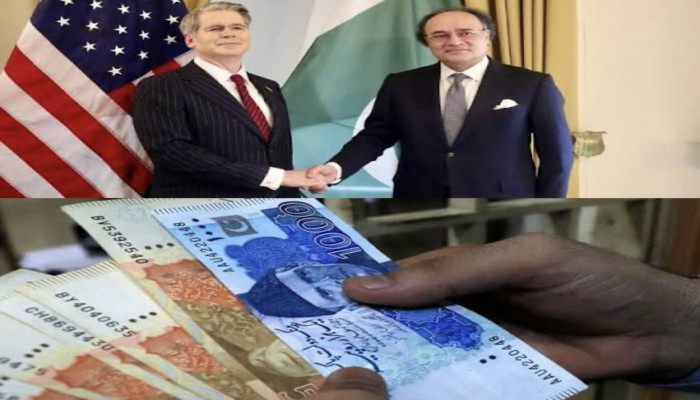
Pakistan has secured a $3-billion financing extension from Saudi Arabia, easing immediate pressure on its external finances as a proposed $10-billion liquidity support facility from the United States remains uncertain.
Finance Minister Muhammad Aurangzeb confirmed on Wednesday that Riyadh had extended the $3-billion financing provided in April. The facility was due to mature on October 31 after an initial three-month term. It had helped Pakistan meet a $3.5-billion repayment obligation to the United Arab Emirates.
Speaking to Dawn at Parliament House, Aurangzeb said the extension had been secured for a “reasonable period". He did not specify its duration.
“It has been extended for a reasonable period. You don’t need to worry as to for how long, given the kind of strategic relationship we have," he said.
Aurangzeb also referred to his meeting with Saudi Finance Minister Mohammed Al-Jadaan during the recent World Bank-IMF meetings in Bangkok. Saudi Arabia had earlier extended its separate $5-billion financing facility until 2028.
The minister denied seeking additional support from Riyadh. He said Pakistan's foreign exchange reserves could cover more than three months of imports. The government aims to increase this to four months by year-end through capital-market financing.
Pakistan is also preparing for the possibility that the proposed $10-billion Exchange Stabilisation Support Facility (ESSF) from the US may not materialise.
Islamabad sought the facility in July as a liquidity backup. However, Aurangzeb said Pakistan had already achieved its immediate goal of regaining access to international capital markets. The country raised $3 billion through a bond issuance in September, attracting orders worth $6 billion.
“What we asked for back in July and were looking at was the market access. We have got the market access," he said.
He added that the ESSF would provide additional liquidity if approved, but Pakistan was not relying on it.
“If that (ESSF) materialises, fantastic, it will be a liquidity support facility. Otherwise, we have plans for further Eurobond issuance, Panda bond issuance and rupee-linked dollar-settled bond," he said.
Aurangzeb said he had met 70-80 institutional investors in Bangkok, with discussions covering five-year and 10-year maturities. He also highlighted potential financing from the US Export-Import Bank and Development Finance Corporation (DFC) for American investors and exporters in Pakistan.
“That is real financing and real credit," he said, distinguishing it from the proposed liquidity facility.
“If possible, fine; if not, we are going to move forward, with or without it," Aurangzeb said.
He added that the IMF Executive Board was scheduled to meet in December to approve a $1.2-billion disbursement.
Separately, Aurangzeb told the Senate Standing Committee on Finance that Pakistan aims to reduce its external debt by $4 billion this fiscal year and another $3.5 billion next year. This follows a $4.5-billion reduction last year.
The government plans to replace costly short-term loans with longer-term bonds and private placements. Pakistan's external debt rose from $45 billion in 2014-15 to around $100 billion, but its annual increase has slowed to about $1 billion over the past two years.
“Our objective is not to increase external debt. All the transactions like Eurobond, Panda bond or private placements have been replacement bonds to replace expensive with cheaper facilities," he said.
Aurangzeb said fiscal discipline had helped control fiscal and current account deficits. Despite higher oil and wheat import bills, the current account deficit is expected to remain below 1% this year. Foreign exchange reserves have crossed $21.5 billion.
Finance Secretary Imdadullah Bosal told the committee that public debt fell to 68.6% of GDP in June 2026, from 75.1% in 2022-23. Public debt growth slowed to 7.7% last fiscal year, its lowest level in 20 years.
He said domestic debt stood at Rs58.8 trillion at the end of August, down from Rs68.4 trillion in June. Foreign debt remained stable at $98.2 billion.
Pakistan's net financing requirements stood at $11 billion after rollovers and refinancing. The country repaid $5 billion in the first four months of the fiscal year, leaving another $6 billion due over the next seven months.



 Loading...please wait
Comments