



Satellite images reveal expansion of secret nuclear weapons sites in China’s Sichuan: Report
- In Reports
- 07:21 PM, Feb 16, 2026
- Myind Staff
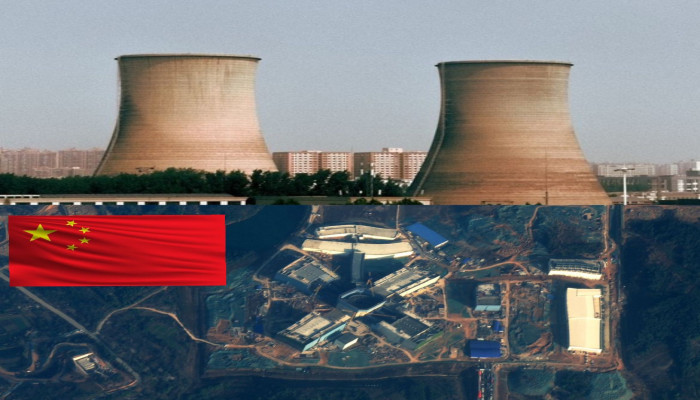
New satellite images have shown a major expansion of secret nuclear weapons-related facilities in China’s Sichuan Province, according to a report by The New York Times. The report says that geospatial analysis of imagery taken between 2022 and 2026 points to increased construction activity at highly restricted locations, suggesting that China’s nuclear development programme is growing faster than before.
The findings were shared by geospatial intelligence expert Renny Babiarz, who studied satellite images and compared the changes over time. According to the analysis, China’s nuclear build-up has accelerated since 2019, reflecting a shift in the country’s defence and strategic planning. Experts believe the new developments may be connected to the production and testing of nuclear warhead components.
One of the key sites identified in the report is located in a valley area known as Zitong, in Sichuan. Satellite imagery shows newly built bunkers and protective ramparts in the region. Analysts noted that the location appears to be designed for activities that require isolation and heavy security.
At the Zitong site, the imagery also shows a newly constructed complex with a large amount of piping infrastructure. Experts say such piping is often seen in facilities that handle hazardous or sensitive materials. This has raised concerns that the complex may be involved in processes linked to nuclear weapons production.
Specialists cited in the report believe the bunkers at Zitong could be used for high-explosives testing, which is an important step in building and improving nuclear warheads. High-explosive tests help refine the chemical detonators that are used to compress nuclear material inside a warhead.
Explaining the process, Hui Zhang, a physicist who researches China’s nuclear programmes at Harvard University’s Kennedy School of Government, said that nuclear warheads require extreme precision. According to him, warheads contain layers of high explosives that must explode at the same time, creating a shock wave that forces material inward toward the centre. These explosions must be tested repeatedly to ensure they work correctly.
The report suggests that such tests are needed to perfect the systems that allow nuclear weapons to function reliably. This is why the construction of bunkers and related infrastructure in Zitong is being closely examined.
Satellite imagery also points to continued activity at another site in Sichuan called Pingtong, which is described as a double-fenced facility. The site includes a main building with a tall ventilation stack, measuring around 360 feet. Experts believe this location may be linked to the production of plutonium-based cores, also known as “pits,” which are key components inside nuclear warheads.
According to The New York Times, experts suspect that China may be producing these plutonium-packed cores at the Pingtong facility. Such pits are used to start the chain reaction that leads to a nuclear explosion.
The satellite images show that the main structure at Pingtong has been refurbished in recent years. New vents and heat-dispersion features have reportedly been added, indicating possible upgrades to support advanced or continuous operations. Additional construction activity has also been spotted near the main building, suggesting that the facility is expanding further.
Babiarz reportedly told The New York Times that the architectural design of the Pingtong complex resembles nuclear warhead pit production facilities seen in other countries. This similarity has strengthened expert belief that the site could be playing a major role in China’s nuclear weapons programme.
The report highlights that these new developments are part of a wider trend of increasing nuclear activity in China. Analysts believe the construction and upgrades in Sichuan show that China is strengthening its nuclear capabilities and expanding its infrastructure to support weapons development.
While China has not officially confirmed the purpose of these facilities, the satellite evidence and expert assessments have raised serious global attention. The report suggests that these expansions could represent an important step in China’s long-term nuclear strategy.



 Loading...please wait
Comments