



‘Sar Tan Se Juda’ slogan challenges law, sovereignty of India: Allahabad High Court
- In Reports
- 06:01 PM, Dec 19, 2025
- Myind Staff
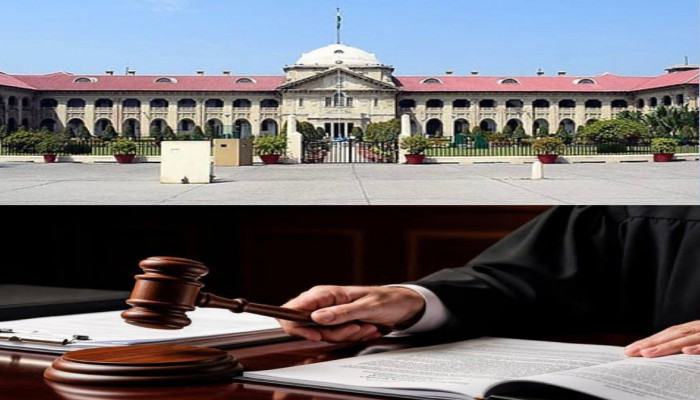
The Allahabad High Court has observed that raising the slogan “Gustakh-e-nabi ki ek saza, sar tan se juda” is a serious offence as it challenges the authority of law and threatens the sovereignty and integrity of India. The court said that such a slogan incites people to take up arms and promotes violent rebellion instead of respect for the legal system.
The slogan, which means “the only punishment for insulting the Prophet is beheading,” was raised by a large crowd in Bareilly earlier this year. The High Court said that encouraging such ideas in public goes against the rule of law and cannot be justified in any civilised society.
The observations were made by Justice Arun Kumar Singh Deshwal while rejecting the bail application of Rihan, one of the accused in the Bareilly violence case. The incident took place on May 26, when around 500 people gathered in the Biharipur area of Bareilly following a call given by Maulana Taukir Raza, the president of the Ittefaq Minnat Council. During the gathering, the crowd repeatedly raised the slogan “Gustakh-e-nabi ki ek saza, sar tan se juda, sar tan se juda.”
The gathering soon turned violent. According to the prosecution, the crowd attacked police personnel, leading to injuries to several policemen. Public and private vehicles were also damaged during the violence. Following the incident, seven people were arrested, including Rihan, who was taken into custody at the spot. While dismissing the bail plea, the court said that there was enough evidence to show that the accused was part of an unlawful assembly that engaged in violent and illegal activities.
The court said, “There is sufficient material in the case diary showing that the applicant was part of an unlawful assembly which not only raised objectionable slogans challenging the authority of the Indian legal system but also caused injuries to police personnel and damaged public as well as private property.” The bench further observed that such actions amount to an offence against the State.
“It is nothing but an offence against the State and he was arrested from the spot. Therefore, this court does not find any ground to release the applicant on bail. And thus the bail application is rejected,” the court said.
Justice Deshwal also made important observations about religious slogans. He said that every religion has slogans or phrases that express devotion and faith, and these are normally used peacefully.
The court noted that in Islam, slogans like “nara-e-takbir” followed by “Allahu Akbar” are commonly used and mean “God is the greatest.” These are religious expressions and are not controversial.
Similarly, in Sikhism, slogans such as “Jo bole so nihaal, Sat Sri Akal” are used, which were popularised by Guru Gobind Singh Ji. In Hinduism, phrases like “Jai Shree Ram” and “Har Har Mahadev” are raised joyfully during religious occasions.
The court clarified, “Therefore, raising or chanting these slogans by any person or a crowd is not an offence unless they are maliciously used to intimidate persons belonging to other religions.”
However, the court drew a clear distinction between devotional slogans and violent slogans like “sar tan se juda.” It said that this particular slogan has no mention in the Quran or any other religious book, and its repeated use promotes violence and fear. The court also referred to the teachings and life of Prophet Mohammad, highlighting his acts of kindness and compassion. It said that the slogan goes against the basic principles of Islam itself.
In its conclusion, the court stated, “In view of above analysis, it is clear that the slogan raised by an individual person or by a crowd is a challenge to the authority of law as well as sovereignty and integrity of India as the same incites the people for armed rebellion.”
The court further ruled that raising such slogans would attract punishment under Section 152 of the Bharatiya Nyaya Sanhita (BNS), which deals with acts that threaten the unity, sovereignty and integrity of the country.



 Loading...please wait
Comments