




Sanctions lifted on Venezuela’s interim leader, signalling a shift in US approach
- In Reports
- 12:39 PM, Apr 02, 2026
- Myind Staff
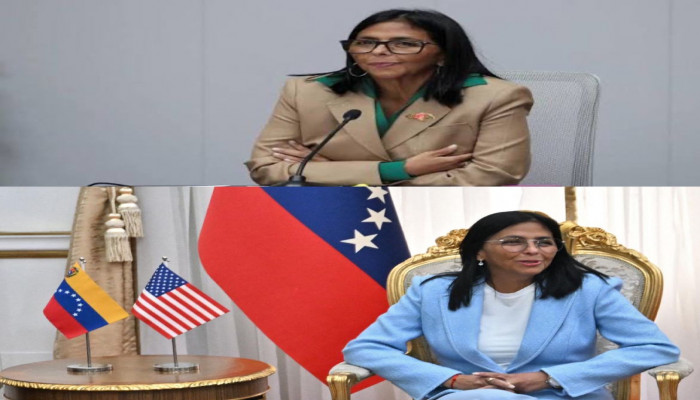
The United States has removed sanctions on Venezuela’s interim President Delcy Rodriguez, marking a major shift in its approach towards the country and paving the way for her administration to regain control of important overseas assets. The decision was confirmed through the U.S. Treasury Department’s website and comes less than three months after U.S. forces captured former President Nicolas Maduro in Caracas.
This move reflects increasing engagement between the Trump administration and Rodriguez’s government. In recent weeks, senior U.S. officials, including those in charge of energy and internal affairs, have visited Caracas with potential investors. Discussions have focused on expanding cooperation in the oil and mining sectors. The two sides have also reached an agreement that allows the United States to sell Venezuelan oil, while reforms in Venezuela’s energy sector are being promoted to attract foreign investment.
Washington had already formally recognised Rodriguez as Venezuela’s leader in March. This recognition now enables her government to reopen embassies and consulates in the United States. It also allows Venezuela to reclaim control of state-owned companies operating abroad. One of the most significant developments is the expected takeover of boards managing subsidiaries of the state oil company PDVSA in the United States, including Citgo Petroleum.
Citgo is considered one of Venezuela’s most valuable foreign assets. Since 2019, it has been managed by boards appointed by an opposition-led congress that is no longer active. The latest step suggests that control of such assets may soon shift back to Venezuela’s current interim administration, further strengthening its authority and financial position.
Rodriguez welcomed the decision and described it as a positive step for both nations. In a post on X, she said, "a step in the direction of normalising and strengthening relations between our countries." She further added, "We trust that this progress will allow for the lifting of the sanctions currently in place on our country, enabling the building and guaranteeing of an effective bilateral cooperation agenda for the benefit of our peoples," she said.
The announcement followed earlier reports that her administration was preparing to take control of PDVSA’s U.S.-based subsidiaries. Sources close to the matter indicated that preparations were already underway for this transition. This suggests that the sanctions relief is part of a broader plan to restore Venezuela’s access to international assets and financial systems.
Despite these developments, uncertainties remain around Rodriguez’s political standing and international engagement. There have been repeated reports that she may travel to the United States to meet President Donald Trump. However, she has not yet met any head of state in person since assuming her interim role, although she has interacted with high-level delegations from several countries.
At the same time, many senior officials from Maduro’s former government continue to face sanctions and legal challenges. Figures such as Interior Minister Diosdado Cabello and former Defence Minister Vladimir Padrino are accused of drug trafficking and other crimes, though they have denied these allegations. The broader sanctions framework against Venezuela has not been fully lifted, indicating that the U.S. is still maintaining pressure on several individuals linked to the previous administration.
Interestingly, while Rodriguez and her brother Jorge Rodriguez, who heads the National Assembly, have not been charged with crimes in the United States, reports suggest that the Trump administration may be quietly building a legal case against her. This could provide Washington with additional leverage in its dealings with Caracas as diplomatic and economic relations evolve.
Overall, the lifting of sanctions on Rodriguez represents a significant turning point in U.S.-Venezuela relations. It signals willingness by Washington to work with the interim government and support economic recovery efforts, especially in the energy sector. At the same time, it reflects a strategic approach where cooperation is being expanded while maintaining legal and political pressure on other key figures from the previous regime.



 Loading...please wait
Comments